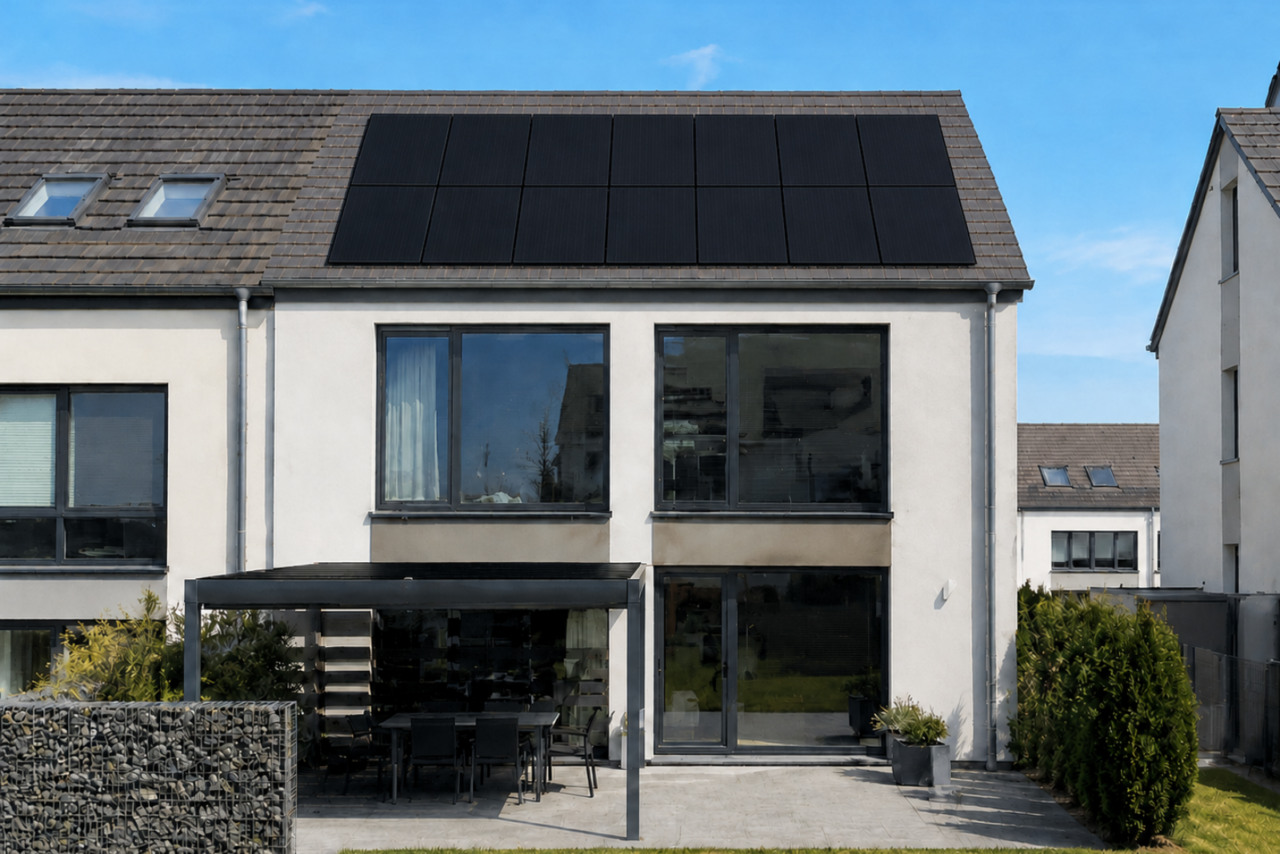

A small roof does not rule out a well-designed photovoltaic installation. When space is limited, the precise layout of the panels, their dimensions and efficiency, and the way the entire system is adapted to the conditions of the specific building become much more important. The goal is not simply to fit as many panels as possible, but to achieve the highest possible energy production from the available roof area.
In practice, what matters is not the total roof area, but the space that can actually be used for installation. This is affected by factors such as the shape of the roof, chimneys, roof windows, shading and the direction in which the photovoltaic panels can be installed. That is why, on a small roof, a well-prepared design and comparison of several possible panel layouts can be significantly more important than on a large, simple roof surface.
Table of contents
ToggleHow much space is actually available for panels on a small roof?
With a small roof, the total surface area should not be the only consideration. What matters much more is how much space can actually be used for photovoltaic panels after taking into account chimneys, roof windows, dormers, vents, antennas and areas that are regularly shaded.
The final layout is also influenced by the mounting method, the roof structure and the need to maintain access to selected elements. The design should also take into account structural safety, roof loads and the ability to secure the entire system correctly. In practice, this means that a 50 m² roof does not necessarily provide 50 m² of usable space for photovoltaics. Some areas may need to be excluded from installation or may be less favourable in terms of energy production.
Which panels make the best use of limited roof space?
On a small roof, it is not worth looking only at the rated power of an individual panel. Its efficiency, exact dimensions and the total amount of power that can be installed within the available area are equally important. A high-power panel may simply be larger, which means that fewer modules may fit on a small or irregular roof.
That is why, when designing the system, it is worth comparing not only the wattage of each panel, but also its actual dimensions and how it can be arranged on the roof. A good example is that a 500 W panel does not necessarily have to be a better choice than a 450 W model if it is significantly larger and its dimensions mean that fewer modules can be installed. In such a case, what matters is which option delivers the greater total system capacity and makes better use of the available space.
On a small roof, panels with high efficiency and dimensions suited to the specific roof surface are particularly important. Sometimes even a small difference in the width or length of a module can determine whether an additional panel can be installed and the total capacity of the system increased.
How should panels be arranged on a small or complex roof?
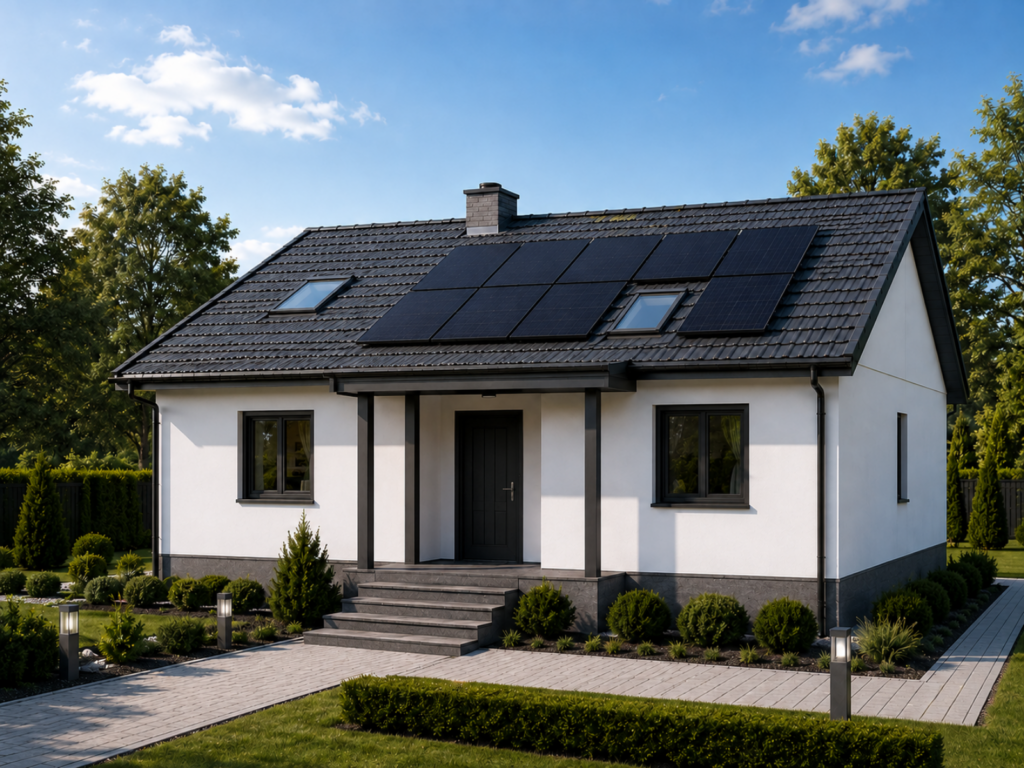
On a small or irregular roof, the way the panels are arranged can be just as important as the modules themselves. Sometimes simply changing their orientation can deliver a better result. Panels can be installed vertically or horizontally, and this difference can determine whether a narrow section of the roof can be used, whether a roof window, chimney or dormer can be avoided, and whether an additional module can be fitted.
It is also worth checking whether more than one roof surface can be used. Photovoltaic panels do not have to be installed exclusively on a south-facing roof. When space is limited, east- and west-facing surfaces can also deliver good results. This makes it possible to increase the total area available for the installation while also spreading energy production over a longer part of the day.
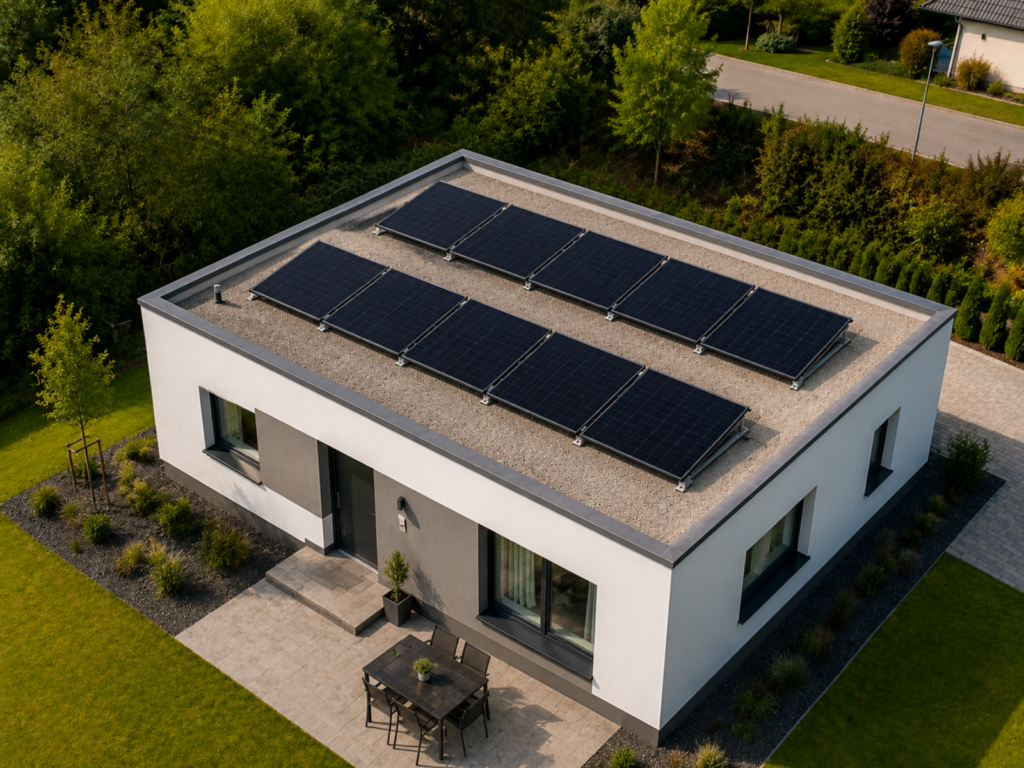
A flat roof is a separate case. Here, the panels are not limited by the natural pitch of the roof, so different configurations can be compared. An east-west layout often allows modules to be installed more densely than traditional south-facing rows because it requires smaller gaps between successive rows. On a small roof, this can make it possible to install more panels and use the available surface more effectively.
On a complex roof, it is therefore worth avoiding a single standard layout. The best arrangement should be based on the shape of the roof surfaces, the available space, shading and the expected energy production from individual sections of the roof.
Can photovoltaics on a small roof meet a home’s energy needs?
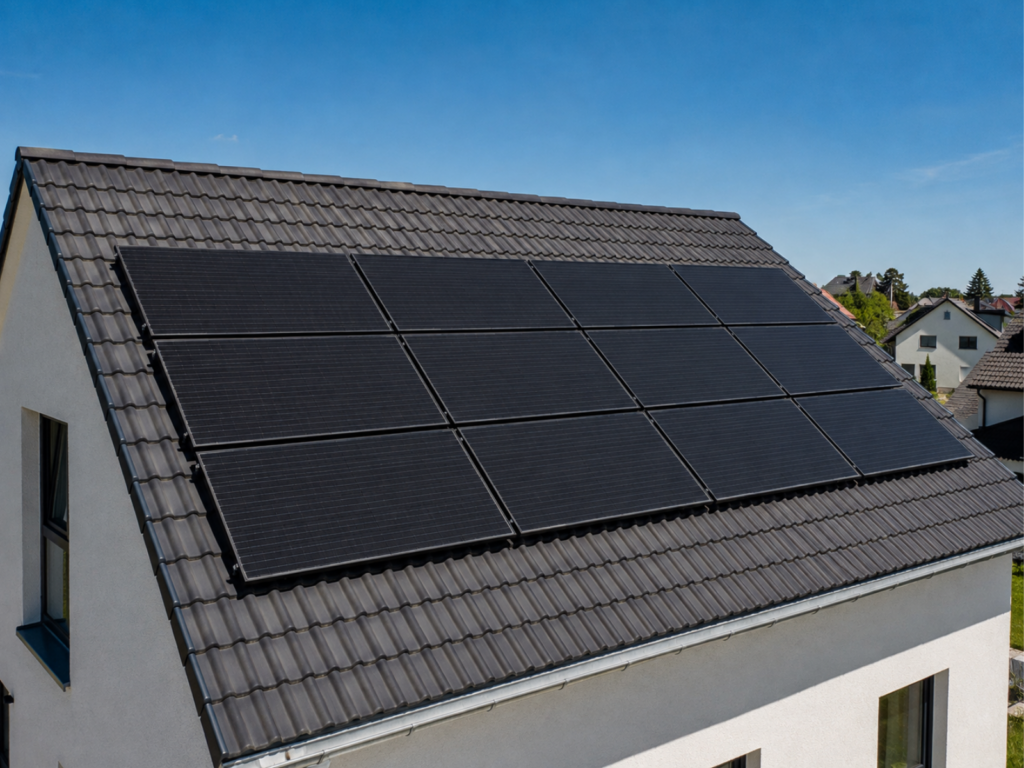
In many cases, photovoltaics on a small roof can meet a significant share of a home’s energy needs, but this cannot be assessed on the basis of roof size alone. What matters much more is the capacity that can actually be installed, how much energy the panels can generate over the course of a year and the building’s actual electricity consumption.
A small roof with well-selected panels, favourable orientation and limited shading can provide surprisingly good energy production. Conversely, a larger roof does not always guarantee better results if some of the panels operate under poor conditions. That is why a project should be assessed primarily in terms of estimated annual energy production and compared with the household’s actual demand.
If calculations show that the roof cannot accommodate a system large enough to cover the entire demand, the installation may still make sense as a way to reduce the amount of electricity purchased from the grid. In such a situation, additional surfaces can also be considered, such as the roof of a garage, carport or another outbuilding.
How can Voltmax design photovoltaics for a small roof?
With a small roof, the most important factor is making effective use of every available part of the surface. Before installation, Voltmax can analyse the actual space available for panels, the shape and orientation of the roof surfaces, shading and the structural possibilities of the roof.
On this basis, different panel layouts can be compared, modules with suitable dimensions and efficiency can be selected, and expected energy production can be estimated. The goal is to create a design that makes the best possible use of the conditions of the specific building and delivers the highest practical energy production from the available space, without artificially increasing the number of panels at the expense of performance or installation safety.