Harnessing solar energy with high-efficiency solar panels is one of the best ways to generate clean, renewable electricity for your home. A professionally installed Photovoltaics for home system allows homeowners to reduce their dependence on traditional utility providers while maximizing energy savings. By switching to solar power, you not only lower electricity costs but also contribute to a sustainable energy future.
Invest in a home solar installation in Luxembourg today and take advantage of energy efficiency, lower utility bills, and long-term energy independence.
Turn your roof into a practical energy asset for lower bills, greater independence and a future-ready home.

Solar panels allow you to produce part of the electricity you use every day. This can help reduce the amount of energy you buy from the grid and make your household less exposed to rising electricity prices. The more of your own solar energy you use directly, the greater the potential benefit for your home.

With photovoltaics, your home becomes less dependent on external energy suppliers. You gain more control over how your electricity is produced, used and managed. When combined with smart monitoring and energy storage, a solar installation can help you use your own electricity more effectively throughout the day and in the evening.
A modern photovoltaic system can increase the attractiveness of your property. For many homeowners and future buyers, lower running costs, better energy performance and future-ready technology are becoming important advantages. Solar panels are not only an energy solution. They are also an investment in the long-term value and efficiency of your home.

A photovoltaic system can be designed with a home battery in mind. This allows you to store surplus solar energy and use it later, for example in the evening or during periods of higher electricity demand. Energy storage helps increase self-consumption and makes your home energy system more flexible.

If you already drive an electric car or plan to buy one, photovoltaics can become an important part of your charging strategy. By combining solar panels with a home EV charger, you can use more of your own electricity to charge your vehicle. This makes your home better prepared for electric mobility.

Solar panels can also support the energy needs of a heat pump. This is especially useful for homeowners who want to modernise their heating system and reduce dependence on fossil fuels. Combining photovoltaics with a heat pump can improve the overall efficiency of your home and support a more sustainable heating strategy.
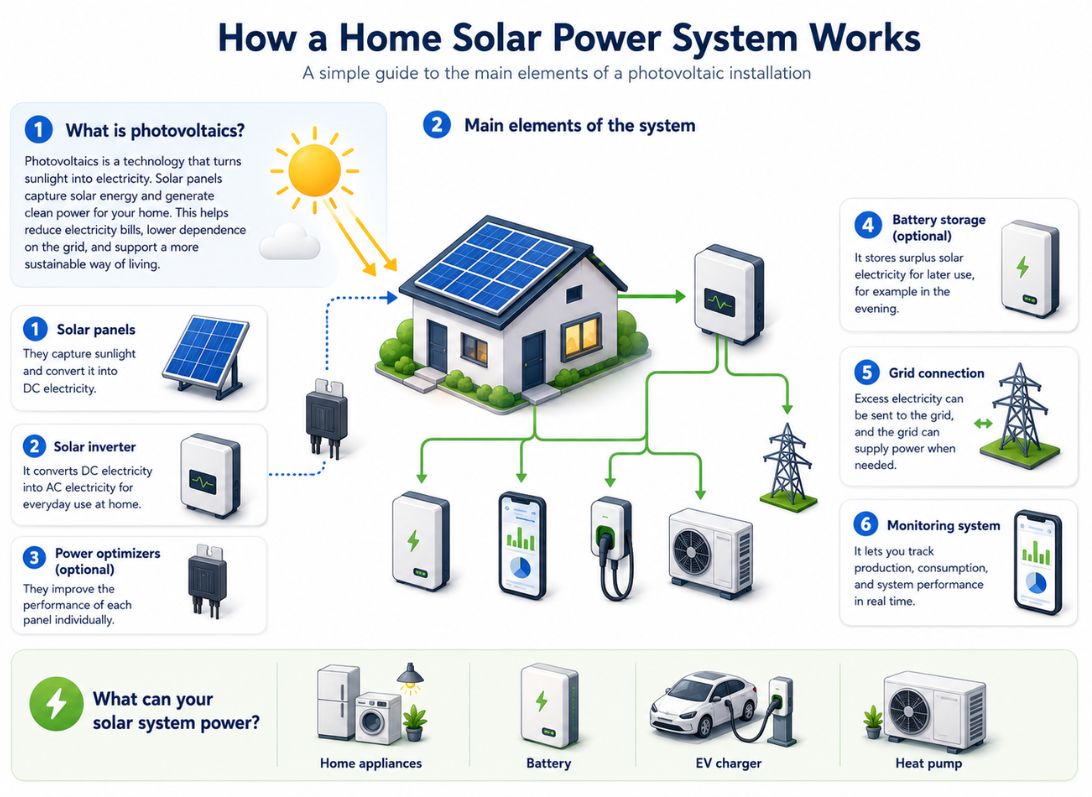
Photovoltaics is a simple way to turn sunlight into electricity for your home. Solar panels installed on the roof capture daylight and produce clean energy that can be used by your appliances, lighting, heat pump or EV charger.
A home solar system is made of a few key elements. Solar panels produce electricity, the inverter converts it into power your home can use, and the grid connection keeps your home supplied when production is lower. You can also add battery storage to use more of your own energy later, and smart monitoring to track production and consumption in real time.
In practice, the system works automatically. During the day, your home uses solar energy first. If production is higher than your current needs, the surplus can be stored in a battery or sent to the grid. When the panels produce less, your home can use stored energy or electricity from the grid.
At Voltmax, we understand that investing in solar power solutions in Luxembourg is a big decision, and we are here to help you maximize your savings. Many regions offer government incentives, subsidies, and tax benefits to encourage the transition to renewable energy. These financial support programs make solar panel installations more accessible and cost-effective for homeowners and businesses.
✅ Solar Subsidies – Depending on your location, you may qualify for direct subsidies that can significantly reduce the upfront cost of your photovoltaic installation. These grants are designed to support the adoption of clean energy and lower the financial burden of switching to solar power. Read more on the Klimabonus website
✅ Tax Deductions & Rebates – In many cases, solar system owners can benefit from income tax reductions, tax credits, or VAT reductions on their solar energy investment. These incentives allow you to recover a portion of your expenses while increasing your long-term energy savings.
✅ Low-Interest Financing – Some programs also offer special financing options with low or zero-interest loans, making it even easier to invest in energy-efficient solar solutions.
Our experienced team at Voltmax specializes in Photovoltaics for home, providing professional support from skilled photovoltaic installers. We guide you step-by-step through subsidies and financial incentives, helping you lower the costs of your solar installation. With Voltmax’s expert photovoltaic installers by your side, transitioning to Photovoltaics for home becomes simple, affordable, and efficient.

We will carry out an energy audit and advise optimal solutions for your home.

We help at every stage of formalities, limiting your involvement and time to a minimum.

In a very short time, you start to feel the benefits of saving on high electricity bills.

Our specialists will help you obtain convenient installment financing on very favorable terms.

Most of the assemblies are made in just one day, so you don’t have to worry about the constant visits of the assembly teams.

Most of the proposed solutions have a 25-year guarantee for solar energy consumption.
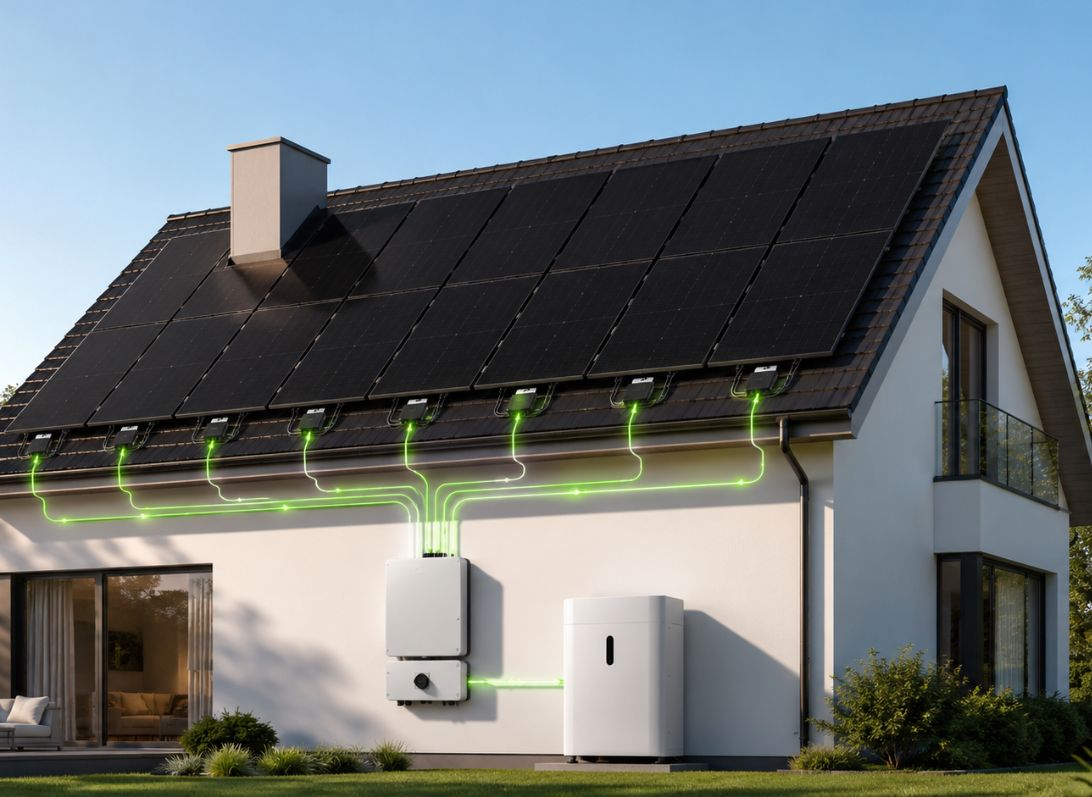
A photovoltaic installation with power optimizers is designed to get more energy from each individual solar panel. In a standard system, panels usually work together in one string. This means that if one panel performs worse because of shade, dirt, snow, leaves or a different roof angle, it can reduce the performance of the whole group.
With power optimizers, each panel works more independently. The system can adjust the performance of every module separately, so one weaker panel does not limit the entire installation. As a result, your photovoltaic system can produce more electricity in real roof conditions, not only in perfect laboratory conditions.

Power optimizers help each solar panel operate at its best possible level. This is especially important when your roof has partial shading, different orientations or panels installed on several roof surfaces. Instead of losing production from the whole string, the system reduces the impact of a single underperforming panel.
Not every roof is simple. Many homes have several roof slopes, different angles, roof windows, chimneys or limited space. Power optimizers make it easier to design a photovoltaic installation on more complex roofs, because panels do not always need to work under identical conditions.
Shade from chimneys, trees, dormers or neighbouring buildings can reduce solar production. In a traditional system, even partial shading may affect more panels than expected. With optimizers, shading has a more limited impact, because each panel is managed individually.

Modern optimizer-based systems can include advanced safety functions, such as automatic voltage reduction during maintenance or emergency situations. This can improve safety for installers, service teams and emergency responders.
A standard inverter usually shows the performance of the whole installation. With a system using power optimizers, you can monitor the performance of individual panels. This makes it easier to detect problems, compare production and understand how your system works during the day.

If you want to add more panels in the future, an optimizer-based system can make expansion easier. New panels can often be integrated more flexibly than in a traditional string system. This is useful if your electricity consumption grows because of an EV charger, heat pump or battery storage.
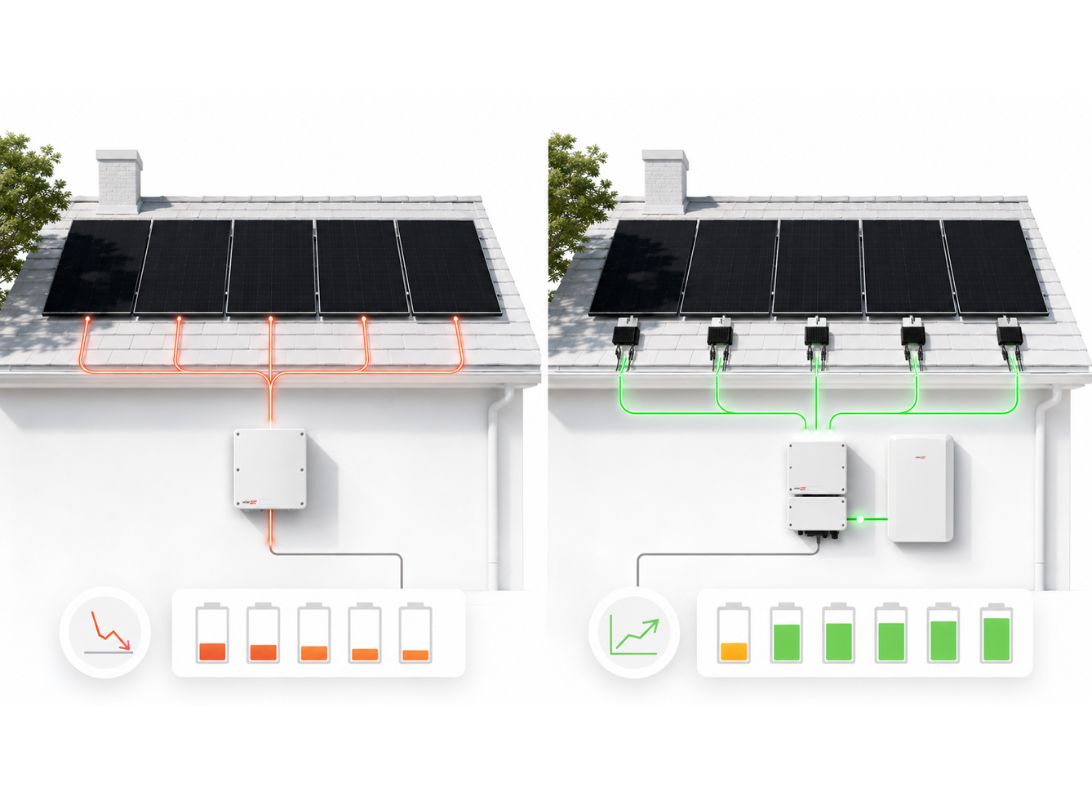
A standard photovoltaic system can work very well on simple, unshaded roofs. However, many homes have real-life conditions that are not perfect: shade, different roof angles, different orientations or changing energy needs.
A SolarEdge system with power optimizers is designed for better control, better visibility and higher efficiency at the panel level. It can help increase energy production, improve monitoring, support safer operation and make the installation more flexible for future upgrades.
For homeowners who want a smarter and more future-ready photovoltaic system, power optimizers are often a strong investment.

» The top layer absorbs light with the electrode
» The plates are made of crystalline silicon
» Metallized bottom layer
» They absorb light on one side
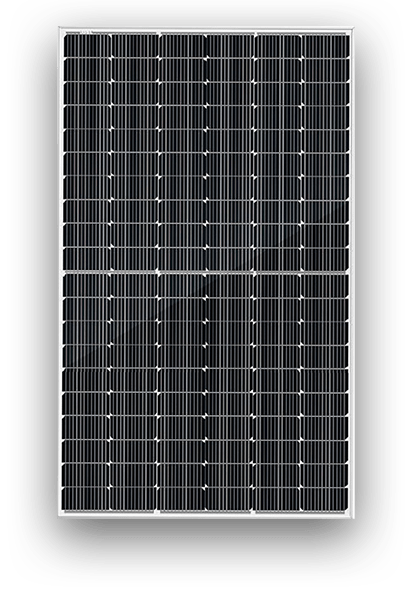
» double-sided photovoltaic panels
» higher yield than mono-facial
» Higher energy yields
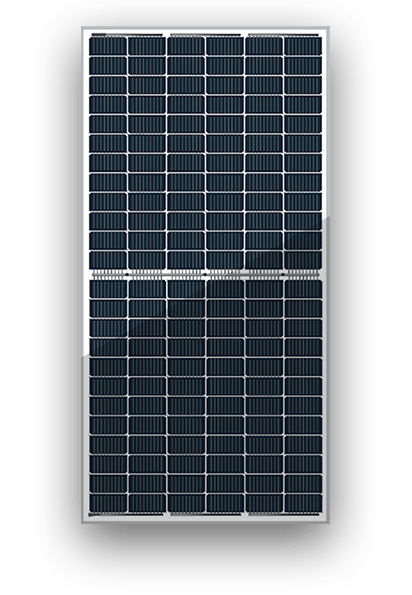
» Cut cells more resistant to the “hot spot” effect
» Better performance with partial shading

» Fully black links
» Black frame
» The other elements are black
» Modern design
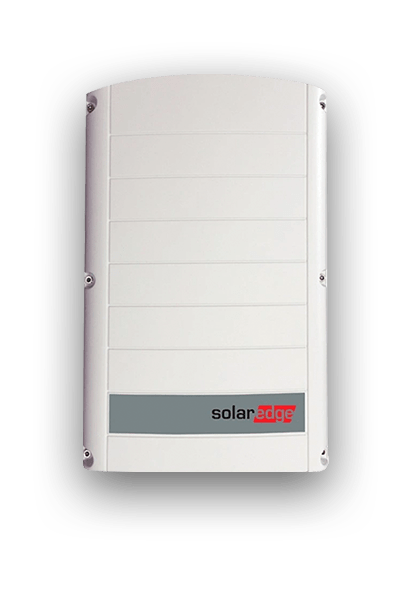
» Intelligent photovoltaic management system
» Preview of work from each installation module
» Extensive energy management system
» Expandable with additional modules
» 25-year warranty on power optimizers
» 12-year warranty for inverters
» max. 25-year warranty
» simple and modern look
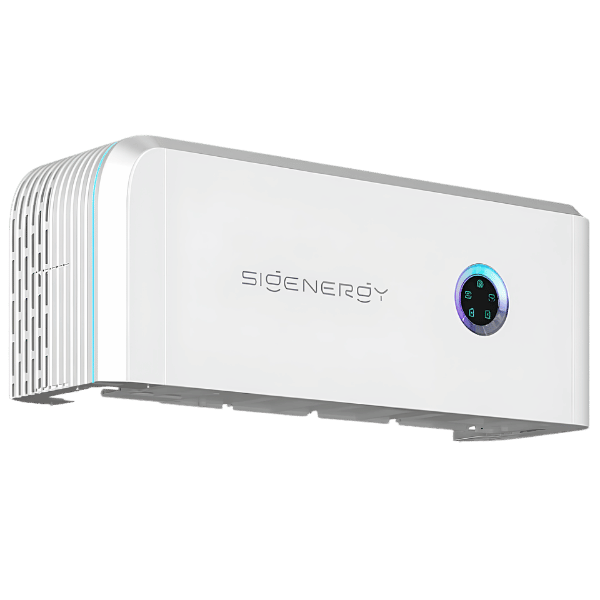
» Built-in surge arresters
» 12-year warranty
» Production preview application
» space for power optimizers
» reading the work of individual panels

SUNNY TRIPOWER 5.0 / 6.0 / 8.0 / 10.0
SMART ENERGY HYBRID
» Three-phase / DC-coupled
» Integrated battery-backup function
» Compatible with high-voltage batteries from leading manufacturers
» Full-scale professional support for solar power professionals
» Automated service thanks to SMA Smart Connected
» Warranty extension from 5 to 10 years – free of charge
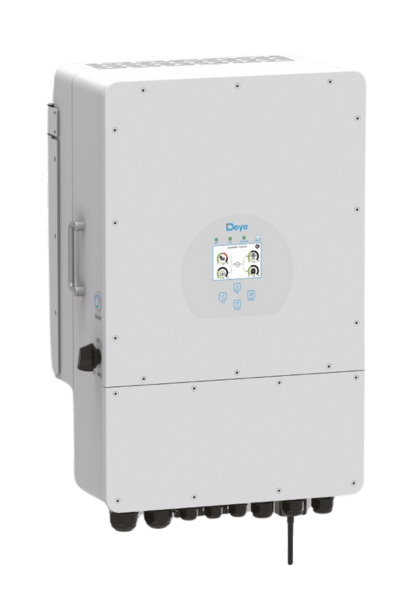
» display
» minimum 12-year warranty
» max. even up to 20 years of warranty
» reliable and proven manufacturer
» dedicated application
» optimization of energy consumption

» Display with readout of production
» 10-year warranty
» simple and reliable structure

» 100% unbalanced power, each phase; max. output power up to 50% of rated power
» DC and AC connection possible to upgrade existing solar system
» Max. 16 pcs parallel for on-grid and off-grid operation; support for multiple batteries in parallel
» Max. charge/discharge current 240A
» 48V low voltage battery, transformer isolation
» 6 battery charge/discharge periods
» Possibility to store energy from diesel generator
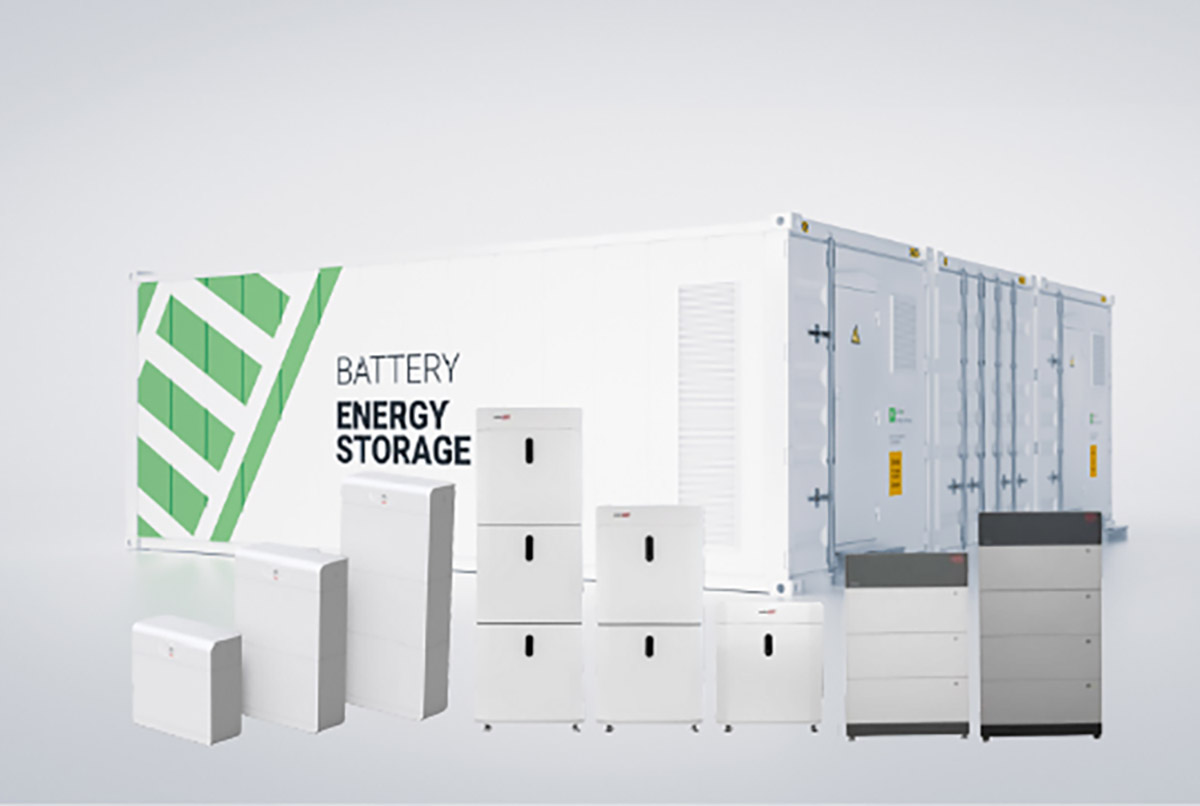
Use solar energy to the maximum

Your energy, always on. With our extended photovoltaic solutions – including flexible energy storage – you gain peace of mind, knowing your home or business stays powered, even when the grid doesn’t.
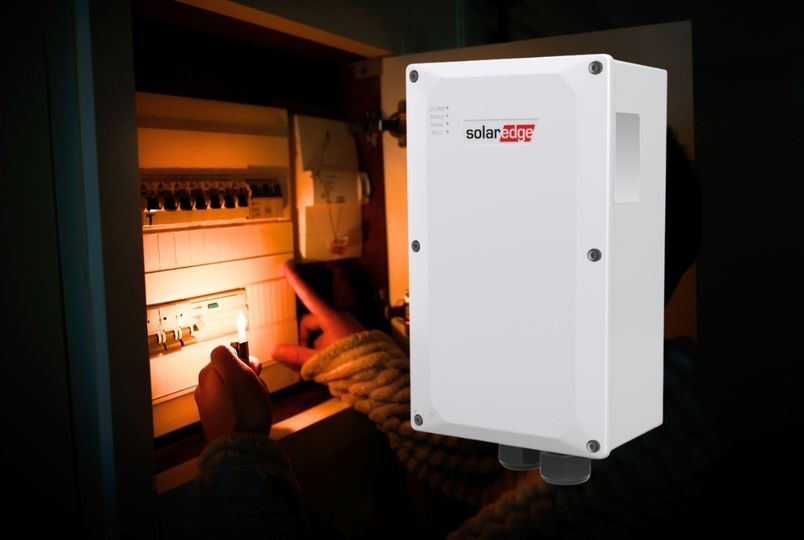
Protect your home or business from power outages with Voltmax emergency systems – a reliable power source in any situation.
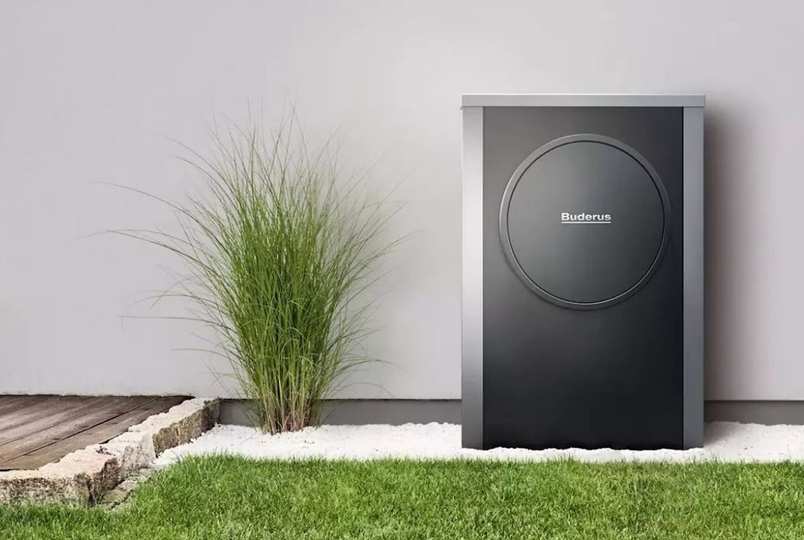
Smart energy starts here. Combine a heat pump with solar power to heat and cool your building efficiently – while cutting emissions and future-proofing your operations.
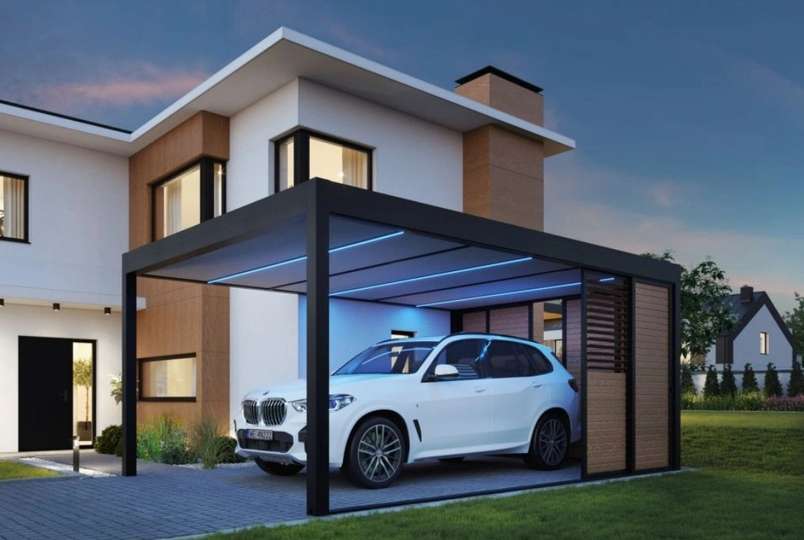
A photovoltaic carport is more than just a modern roof—it's your own personal power plant. It combines sun and rain protection for your car with clean energy production that you can consume, store, or use to charge your EV. It's the perfect solution for homes and businesses that are forward-thinking.
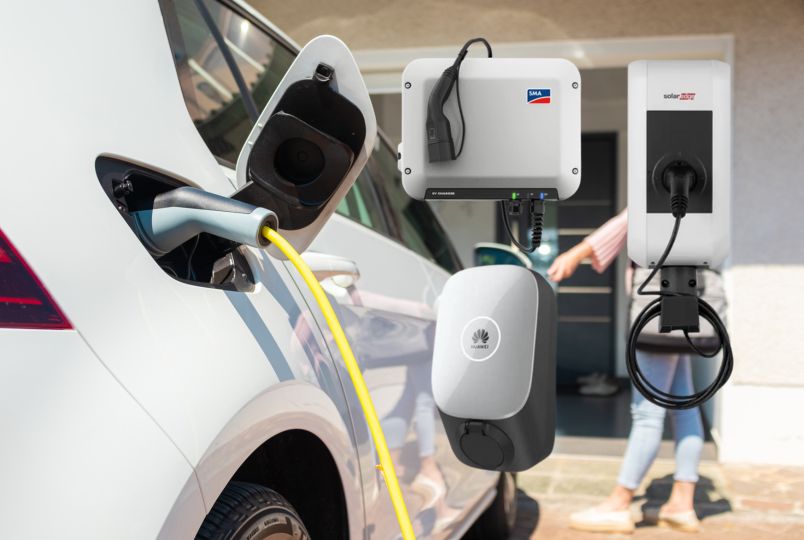
Whether you drive a private electric car or manage a growing EV fleet, your own charging station gives you complete control over your energy. You save money, reduce emissions, and charge more conveniently, faster, and cheaper every day. Smart charging? Now you decide.
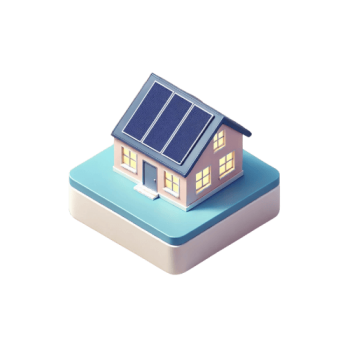
Photovoltaic energy is a renewable energy source that converts sunlight into electricity using solar panels. Solar panels contain photovoltaic cells that capture sunlight and generate direct current (DC) electricity. An inverter then converts this DC electricity into alternating current (AC), which powers your home or business.
The amount of electricity generated depends on panel efficiency, sunlight exposure, and geographic location. On average, a 1 kWp (kilowatt-peak) photovoltaic system in Poland can generate between 900 and 1,000 kWh annually.
A solar energy audit is an assessment of your property to determine the best solar panel installation based on your energy needs, roof orientation, shading, and available space. It ensures the system is tailored to your specific energy consumption patterns.
kWp (kilowatt-peak) refers to the maximum power output of a solar panel under optimal conditions, including direct sunlight, proper tilt angle, and ideal temperature.
kWh (kilowatt-hour) is a unit of energy measurement representing the electricity consumption of 1,000 watts over one hour. It is used by energy providers to calculate electricity usage and billing.
Yes. Installing solar panels can significantly reduce electricity bills and provide long-term savings. The return on investment (ROI) typically ranges from 5 to 10 years, depending on factors such as energy prices, system size, and available incentives.
Yes. Excess energy can be stored in battery storage systems or fed back into the electrical grid. Grid-connected systems can retrieve stored energy when needed, while off-grid systems require batteries for energy storage.
To determine the right system size, review your annual electricity consumption (found on your utility bills). A consultation with a solar provider can help you choose a system that matches your energy needs and budget.
On-grid systems: Connected to the electrical grid, allowing excess energy to be fed into the network.
Off-grid systems: Independent systems with battery storage, ideal for remote locations.
Hybrid systems: Combine on-grid and off-grid functionality for enhanced energy reliability.
Yes. Solar panels work in winter and cloudy weather, although efficiency is lower compared to sunny conditions. Snow accumulation may reduce energy production, but panels are designed to shed snow naturally.
Solar panels require minimal maintenance. Regular cleaning and periodic inspections ensure optimal efficiency. Professional maintenance checks help detect potential issues like shading, debris, or wiring faults.
Yes. Solar panels can be installed on various roofing materials, including metal, tile, and asphalt shingles. Ground-mounted systems are an alternative if roof installation is not feasible.
Yes, but you need approval from the property management or homeowners’ association. Shared solar systems or community solar programs may also be an option.
Yes. In Luxembourg, there are various financial incentives for installing solar panels, including tax deductions, subsidies, and feed-in tariffs. Homeowners and businesses may benefit from government programs supporting the transition to renewable energy. It is advisable to consult with a tax expert or relevant authorities for the most up-to-date information on eligibility and application procedures.
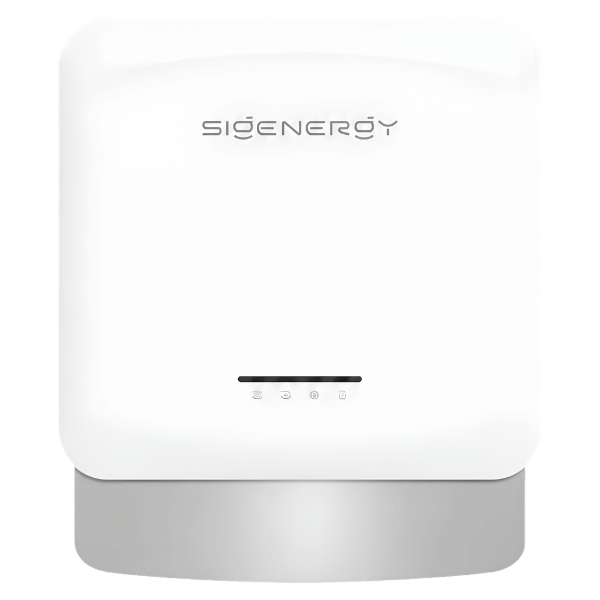
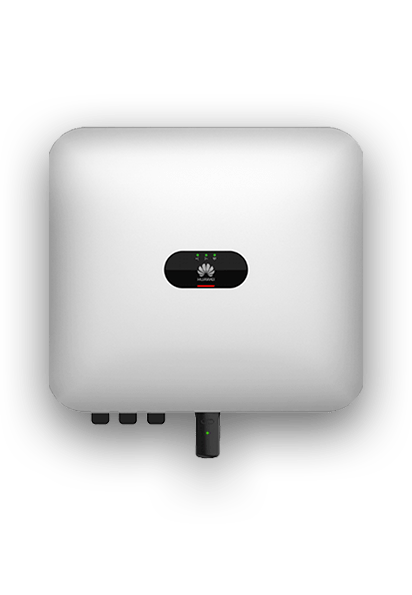
A solar inverter (or power inverter) converts the direct current (DC) generated by solar panels into alternating current (AC), which powers electrical appliances. It is a crucial component of any solar installation.
A traditional inverter converts energy from multiple solar panels at once, while microinverters are installed on each panel, improving efficiency, especially in shaded conditions or multi-directional panel installations.
Yes. In Luxembourg, surplus electricity generated by photovoltaic systems can be sold back to the grid through a feed-in tariff program. The compensation rates and conditions depend on government regulations and your energy provider. It is recommended to check with local authorities or energy suppliers for the latest details on feed-in tariffs and grid integration policies.
High-quality solar panels typically last 25 to 30 years, with a gradual efficiency decline of around 0.5% per year. Most manufacturers offer warranties covering performance over this period.
Most modern solar inverters come with monitoring apps or software that allow real-time tracking of energy production, consumption, and system efficiency.
Yes. Solar energy can be used to charge EVs with dedicated home EV chargers. The size of the photovoltaic system should match the vehicle’s annual energy consumption for maximum efficiency.
Yes. If your inverter supports additional capacity, you can add more solar panels later. Planning for future expansion during the initial installation can help minimize upgrade costs.
Yes. Ground-mounted solar systems are ideal when roof space is insufficient or unsuitable. They offer better tilt angle adjustment and easy maintenance access.
Excess energy can be stored in batteries, exported to the grid (for grid-tied systems), or utilized for additional energy needs like heating or electric vehicle charging.
Solar panels are designed to withstand harsh weather conditions, including heavy rain, snow, and strong winds. However, severe hailstorms or tornadoes may cause damage, so additional protective measures can be considered.
Yes. Many financial institutions offer loans and leasing options for solar installations, allowing homeowners to invest in solar energy with little or no upfront cost.
For more comprehensive details and information about photovoltaic installations, please do not hesitate to contact Voltmax for expert assistance.
You want to know more
Do you have questions about our offer?