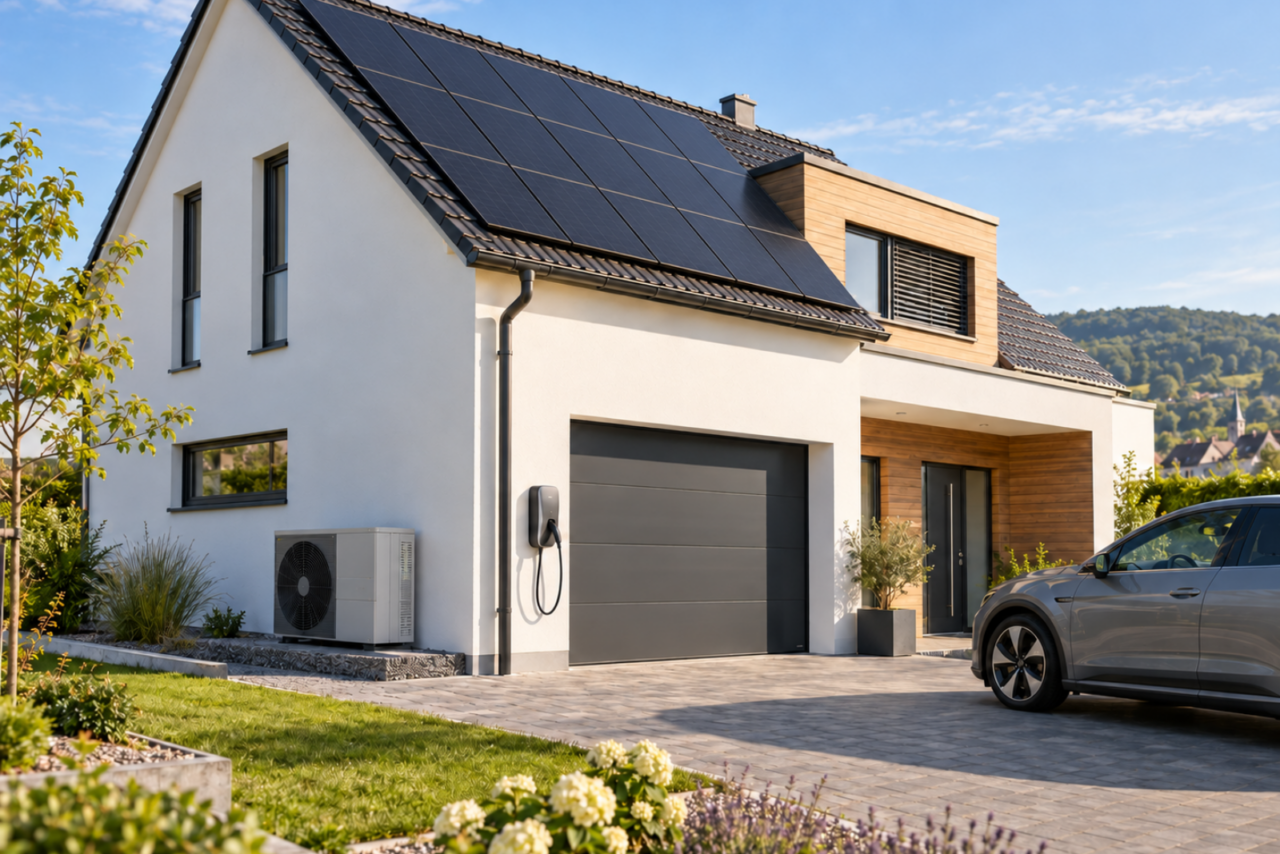

Modern homes increasingly use several independent systems. These may include a photovoltaic installation, an energy storage system, a heat pump and an electric vehicle charger. Each of these devices may have its own app, schedule and operating logic, but without centralised control they do not always work together in the most efficient way.
HEMS, or a Home Energy Management System, brings together information from these devices and helps coordinate their operation. It does not generate or store energy itself, but determines when energy can be used most effectively, where surplus photovoltaic energy should be directed and when selected appliances should operate. This makes it possible to use energy more intelligently and reduce unnecessary consumption from the grid.
Table of contents
ToggleWhat is HEMS and how does it work?
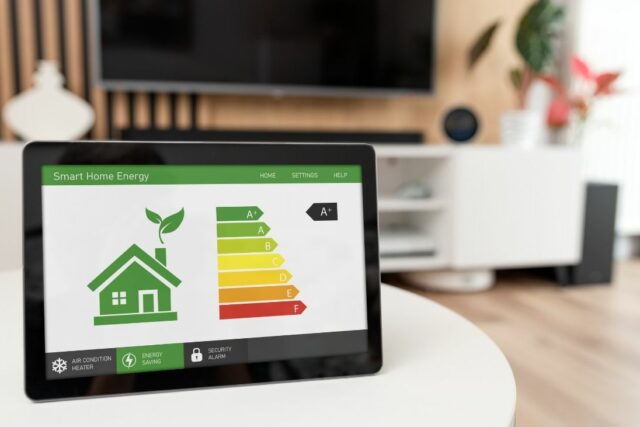
HEMS (Home Energy Management System) is a system designed to manage energy within the home. Its role is to collect information about how much energy the photovoltaic installation is producing, how much electricity the household is using and how individual devices are operating, and then use this data to improve the way the entire system is controlled.
It is important to distinguish between monitoring and management. An app that simply shows on a graph that the photovoltaic installation is currently producing 5 kW is not necessarily a HEMS. A true energy management system should not only monitor energy flows, but also use this information to control compatible devices or send them appropriate commands.
In practice, HEMS can, for example, decide whether surplus photovoltaic energy should be directed to an energy storage system, used to charge an electric car or used to operate a selected appliance at a more favourable time. This means that individual components of the installation no longer operate completely independently, but can work together according to defined priorities.

Which devices can HEMS manage?
The capabilities of a HEMS depend on which devices are compatible with it and which functions the particular system supports. Most commonly, it can coordinate the operation of a photovoltaic installation, an energy storage system, a heat pump and an electric vehicle charger.
Photovoltaics and HEMS
HEMS can monitor current energy production and determine whether the photovoltaic installation is generating a surplus at a given moment. Based on this information, the system can decide whether it is better to use the energy immediately in the home, store it in the battery or use it to charge an electric vehicle.
HEMS and energy storage
In the case of an energy storage system, HEMS can control when the battery is charged and discharged. For example, the battery can be charged using surplus photovoltaic energy during the day, while the stored energy can be used in the evening when household demand increases.
Heat pump managed by HEMS
The system can also work with a heat pump and, in certain situations, shift part of its operation to more favourable hours. This may mean, for example, making greater use of photovoltaic energy to heat the building or prepare domestic hot water.
Electric vehicle charger connected to HEMS
HEMS can also manage electric vehicle charging. Depending on the configuration, it can start charging when surplus energy is available, reduce the charger’s power or postpone the entire charging process until a later time. This means the car does not have to charge at exactly the same time as other household devices are already drawing significant power from the grid.
The greatest advantage of HEMS is therefore not simply controlling a single device, but the ability to coordinate several elements at the same time according to shared priorities.
How does HEMS change everyday energy use?
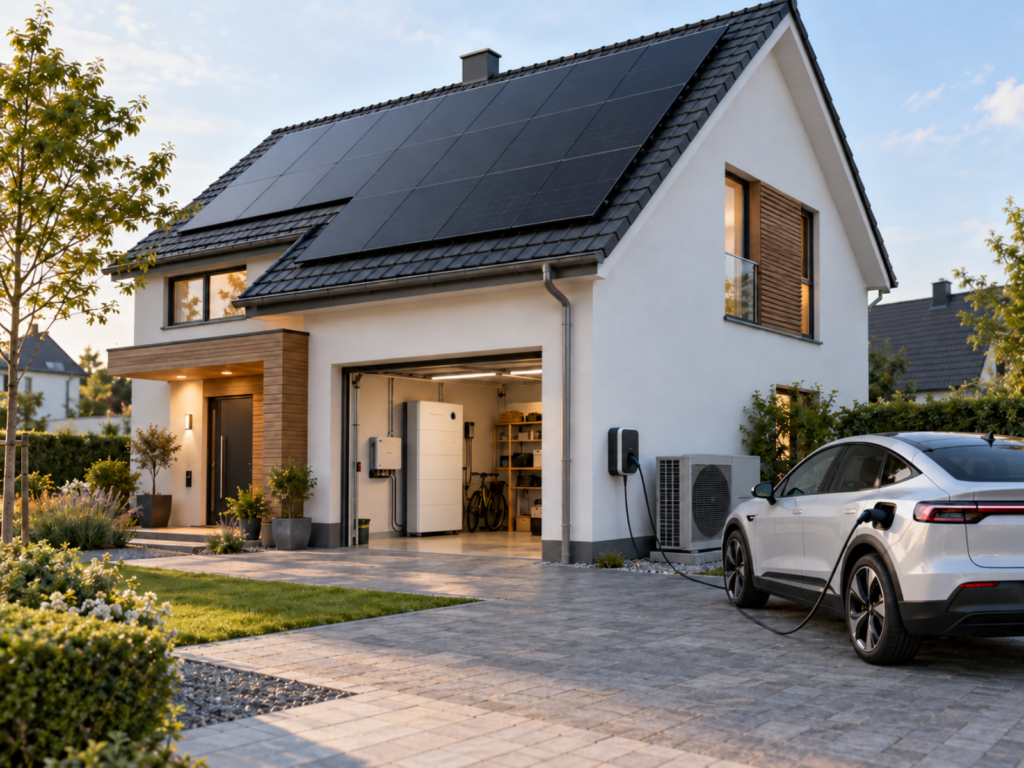
The biggest difference is that individual devices no longer operate completely independently. HEMS can continuously take into account energy production, current consumption and the operating status of connected devices, and use this information to distribute their operation more effectively throughout the day.
Home without HEMS | Home with HEMS |
Each device operates according to its own settings | Devices can operate according to shared priorities |
Surplus photovoltaic energy may be exported to the grid | Surplus energy can be directed, for example, to the battery or EV charger |
The car may start charging immediately after being connected | Charging can be postponed or its power limited |
Several high-power devices may operate at the same time | The system can reduce overlap between the operation of different devices |
The user manages several separate applications | Management can be centralised within a single system |
In practice, HEMS can therefore help make better use of energy generated on site, reduce unnecessary grid consumption and lower the risk of high power demand peaks. The benefit does not come simply from having the system installed, but from how well it is configured and which devices it can actually control.
HEMS, tariffs and reference power - where can savings come from?
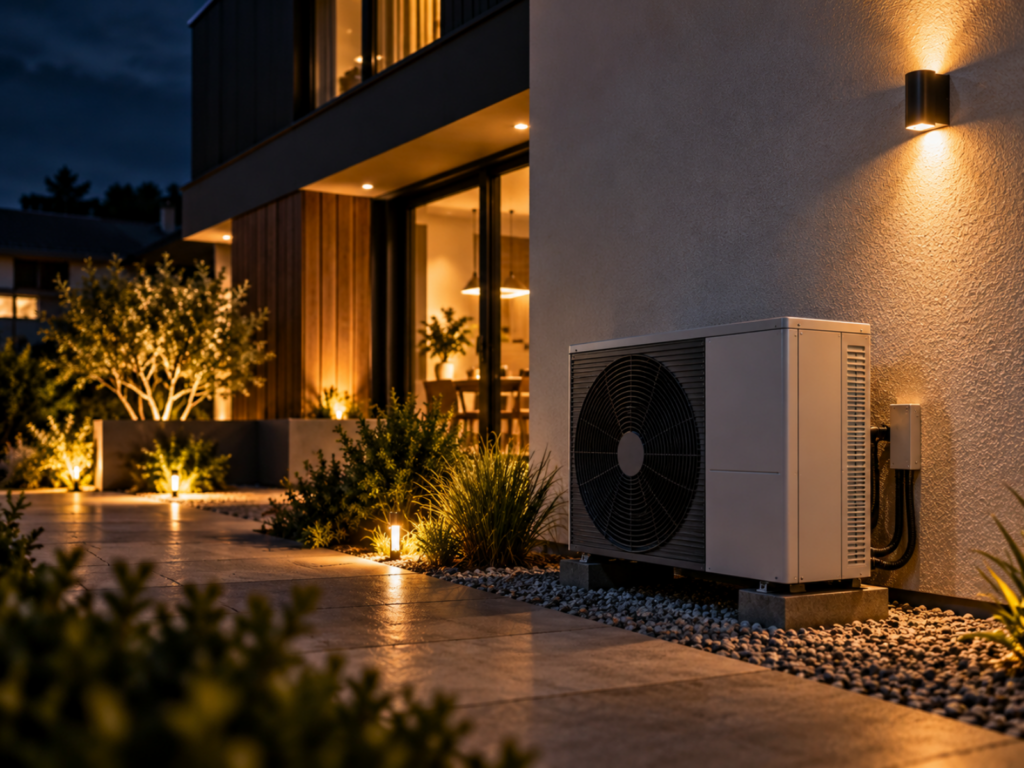
HEMS does not reduce energy bills simply by being installed. Savings can arise when the system genuinely helps make better use of self-generated energy, shifts consumption to more favourable hours and reduces situations in which several high-power devices operate simultaneously.
Higher self-consumption
If the home has a photovoltaic installation, HEMS can increase the amount of energy used on site. Instead of exporting surplus energy to the grid, the system can direct it to an energy storage system, EV charging or heat pump operation. The more self-generated energy is used within the home, the less electricity may need to be drawn from the grid later.
Better use of electricity tariffs
With tariffs where the price of electricity varies depending on the time of day, HEMS can shift part of the consumption to lower-cost periods. This may apply, for example, to EV charging, energy storage operation or domestic hot water preparation. This is, of course, only possible if the particular system supports such functions and has access to the relevant tariff data.
Reducing peak power demand
Reference power is also important in Luxembourg, which means HEMS can help reduce the simultaneous operation of high-power devices. Instead of running the heat pump, EV charger and other loads at the same time, the system can spread their operation over different periods or use an energy storage system to cover part of the demand. This can make grid consumption more balanced.
The actual benefits, however, depend on the consumption profile, the size of the photovoltaic installation, the devices in the home, the electricity tariff and the way the entire system is configured. HEMS provides tools for optimisation, but it does not guarantee one fixed level of savings.

Is a HEMS subsidy available in Luxembourg in 2026?
Yes. Under the Klimabonus 2026 programme, financial support is available for eligible energy management systems. The subsidy amounts to EUR 500. To qualify for this support, the invoice for the HEMS must be issued between 1 October 2026 and 31 December 2030.
The subsidy applies to systems capable of connecting and integrating at least two devices, such as a photovoltaic installation, energy storage system, heat pump, electric vehicle charger or controllable domestic hot water heater. If such devices are already connected to the installation when the HEMS is installed, they should be integrated into the system. The subsidy is worth treating as an additional benefit rather than the main reason for installing HEMS. What matters most is whether the system can genuinely work with the devices in the home and improve the way energy is used.
How can Voltmax design a Home Energy Management System?
When designing a HEMS, the most important thing is not to add yet another device, but to make the elements of the home energy system work together. Voltmax can analyse the photovoltaic installation, energy storage system, heat pump, EV charger and energy consumption profile, and then determine which devices should be integrated.
The next step is to define operating priorities, such as when to use surplus photovoltaic energy, when to charge the battery, how to manage EV charging and how to reduce simultaneous high power demand. This allows HEMS to operate as a central energy management system tailored to the actual needs of the home, rather than as a separate solution functioning alongside the other devices.