
La croissance rapide des installations solaires résidentielles et commerciales au Luxembourg a conduit de nombreux propriétaires immobiliers à se demander quel système offre la meilleure valeur à long terme : les panneaux solaires traditionnels installés sur les toits ou le BIPV, également connu sous le nom de photovoltaïque intégré au bâtiment. À première vue, les deux technologies semblent remplir le même objectif : une production d'électricité propre et décentralisée. Cependant, leur fonctionnement, leur intégration dans l'architecture et leur influence sur la valeur d'un bien immobilier sont très différents. Alors que les subventions publiques, la hausse des coûts de l'électricité et la construction axée sur la durabilité façonnent le marché national, le choix entre un système photovoltaïque sur le toit et un toit solaire complet n'a jamais été aussi important.
Table des matières
ToggleDifférences entre les systèmes photovoltaïques sur toiture et les systèmes photovoltaïques intégrés au bâtiment en termes de fonctionnalité et de conception
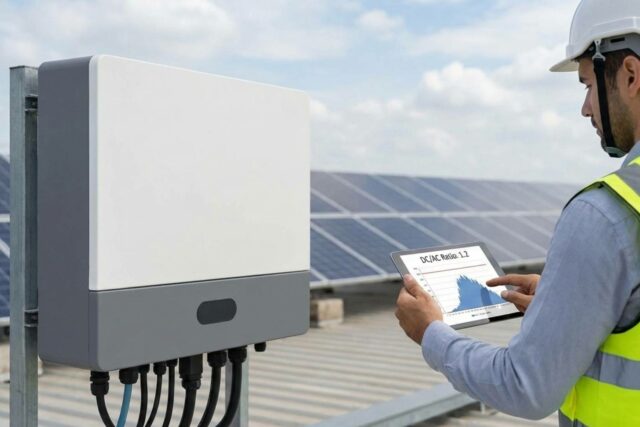
Les panneaux solaires traditionnels sont montés sur le toit à l'aide d'un système de fixation dédié. Cela permet de préserver le toit d'origine et crée une couche technologique visible. Cette méthode est bien connue des installateurs luxembourgeois, ce qui la rend efficace, prévisible et relativement peu coûteuse. La structure reste intacte et le système photovoltaïque peut être installé sans modifier l'enveloppe du bâtiment.
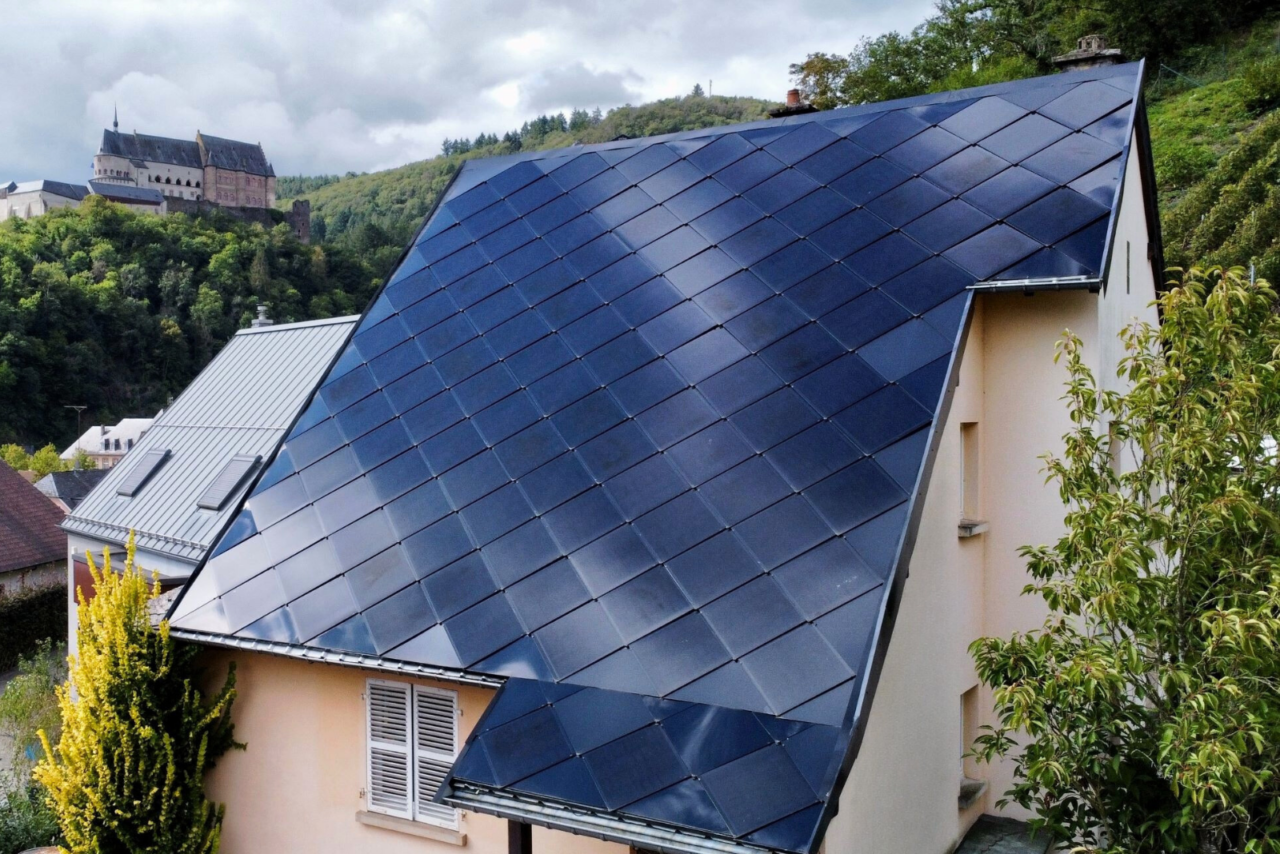
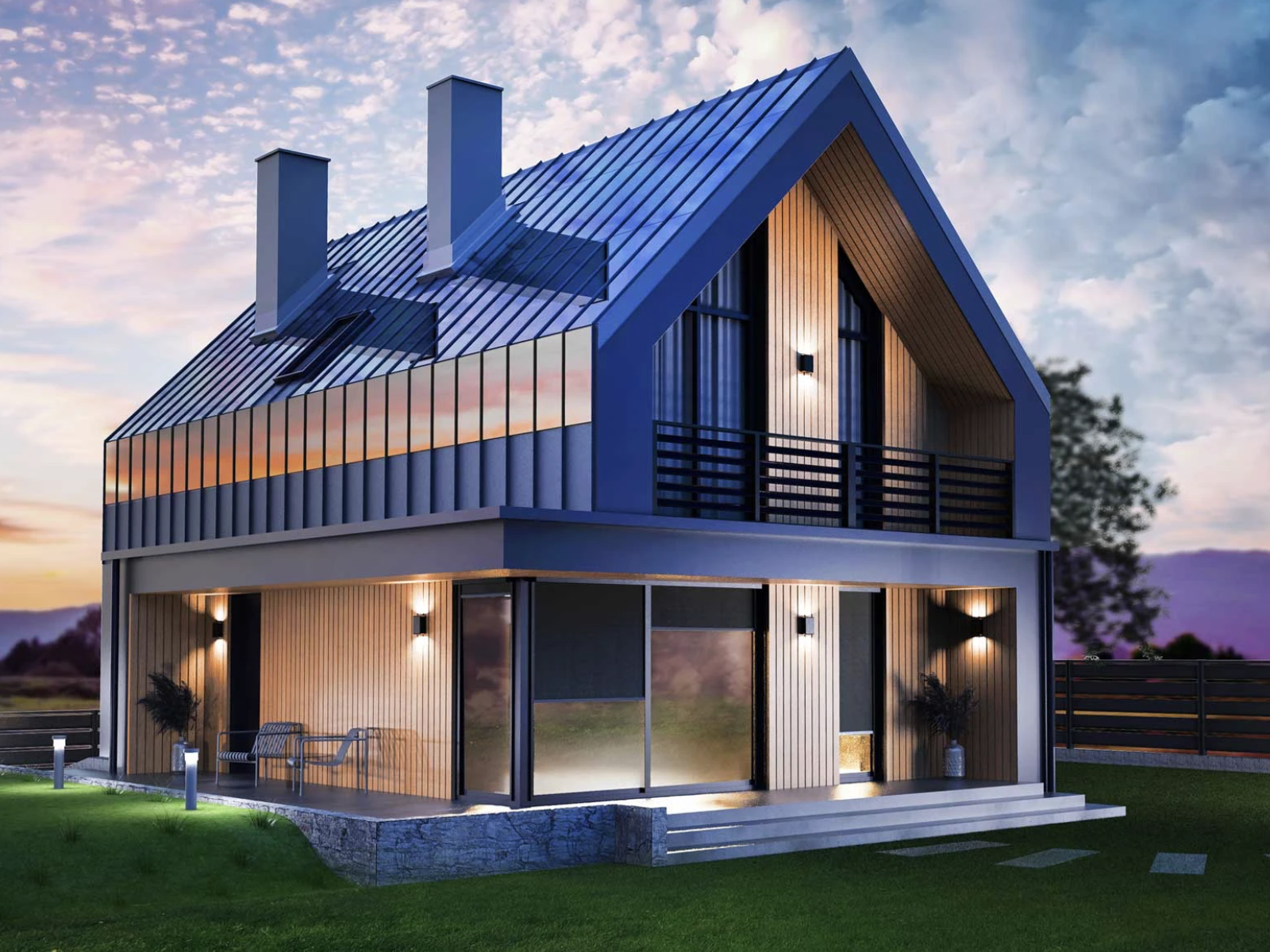
Le BIPV, quant à lui, transforme le bâtiment en un élément générateur d'électricité en intégrant des éléments photovoltaïques dans la structure elle-même. Un toit solaire utilisant des modules BIPV remplace les tuiles ou autres matériaux de revêtement, éliminant ainsi le besoin d'une toiture séparée. Au lieu d'ajouter une technologie énergétique à un bâtiment fini, la surface du bâtiment devient la technologie. Pour les architectes et les propriétaires immobiliers haut de gamme, ce concept apporte des avantages fonctionnels et esthétiques : des finitions lisses, une couleur uniforme et une identité moderne qui ne trahit pas visuellement la présence de l'énergie solaire.
Panneaux solaires traditionnels sur le toit comme couche supplémentaire
Les systèmes photovoltaïques traditionnels sur toiture sont installés au sommet d'une structure de toiture existante. En d'autres termes, la toiture reste inchangée et les modules photovoltaïques agissent comme une couche fonctionnelle supplémentaire. Les panneaux sont montés à l'aide de rails et de supports fixés à la structure de la toiture, ce qui permet à l'air de circuler sous les modules. Il en résulte une dissipation thermique relativement efficace, ce qui peut avoir un effet positif sur les performances électriques. D'un point de vue esthétique, cependant, les systèmes sur toiture sont clairement visibles et contrastent souvent avec le matériau de couverture d'origine. Ils sont donc généralement choisis en fonction de leur rendement énergétique et de leur rentabilité plutôt que de leur intégration architecturale.
Caractéristiques principales des systèmes photovoltaïques sur toiture :
- Installés au-dessus de la couverture existante
- Utilisent des rails et des supports de fixation fixés à la structure du toit
- Laissent les matériaux de couverture intacts
- Modules bien ventilés avec une bonne dissipation thermique
- Composants et méthodes d'installation hautement standardisés
- Aspect technique clairement visible
- Optimisés pour le rendement énergétique et la rentabilité
Photovoltaïque intégré au bâtiment dans le cadre du toit lui-même
Les systèmes photovoltaïques intégrés au bâtiment (BIPV), en revanche, remplacent les matériaux de couverture traditionnels et font partie intégrante de l'enveloppe du bâtiment. En d'autres termes, le système solaire fonctionne à la fois comme une couverture de toit et un générateur d'énergie. Les éléments BIPV sont conçus pour s'adapter à la forme, à la couleur et à la géométrie du toit, ce qui leur confère un aspect homogène et cohérent sur le plan architectural. Il n'est donc pas nécessaire d'installer des tuiles ou des panneaux séparés sous la surface solaire. Sur le plan fonctionnel, le BIPV contribue non seulement à la production d'électricité, mais aussi à la protection contre les intempéries et à l'esthétique du bâtiment. Cette solution est donc souvent choisie pour les projets où la cohérence du design, la planification à long terme et les composants multifonctionnels du bâtiment sont une priorité.
Principales caractéristiques des toitures solaires BIPV :
- Remplace les matériaux de toiture ou de façade conventionnels
- Combine protection contre les intempéries et production d'énergie dans un seul système
- Fait partie intégrante de l'enveloppe du bâtiment, et non un ajout
- Intégration visuelle harmonieuse avec la géométrie et la couleur du toit
- Pas de tuiles ou de panneaux séparés sous la surface solaire
- Besoin réduit de matériel de montage et de pénétrations dans le toit
- Accent mis sur la cohérence du design et la valeur architecturale à long terme
Dynamique des coûts et valeur à vie
D'un point de vue purement financier, les panneaux solaires traditionnels offrent toujours le retour sur investissement le plus rapide pour la plupart des maisons. Les modules et les procédures d'installation sont standardisés, la chaîne d'approvisionnement est mature et l'entretien est peu coûteux. Cela est particulièrement intéressant lorsque le toit existant est en bon état technique et ne nécessite pas de remplacement dans un avenir proche.
A Les toitures solaires BIPV au Luxembourg, quant à elles, impliquent un coût initial plus élevé, mais leur rentabilité change radicalement lorsqu'on les considère dans le cadre d'une rénovation ou d'une nouvelle construction. Au lieu de payer une fois pour les matériaux de toiture et une autre fois pour les modules photovoltaïques, le propriétaire investit une seule fois dans le BIPV et bénéficie des deux fonctions. De plus, les installations BIPV contribuent souvent à la valeur à long terme du bien immobilier grâce à leur esthétique supérieure et à leur image de pointe en matière de durabilité. Ces facteurs ont une grande importance sur un marché immobilier aussi concurrentiel et international que celui du Luxembourg.
Par conséquent, il est impossible de répondre à la question « quand un toit solaire est-il rentable ? » sans tenir compte du contexte global du projet. Pour les maisons neuves et les rénovations importantes, où les coûts de toiture sont déjà budgétés, le BIPV peut devenir compétitif en termes de coûts, voire plus économique sur la durée de vie du bâtiment.
Quand les panneaux solaires traditionnels sont plus économiques
Les panneaux solaires traditionnels installés sur le toit sont généralement plus économiques lorsque le toit existant est en bon état et ne nécessite pas de rénovation. Dans ce cas, le système photovoltaïque peut être ajouté sans interférer avec l'enveloppe du bâtiment, ce qui simplifie les travaux d'installation et rend les coûts prévisibles. En d'autres termes, les propriétaires ne paient que pour le système de production d'énergie, et non pour les composants de remplacement du toit. Par conséquent, l'investissement initial est généralement moins élevé que pour les solutions BIPV. Ainsi, les systèmes photovoltaïques sur toiture sont souvent privilégiés pour les rénovations où le rendement énergétique maximal, le délai de rentabilité rapide et l'efficacité budgétaire sont les principales préoccupations.
Quand un toit solaire avec BIPV peut être compétitif en termes de coûts
Une toiture solaire avec BIPV peut devenir compétitive en termes de coûts lorsqu'elle est installée dans le cadre d'une nouvelle construction ou d'une rénovation majeure de la toiture. Dans de tels cas, les matériaux de toiture conventionnels devraient de toute façon être achetés. En d'autres termes, une partie du coût du BIPV remplace efficacement les dépenses liées aux tuiles, aux membranes et à la main-d'œuvre associée. En conséquence, la différence de prix entre une toiture traditionnelle équipée de panneaux photovoltaïques et un toit solaire intégré est considérablement réduite. Ainsi, le BIPV est souvent justifié financièrement lorsque l'on tient compte de la valeur à long terme, de l'intégration architecturale et de l'utilisation multifonctionnelle des composants du bâtiment.
Critère | Panneaux solaires sur toiture | Toiture solaire BIPV |
Coût initial | Investissement initial moindre | Coût initial plus élevé, remplace partiellement la toiture |
Consommation d'énergie | Très élevée sur les toits simples et bien ventilés | Fortement dépendante de la conception, compétitive dans les configurations complexes |
Esthétique | Apparence technique visible | Intégration architecturale harmonieuse |
Particularité | Production d'électricité uniquement | Production d'énergie + fonction de toiture |
Entretien | Entretien simple, coûts de réparation réduits | Entretien plus spécialisé, moins de points d'usure structurelle |
Idéal pour | Toitures existantes en bon état | Nouvelles constructions ou rénovations majeures de toitures |
Influence du climat et de l'architecture sur les performances
Le climat tempéré du Luxembourg se caractérise par de nombreux jours nuageux et des variations saisonnières importantes. Les systèmes photovoltaïques intégrés au bâtiment (BIPV) et les systèmes photovoltaïques sur toiture sont conçus pour produire efficacement dans ces conditions, et les technologies modernes des modules offrent une production robuste même en cas de lumière diffuse. Cependant, la géométrie architecturale joue souvent un rôle décisif. Un simple toit à pignon avec une pente et une orientation idéales peut fortement favoriser les panneaux solaires traditionnels, car l'espace disponible peut être utilisé efficacement avec un minimum de complexité.
En revanche, les bâtiments dont la structure du toit est fragmentée, qui présentent des angles, des lucarnes, des chiens-assis ou qui sont ombragés par des propriétés voisines peuvent réduire l'efficacité des panneaux photovoltaïques montés sur des supports. Dans ce cas, le BIPV présente un avantage stratégique : il permet aux architectes de concevoir des surfaces de production sur plusieurs élévations et angles sans perturber l'aspect visuel du bâtiment. Un toit solaire BIPV peut capter une exposition supplémentaire qui, autrement, resterait inutilisée sur une ligne de toiture très fréquentée ou non conventionnelle.
Réglementations, autorisations et intégration urbaine au Luxembourg
Au Luxembourg, les installations photovoltaïques bénéficient d'un soutien actif dans le cadre de la stratégie nationale en matière d'énergie et de climat. Cependant, les exigences en matière d'autorisation dépendent fortement de l'impact du système sur l'enveloppe du bâtiment et son aspect visuel. En d'autres termes, plus une installation photovoltaïque modifie la structure du toit, les matériaux ou l'esthétique de la façade donnant sur la rue, plus l'examen par les autorités locales est minutieux. Par conséquent, la conformité réglementaire est définie non seulement au niveau national, mais aussi par les règles d'urbanisme communales (PAG / PAP) et le statut de protection des bâtiments.
Une première étape essentielle consiste toujours à vérifier si le bâtiment est situé dans une zone protégée, telle qu'un secteur sauvegardé, un centre historique, ou si le bâtiment lui-même est classé monument historique. un centre historique, ou si le bâtiment lui-même est classé comme structure protégée (monument classé). Dans ce cas, des contraintes architecturales supplémentaires s'appliquent, quelle que soit la technologie photovoltaïque utilisée.
Homologations standard pour les panneaux solaires sur toiture
Les panneaux solaires installés sur les toits sont généralement soumis au régime d'autorisation le plus simple au Luxembourg, en particulier pour les maisons individuelles situées en dehors des zones protégées. Dans la plupart des communes, un système peut être installé sur la base d'une déclaration (déclaration de travaux) plutôt que d'un permis de construire complet, à condition que certaines conditions soient remplies :
- Les panneaux suivent la pente et l'orientation existantes du toit.
- Aucun changement significatif n'est apporté à la hauteur ou à la silhouette du bâtiment.
- L'installation ne dépasse pas le contour du toit.
- Des finitions standard non réfléchissantes sont utilisées pour les modules.
Étant donné que les installations photovoltaïques sur toiture sont considérées comme un ajout technique réversible, elles ne nécessitent généralement pas de projet architectural complet. Il est important de noter qu'il n'existe pas de seuil national de puissance qui déclenche automatiquement un permis de construire ; le facteur décisif est l'impact structurel et visuel plutôt que la puissance crête (kWc). Par conséquent, les délais d'approbation sont généralement courts, ce qui fait des installations photovoltaïques sur toiture l'option la plus rapide et la moins risquée d'un point de vue réglementaire.
Examen de la conception et planification des toitures solaires
Les toitures solaires basées sur le BIPV sont évaluées de manière plus approfondie, car elles remplacent des éléments de construction visibles tels que les tuiles ou le revêtement et influencent donc directement l'identité architecturale du bâtiment. Dans la pratique, cela signifie souvent qu'un permis de construire complet (autorisation de bâtir) est nécessaire, en particulier pour les nouvelles constructions ou les rénovations de toitures.
Les autorités locales peuvent évaluer :
- La géométrie et les angles du toit par rapport aux bâtiments environnants
- La couleur, la texture et la réflectivité des modules BIPV
- L'alignement avec les styles architecturaux locaux définis dans le PAG ou le PAP
- L'intégration visuelle dans les zones donnant sur la rue ou sensibles au patrimoine
Dans les zones protégées, les autorités peuvent exiger des plans détaillés, des échantillons de matériaux ou une justification architecturale démontrant que la toiture solaire respecte le caractère du quartier. Il est donc essentiel de coordonner dès le début le projet avec les architectes, les installateurs et les services d'urbanisme communaux.
Cependant, lorsqu'elles sont bien conçues, les solutions BIPV sont de plus en plus appréciées par les autorités luxembourgeoises. Leur apparence uniforme et leur encombrement visuel réduit s'intègrent souvent plus harmonieusement que les systèmes à panneaux en relief, en particulier dans les contextes urbains denses ou patrimoniaux, combinant ainsi les objectifs en matière d'énergies renouvelables avec une esthétique urbaine contrôlée et cohérente.
Entretien et expérience à long terme en tant que propriétaire
La maintenance à long terme est l'un des facteurs clés pris en compte par les propriétaires lorsqu'ils choisissent entre des systèmes photovoltaïques sur toiture et des systèmes BIPV. Les panneaux solaires traditionnels bénéficient d'une standardisation élevée et d'une grande disponibilité des installateurs, ce qui facilite leur entretien. Les panneaux individuels peuvent généralement être remplacés sans affecter le toit lui-même. Par conséquent, les interventions de réparation sont généralement plus rapides et, en cas de défaillance d'un module, les coûts de maintenance sont en moyenne 20 à 30 % inférieurs à ceux des solutions intégrées, principalement en raison d'un accès plus simple et de la disponibilité immédiate des pièces de rechange.
Les systèmes BIPV, en revanche, peuvent nécessiter des procédures de remplacement spécialisées et une coordination plus étroite avec le fabricant ou l'installateur d'origine. En d'autres termes, un module endommagé peut entraîner des délais plus longs et des coûts d'intervention plus élevés. Par conséquent, les réparations ponctuelles peuvent être plus coûteuses. Cependant, le BIPV modifie l'expérience des propriétaires à long terme. Comme les modules BIPV servent à la fois de matériau de couverture et de composants générateurs d'électricité, le système élimine les pénétrations dans le toit, les rails de montage et le câblage externe qui se détériorent généralement avec le temps. Par conséquent, les problèmes tels que les infiltrations d'eau, la corrosion ou la fatigue mécanique sont moins susceptibles de se produire.
Le choix entre un système photovoltaïque sur toiture et un système BIPV revient en fin de compte à trouver un compromis entre la flexibilité de service et l'intégration structurelle. Avec un système photovoltaïque sur toiture, le propriétaire bénéficie d'un accès rapide, de coûts de réparation réduits et d'un remplacement facile des composants, mais il doit accepter un nombre plus élevé de points de fixation, de pénétrations et d'éléments exposés qui peuvent nécessiter une attention particulière au fil du temps. Avec le BIPV, le propriétaire échange la simplicité d'entretien à court terme contre une consolidation à long terme : moins d'interfaces physiques, une enveloppe de bâtiment plus propre et un risque réduit d'usure progressive, au prix d'interventions de réparation individuelles plus spécialisées et potentiellement plus lentes.
La question de la maintenance devient donc un compromis stratégique. Les installations photovoltaïques sur toiture offrent simplicité, rapidité et coûts de réparation à court terme réduits, tandis que les installations BIPV offrent intégration, réduction de l'usure structurelle et potentiellement moins d'interventions sur plusieurs décennies. En d'autres termes, la différence ne réside pas seulement dans les opérations de maintenance, mais aussi dans la façon dont le bâtiment vieillit avec le système énergétique.
Alors, quand un toit solaire est-il rentable ?
En résumé, un toit solaire est rentable lorsqu'il répond aux besoins généraux du projet. Il n'y a pas de gagnant universel entre les panneaux photovoltaïques sur toiture et les panneaux BIPV. Le choix approprié dépend du calendrier, de la structure budgétaire, des priorités architecturales et de la stratégie de propriété à long terme. Si l'objectif est une production d'énergie rapide et rentable sur un toit existant, les panneaux photovoltaïques traditionnels restent l'option logique. Si, toutefois, l'énergie solaire fait partie d'une nouvelle construction, d'une rénovation majeure ou d'un investissement axé sur le design, un toit solaire BIPV peut offrir une valeur comparable sur toute sa durée de vie tout en apportant des avantages architecturaux et fonctionnels supplémentaires.
Critère | Panneaux solaires sur toiture | Toiture solaire BIPV |
Coût initial | Investissement initial moindre | Coût initial plus élevé, remplace partiellement la toiture |
Complexité réglementaire | Approbations simplifiées dans la plupart des communes | Examen plus détaillé de la conception et de la planification |
Type et pente du toit | Idéal pour les toits simples et de géométrie standard | Flexible pour les formes complexes et les toits à angles multiples |
Bâtiment existant ou neuf | Idéal pour les toitures existantes en bon état | Idéal pour les nouvelles constructions ou les rénovations complètes de toiture |
Valeur à long terme | Retour sur investissement plus rapide, optimisation du ROI | Valeur du cycle de vie et perception de la propriété renforcées |
Esthétique | Apparence technique visible | Intégration architecturale harmonieuse |
En fin de compte, la question n'est pas de savoir si le BIPV ou le photovoltaïque sur toiture est meilleur, mais quelle solution correspond le mieux à la fonction, à l'apparence et à la durée de vie prévues du bâtiment. En d'autres termes, les toitures solaires ont du sens lorsque l'énergie, l'architecture et la vision à long terme sont considérées comme une décision intégrée plutôt que comme des investissements distincts.
FAQ - BIPV vs toitures solaires sur toiture au Luxembourg
Qu'est-ce que le BIPV et en quoi diffère-t-il des panneaux solaires classiques ?
Les systèmes BIPV (Building Integrated Photovoltaics) sont des éléments solaires intégrés directement dans la structure d'un bâtiment, comme le toit ou la façade. Contrairement aux panneaux solaires classiques, qui sont montés sur un toit existant en tant que complément, les systèmes BIPV remplacent les matériaux de construction conventionnels tels que les tuiles ou les revêtements. En d'autres termes, l'enveloppe du bâtiment elle-même devient la surface génératrice d'énergie, combinant fonction architecturale et production d'électricité dans un système intégré.
Un toit solaire est-il moins efficace que des panneaux solaires installés sur le toit ?
Un toit solaire n'est pas intrinsèquement moins efficace. Les panneaux traditionnels installés sur le toit peuvent atteindre des performances maximales légèrement supérieures grâce à une meilleure ventilation arrière, mais la différence dans les conditions réelles est souvent modeste. Dans les bâtiments présentant des formes de toit complexes, des lucarnes ou des contraintes architecturales, le BIPV peut utiliser les surfaces de manière plus efficace et offrir un rendement global comparable, voire supérieur dans certains cas. Par conséquent, l'efficacité dépend davantage de la conception et de l'orientation du toit que de la technologie seule.
Quand un toit solaire est-il plus avantageux que des panneaux solaires traditionnels ?
Un toit solaire mérite d'être envisagé lorsque l'installation solaire fait partie d'une nouvelle construction ou d'une rénovation majeure de la toiture. Dans ce cas, une partie de l'investissement dans le BIPV remplace les matériaux de couverture qui auraient de toute façon été achetés. En d'autres termes, la comparaison passe de « solaire vs toit solaire » à « toit + PV vs toit solaire intégré ». Par conséquent, le BIPV devient intéressant lorsque la valeur à long terme, l'intégration architecturale et la cohérence du design sont des priorités clés.
Les toitures solaires BIPV sont-elles plus coûteuses à installer ?
Oui, le coût initial des systèmes BIPV est généralement plus élevé que celui des systèmes photovoltaïques traditionnels installés sur les toits. Cependant, cela ne reflète pas toute la réalité. Étant donné que les systèmes BIPV remplacent les tuiles ou le revêtement des toits, la différence de coût net diminue dans les projets de construction et de rénovation. Sur la durée de vie du bâtiment, les avantages tels que l'esthétique, la durabilité et l'appréciation potentielle de la valeur immobilière peuvent compenser l'investissement initial plus élevé.
Puis-je installer un toit solaire BIPV sur un bâtiment existant ?
Techniquement, oui, mais cela n'est généralement possible que si le toit doit déjà être remplacé. La modernisation d'un système BIPV implique le retrait des matériaux de couverture existants et la refonte de l'enveloppe du bâtiment, ce qui augmente la complexité et le coût. Par conséquent, les panneaux solaires traditionnels installés sur le toit restent la solution privilégiée pour les rénovations standard, tandis que les systèmes BIPV sont mieux adaptés aux nouvelles constructions ou aux rénovations complètes prévues.