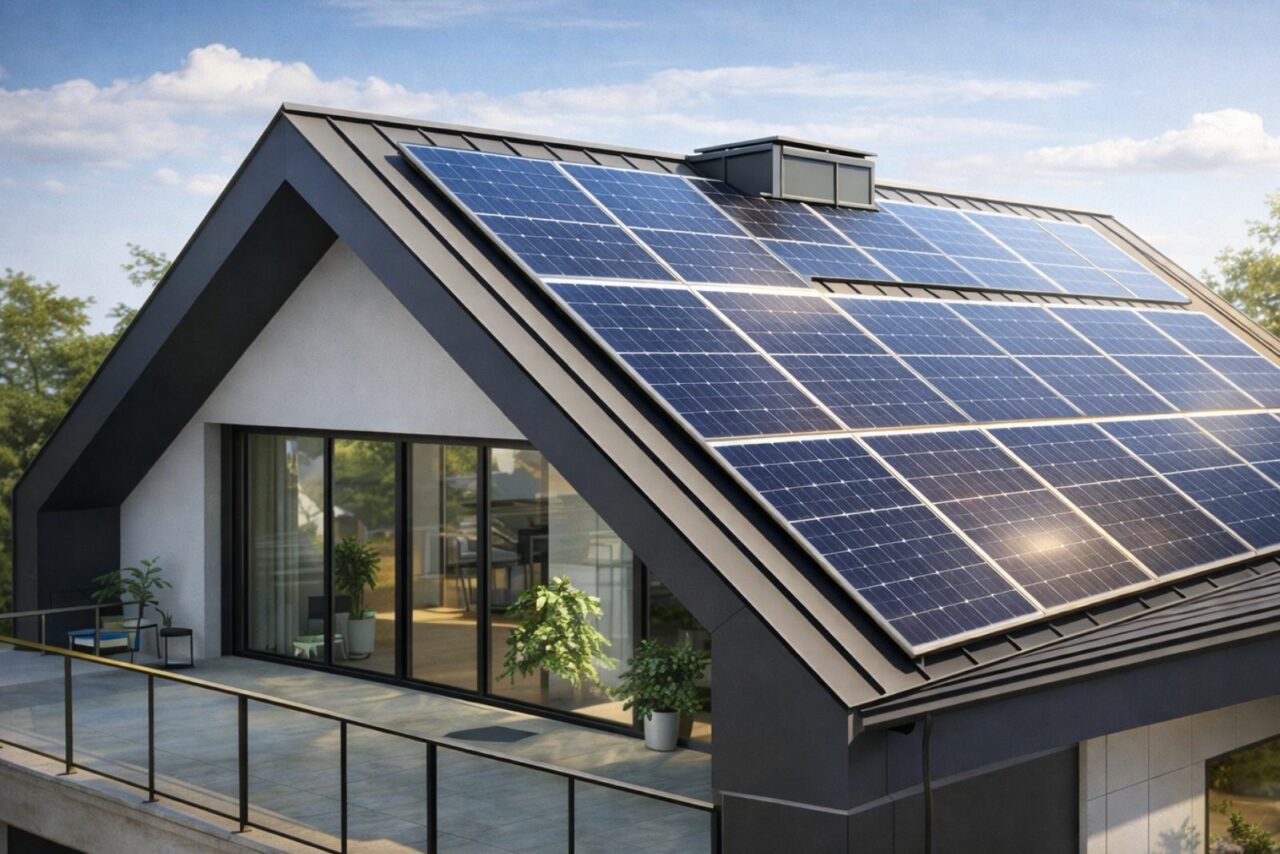

Les installations solaires sont conçues pour transformer la lumière du soleil en électricité utilisable, mais les performances d'un système photovoltaïque ne dépendent pas uniquement des panneaux qui collectent l'énergie solaire. L'onduleur joue un rôle clé en convertissant le courant continu en courant alternatif utilisé par les ménages et les entreprises. Cependant, il arrive parfois qu'un onduleur ne puisse pas convertir toute l'énergie produite par les panneaux à un moment donné. Cette situation est connue sous le nom de « clipping » de l'onduleur solaire, et bien qu'elle semble être à éviter, elle n'est pas toujours négative. Dans la conception des systèmes solaires modernes, le clipping de l'onduleur est non seulement prévu, mais souvent intégré intentionnellement dans le système. Lorsqu'il est appliqué correctement, il devient un choix stratégique plutôt qu'un problème de performance.
Table des matières
ToggleQu'est-ce que le clipping d'un onduleur solaire ?
Le clipping de l'onduleur solaire se produit lorsqu'un générateur photovoltaïque produit plus d'énergie CC que l'onduleur ne peut convertir en CA à ce moment-là. Chaque onduleur a une puissance maximale de sortie CA fixe, et dès que le générateur photovoltaïque dépasse cette limite, l'effet de clipping de l'onduleur solaire se produit : l'onduleur réduit automatiquement la puissance qu'il fournit. Au lieu de traiter la totalité de l'énergie CC disponible, il ne fournit que la puissance autorisée par sa puissance nominale, tandis que l'excédent est perdu sous forme de pertes de clipping de l'onduleur.
À première vue, cela peut sembler être un défaut de conception. En réalité, les panneaux solaires n'atteignent leur puissance maximale théorique que pendant de brèves périodes d'ensoleillement intense. La plupart de l'année, la production réelle reste bien en deçà du maximum. C'est pourquoi autoriser un léger écrêtage pendant les heures de pointe peut être non seulement acceptable, mais aussi stratégique sur le plan économique, en particulier lorsque le système global est conçu pour maximiser le rendement énergétique annuel plutôt que de rechercher quelques moments parfaits en plein été.
Vous aimerez peut-être aussi : Hybrid inverters – advantages and disadvantages
Quand l'écrêtage de l'onduleur se produit-il généralement ?
- Pendant les heures les plus ensoleillées des journées claires, lorsque la puissance CC dépasse brièvement la puissance CA nominale de l'onduleur.
- Dans les systèmes présentant des rapports CC/CA plus élevés ou un sous-dimensionnement intentionnel de l'onduleur.
- Pendant les saisons plus fraîches ou les matins/après-midis, lorsque l'irradiance est forte et que le rendement des modules est élevé.
Que fait exactement l'onduleur ?
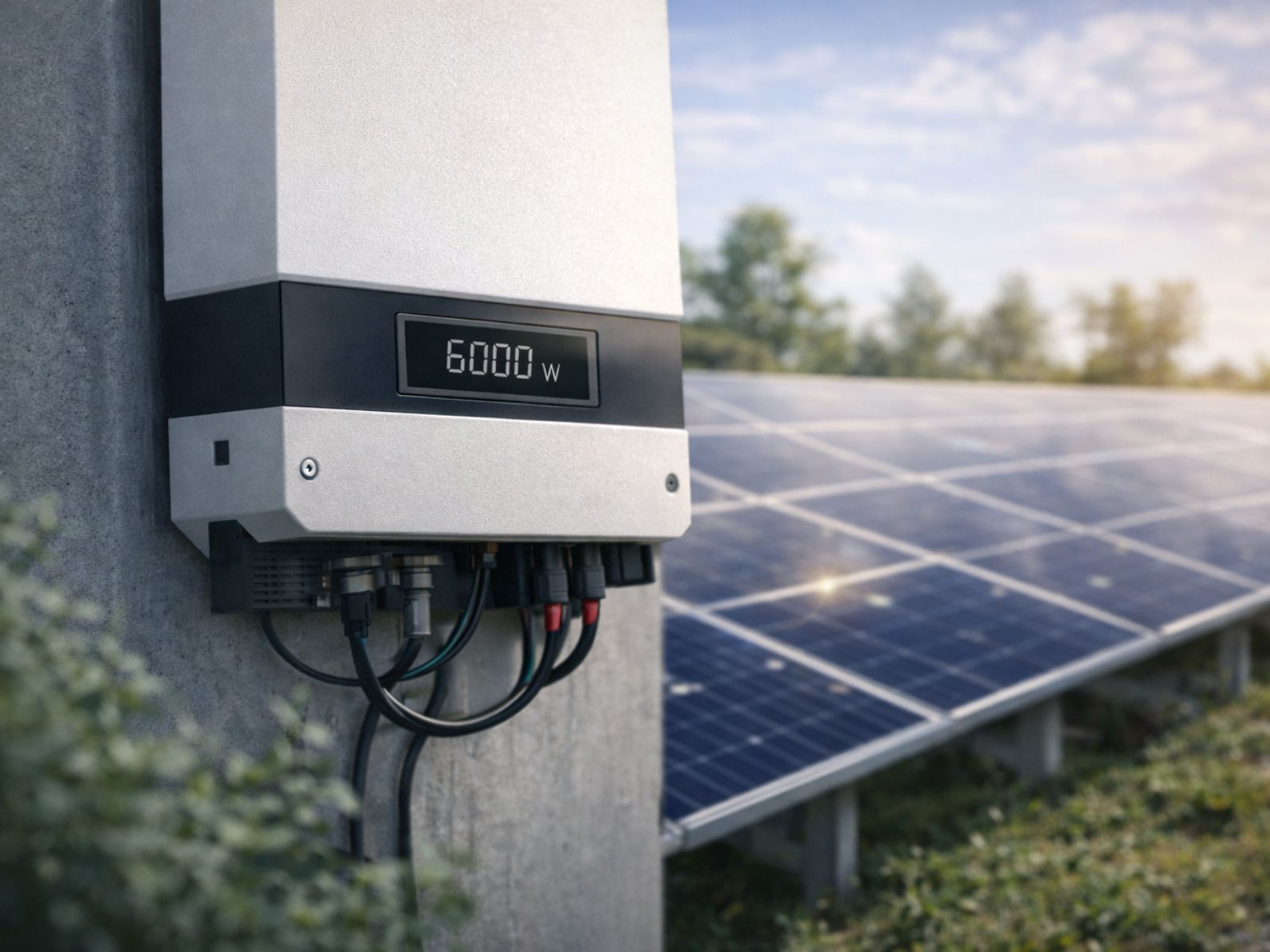
- L'onduleur limite simplement sa puissance de sortie à sa valeur maximale nominale.
- Il ne surchauffe pas, ne se dégrade pas et ne s'endommage pas.
- Il continue à fonctionner en toute sécurité tout en rejetant uniquement l'excès d'énergie CC
Que peut-on voir dans un logiciel de surveillance ?
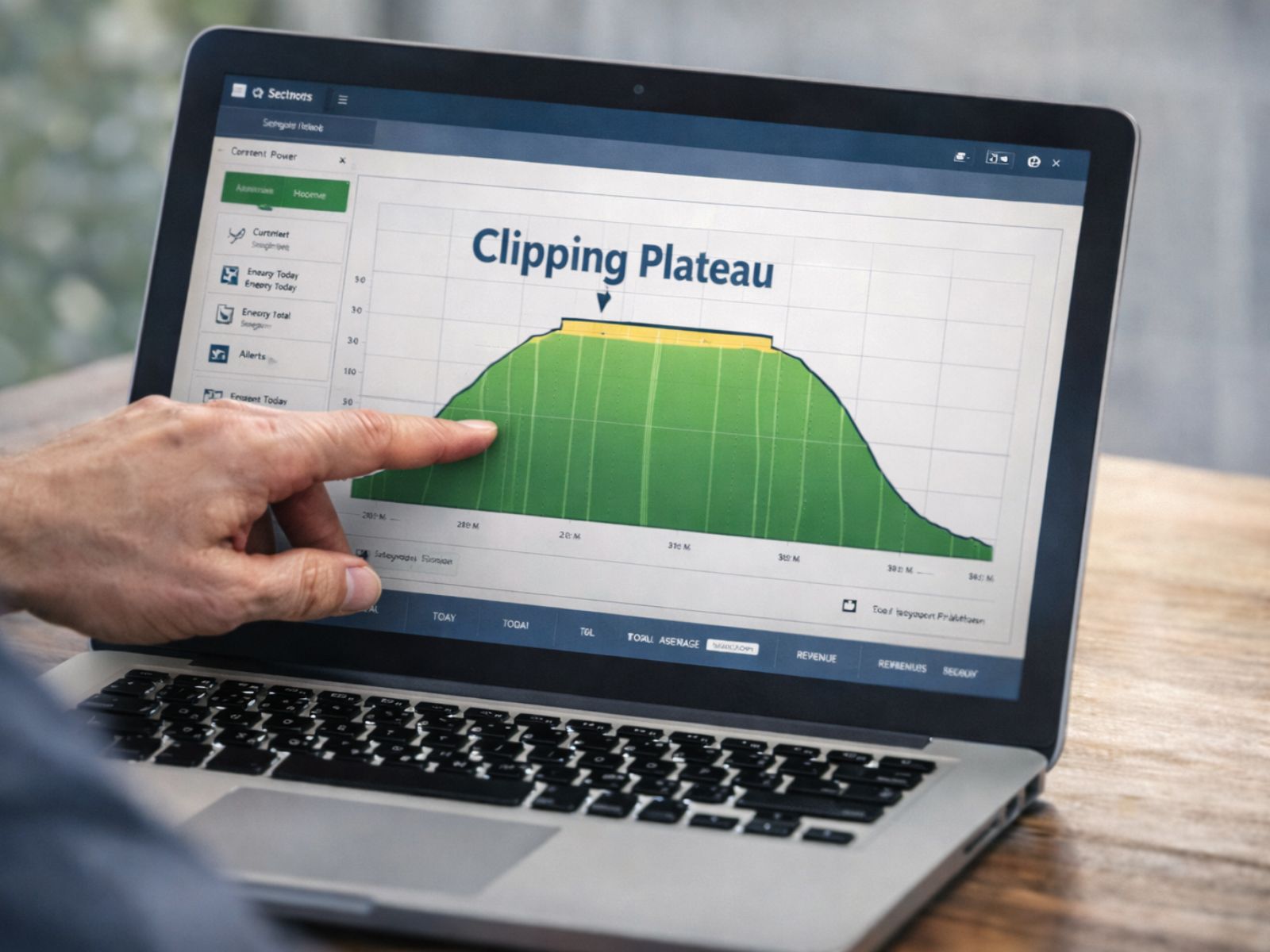
- Un « plateau » aplati au sommet de la courbe de puissance.
- Lissage soudain de ce qui serait autrement un pic de production naturel.
- Puissance de sortie constante de l'onduleur à sa limite CA pendant les événements d'écrêtage.
Ce que le clipping de l'onduleur ne signifie pas :
- Cela n'indique pas un dysfonctionnement de l'onduleur.
- Cela ne réduit pas la durée de vie du système.
- Cela n'endommage pas les modules photovoltaïques ni la connexion au réseau.
À quoi ressemble le clipping sur une courbe de production solaire ?
Sur un graphique de production quotidienne type, la production solaire forme un arc régulier qui augmente le matin, atteint son maximum vers midi et diminue l'après-midi. Lorsque l'onduleur écrête la production, le sommet de cet arc cesse d'augmenter et devient un plateau plat. Ce segment plat représente la limite maximale de production CA de l'onduleur, même si le générateur photovoltaïque est capable de produire plus d'énergie CC à ce moment-là.
Dans une courbe normale, le pic de midi forme une parabole arrondie naturelle. Sous l'effet de l'écrêtage de l'onduleur solaire, ce pic arrondi devient une ligne horizontale nette, indiquant clairement que l'onduleur a atteint sa puissance nominale CA. La différence entre la courbe naturelle et le plateau écrêté permet d'évaluer facilement la fréquence de l'écrêtage et de déterminer si son ampleur correspond à la conception prévue du système.
Pertes dues à l'écrêtage de l'onduleur par rapport aux pertes normales du système
Les pertes dues à l'écrêtage de l'onduleur sont fondamentalement différentes des pertes typiques qui se produisent dans toute installation solaire. Les pertes quotidiennes du système, telles que les baisses de rendement liées à la chaleur, les salissures mineures, l'ombrage partiel ou les limites de conversion du courant continu en courant alternatif, sont réparties sur toute la journée et fluctuent en fonction des conditions environnementales.
En revanche, le clipping de l'onduleur solaire n'apparaît que lorsque la production CC dépasse la puissance CA maximale de l'onduleur. Il est prévisible, souvent intégré intentionnellement dans le système, et limité à de courtes périodes de forte irradiation. De ce fait, un faible niveau de clipping n'indique pas une mauvaise performance du système. Au contraire, il reflète souvent un choix de conception délibéré qui équilibre le coût, l'efficacité et le retour sur investissement à long terme.
Comment les rapports CC/CA affectent l'écrêtage des onduleurs
Pour comprendre quand se produit le clipping de l'onduleur et pourquoi il peut parfois être avantageux, il faut examiner de près les rapports entre le courant continu et le courant alternatif. La valeur du courant continu représente la capacité de production totale du générateur solaire, tandis que la valeur du courant alternatif décrit la puissance maximale de l'onduleur. Lorsque la puissance CC disponible à partir des panneaux est nettement supérieure à la capacité CA de l'onduleur, l'écrêtage de l'onduleur solaire devient plus fréquent car l'équipement est poussé à sa limite de fonctionnement. Si la situation est inversée et que la puissance CA est beaucoup plus importante que l'entrée CC, l'écrêtage peut ne jamais se produire, mais l'onduleur devient alors inutilement surdimensionné, ce qui augmente les coûts sans apporter de gains de performance significatifs.
Lectures recommandées : Panneaux photovoltaïques au sol ou sur toiture : lesquels choisir ?
La clé est de trouver un rapport CC/CA équilibré qui corresponde aux modèles de production réels. Un surdimensionnement trop important du générateur CC peut entraîner des pertes excessives dues à l'écrêtage de l'onduleur, qui annulent les avantages financiers. Un surdimensionnement du côté CA du système peut entraîner des coûts pour une capacité rarement, voire jamais, utilisée. La conception des systèmes modernes inclut souvent un écrêtage modéré intentionnel, car il est reconnu que maximiser le rendement énergétique annuel est plus important que de préserver quelques pics de production théoriques.
Formule pour le rapport courant continu/courant alternatif
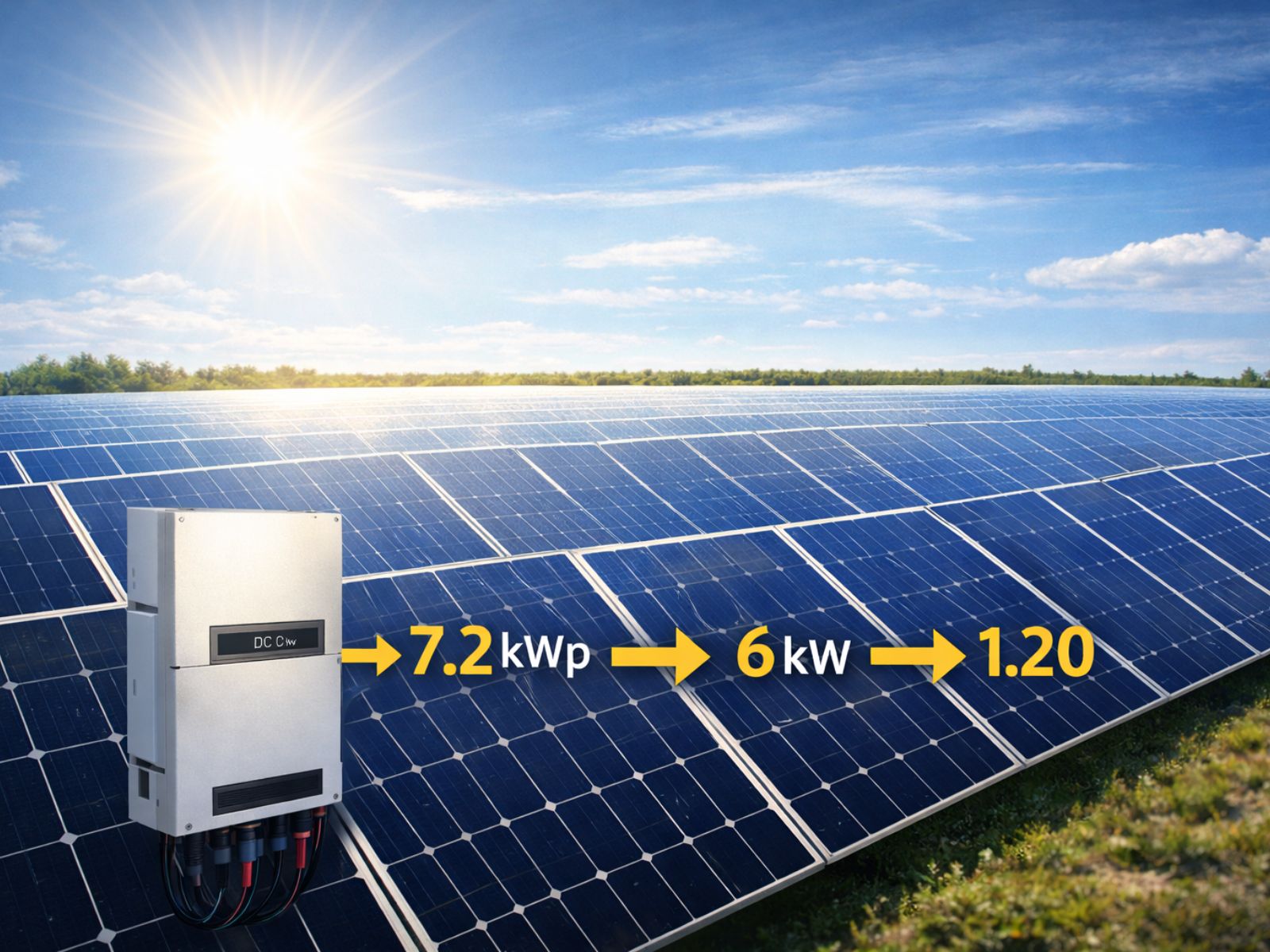
Rapport CC/CA = Puissance totale du générateur CC (Wc) ÷ Puissance nominale CA de l'onduleur (W)
Exemple
Un générateur solaire de 7,2 kWc connecté à un onduleur de 6 kW fournit :
7,200 W ÷ 6,000 W = 1.20 DC to AC ratio
Ce rapport entraînerait un léger écrêtage de l'onduleur solaire lors des journées ensoleillées, mais augmenterait généralement la production annuelle totale.
Ce type de surdimensionnement CC, souvent appelé « surpanneau », est expliqué plus en détail dans notre article dédié Suralimentation et dimensionnement des onduleurs.
Que signifie le rapport CC/CA dans la conception solaire ?
Le rapport CC/CA définit la relation entre la puissance maximale du générateur solaire et la capacité de sortie maximale de l'onduleur. Un rapport proche de 1,0 signifie que les deux composants sont parfaitement adaptés l'un à l'autre. Lorsque les concepteurs choisissent un rapport supérieur à 1,0 (par exemple 1,2 ou 1,3), l'onduleur est légèrement plus petit que le générateur. Ce choix intentionnel, appelé sous-dimensionnement de l'onduleur, augmente la production d'énergie tout au long de l'année, même s'il entraîne de courtes périodes de clipping de l'onduleur pendant les heures les plus ensoleillées. Dans la pratique, le choix du bon rapport garantit que l'onduleur fonctionne efficacement pendant la majeure partie de l'année plutôt que de rester surdimensionné et sous-chargé.
Plages typiques du rapport CC/CA et exemples de conception
Dans la plupart des systèmes modernes, les rapports CC/CA varient généralement entre 1,10 et 1,35, bien que la valeur idéale dépende du climat, de l'irradiance prévue, des modèles d'ombrage et des objectifs de production à long terme. Les climats plus froids ou les régions où l'ensoleillement annuel est plus faible adoptent souvent des rapports plus élevés, car les panneaux atteignent rarement leur rendement maximal, ce qui permet de limiter au minimum le clipping des onduleurs solaires. Les endroits chauds et à forte irradiance peuvent nécessiter des rapports plus conservateurs afin de contrôler les niveaux de clipping quotidiens.
Un système conçu avec un rapport d'environ 1,15 peut ne subir qu'un léger écrêtage, mais maintenir un rendement constant tout au long de l'année. Un système utilisant un rapport plus proche de 1,30 peut présenter un écrêtage plus notable vers midi, mais il peut capter beaucoup plus d'énergie le matin et l'après-midi, ce qui augmente le rendement annuel total. Les rapports supérieurs à 1,35 sont utilisés de manière sélective et nécessitent une modélisation minutieuse afin de s'assurer que les pertes supplémentaires liées à l'écrêtage de l'onduleur ne l'emportent pas sur les avantages économiques.
Rapport courant continu/courant alternatif | Comportement du système | Clipping prévu de l'onduleur | Cas d'utilisation appropriés |
1.00 – 1.10 | La puissance de l'onduleur correspond étroitement à la capacité du générateur photovoltaïque | Très peu ou pas d'écrêtage de l'onduleur | Emplacements chauds et à fort ensoleillement ; systèmes privilégiant les performances de pointe plutôt que le rendement annuel |
1.10 – 1.20 | Un léger surdimensionnement du courant continu améliore l'utilisation globale du système | Légère coupure occasionnelle pendant les heures claires de la mi-journée | Systèmes résidentiels standard ; conceptions équilibrées axées sur le rendement tout au long de l'année |
1.20 – 1.30 | Un surdimensionnement important du courant continu augmente la production le matin et l'après-midi | Clipping modéré au pic d'irradiance | Climats plus frais ; régions avec un ensoleillement annuel plus faible ; systèmes optimisés pour une production annuelle en kWh plus élevée |
1.30 – 1.35 | Fort surdimensionnement du courant continu, sous-dimensionnement intentionnel de l'onduleur | Clipping fréquent pendant les heures de pointe, mais récolte énergétique annuelle plus élevée | Systèmes commerciaux où la maximisation de la production totale l'emporte sur le écrêtage en milieu de journée |
> 1.35 | Ratios CC/CA très élevés | Risque élevé de pertes excessives dues à l' écrêtage de l'onduleur | Cas particuliers de faible irradiance ; nécessite une modélisation détaillée et une justification économique |
Pourquoi sous-dimensionner un onduleur peut être une décision judicieuse
La conception d'une installation solaire implique parfois un sous-dimensionnement de l'onduleur, ce qui signifie que la puissance CA nominale de l'onduleur est intentionnellement inférieure à la puissance maximale potentielle des panneaux. Cela peut sembler contre-intuitif, mais cela permet souvent d'obtenir le meilleur résultat économique. Comme les panneaux solaires n'atteignent que rarement leur production maximale, l'onduleur fonctionne plus souvent à un niveau proche de sa plage de puissance optimale tout au long de l'année, plutôt que de fonctionner la plupart du temps bien en dessous de sa puissance maximale nominale.
De plus, certains facteurs propres au site, tels que l'espace de montage limité, la gestion thermique ou les contraintes liées au tableau électrique d'un bâtiment, peuvent rendre impossible l'installation d'onduleurs supplémentaires ou plus puissants. Opter pour des onduleurs légèrement plus petits et accepter un écrêtage contrôlé peut donc s'avérer être la solution la plus réaliste et la plus responsable sur le plan financier.
Le clipping de l'onduleur est-il toujours néfaste ?
Le clipping des onduleurs solaires n'est pas un problème en soi : son impact dépend de sa fréquence et de la quantité d'énergie réellement perdue. Un système qui subit un clipping des onduleurs solaires lors d'après-midis ensoleillés peut tout de même fonctionner de manière efficace et rentable, en particulier si le choix d'un onduleur plus puissant ne permettrait pas de générer une production supplémentaire suffisante pour justifier son prix plus élevé. Dans de nombreuses installations réelles, les économies financières réalisées grâce à un onduleur sous-dimensionné l'emportent sur la valeur de la récupération de quelques rares heures de production maximale.
Le clipping ne devient préoccupant que lorsqu'il commence à fausser le profil énergétique attendu du système. Des pertes excessives dues au clipping de l'onduleur peuvent indiquer que le générateur CC est surdimensionné au point que l'onduleur ne peut pas exploiter pleinement l'énergie disponible, ce qui réduit le retour sur investissement global. Pour déterminer si le clipping est acceptable ou problématique, les concepteurs évaluent sa fréquence, l'importance des pertes de production et le rapport entre ces pertes et le coût de la mise à niveau vers un onduleur de plus grande capacité.
Quand le clipping est acceptable
Le clipping est généralement acceptable lorsqu'il se limite à de courtes périodes d'ensoleillement intense et ne réduit pas de manière significative le rendement énergétique annuel. Si le clipping de l'onduleur n'apparaît que lors de journées exceptionnellement claires, c'est-à-dire lorsque le générateur photovoltaïque atteint ou dépasse brièvement son pic théorique, la perte d'énergie est généralement minime. Dans de tels cas, les avantages économiques d'un onduleur sous-dimensionné sont bien supérieurs à la valeur de l'élimination totale du clipping.
Le clipping est également acceptable lorsqu'il permet une meilleure utilisation de l'onduleur tout au long de l'année. Un onduleur de taille adéquate ou légèrement sous-dimensionné fonctionne plus efficacement le matin, l'après-midi et pendant les saisons plus froides, qui représentent ensemble la majeure partie de la production solaire annuelle.
Signes d'un écrêtage excessif de l'onduleur
Le clipping devient excessif lorsqu'il se produit pendant de longues périodes dans des conditions de fonctionnement normales, plutôt que seulement pendant les heures d'ensoleillement maximal. Une courbe de production qui présente un sommet aplati pendant plusieurs heures par jour, pendant une grande partie de l'année, peut indiquer que l'onduleur limite constamment la production. Ce schéma suggère que le rapport CC/CA est trop élevé et que le système perd une quantité importante d'énergie qui aurait pu être captée avec un onduleur légèrement plus grand.
D'autres signes avant-coureurs incluent un écart notable entre la production annuelle prévue et réelle ou un système qui ne répond pas aux critères de performance malgré des conditions météorologiques favorables. Dans de telles situations, il peut être nécessaire de repenser le système (en ajustant le rapport CC/CA ou en choisissant un onduleur plus puissant) afin de rétablir des performances optimales.
Clipping de l'onduleur et réduction de la production : quelle est la différence ?
Bien que le clipping et la réduction de la puissance de l'onduleur réduisent tous deux la quantité d'énergie fournie au réseau ou à la propriété, ils ont des causes complètement différentes et des implications très différentes sur les performances du système. Le clipping de l'onduleur est une limitation interne de l'onduleur lui-même. Il se produit lorsque le courant continu provenant du générateur solaire dépasse temporairement la puissance maximale en courant alternatif que l'onduleur est censé fournir. Cette situation est prévisible, souvent intentionnelle et généralement sans danger. Elle reflète le rapport courant continu/courant alternatif choisi et fait souvent partie intégrante de la conception stratégique des systèmes modernes, en particulier lorsque un écrêtage modéré améliore le rendement énergétique annuel.
La réduction, en revanche, est une limitation externe imposée au système, et non une contrainte matérielle. La réduction se produit lorsque l'onduleur est capable de produire plus d'énergie, mais qu'il est intentionnellement freiné par des facteurs externes. Cela peut être dû à des limites d'exportation imposées par les services publics, à une congestion du réseau, à des exigences réglementaires ou à des plafonds opérationnels programmés dans le système de surveillance. Contrairement à l'écrêtage des onduleurs solaires, qui ne se produit qu'à la limite supérieure de la capacité de l'onduleur, la réduction peut réduire la production même lorsque l'onduleur fonctionne bien en dessous de sa puissance maximale.
La principale différence réside dans le fait que l'écrêtage de l'onduleur est une réponse naturelle à de brèves périodes d'irradiance élevée, tandis que la réduction est une restriction imposée par les règles du réseau ou d'exploitation. L'une fait partie de la conception de l'équipement, tandis que l'autre est une mesure de contrôle au niveau du système.
Comment vérifier si l'écrêtage est un problème dans votre système
Pour déterminer si l'écrêtage de l'onduleur est acceptable ou excessif, il faut examiner les données de production réelles plutôt que de se concentrer sur des pics quotidiens isolés. La manière la plus efficace d'évaluer l'écrêtage consiste à examiner la courbe de puissance de sortie dans votre plateforme de surveillance. Dans des conditions normales et saines, l'écrêtage n'apparaît que sous forme de courtes sections plates au sommet de la courbe, généralement pendant les heures les plus ensoleillées des journées exceptionnellement claires. Ce schéma indique que l'onduleur est correctement dimensionné et qu'il atteint occasionnellement sa limite, mais seulement brièvement.
Si, toutefois, la courbe de puissance montre des plateaux prolongés pendant plusieurs heures lors de nombreuses journées ensoleillées tout au long de l'année, le système subit probablement un écrêtage excessif. Cela suggère que le générateur CC est surdimensionné par rapport à la capacité CA de l'onduleur et qu'une quantité importante d'énergie potentielle n'est pas convertie. La comparaison de la production annuelle réelle avec les prévisions de performance des outils de conception peut aider à confirmer le problème. Un écart persistant entre la production prévue et la production mesurée, en particulier pendant les mois où l'ensoleillement est important, peut indiquer que les pertes dues à l'écrêtage de l'onduleur sont plus élevées que prévu.
Il est également utile d'évaluer le rapport CC/CA utilisé dans la conception d'origine. Des rapports extrêmement élevés peuvent maximiser la production dans des conditions de faible luminosité, mais peuvent entraîner un écrêtage constant pendant les pics d'irradiance. Si les données de surveillance montrent que l'écrêtage dégrade le rendement annuel au lieu de l'améliorer, l'ajustement de la configuration du système ou le choix d'un onduleur plus puissant peuvent être les moyens les plus efficaces de rétablir les performances.
Conclusions finales
Le clipping des onduleurs solaires n'est ni un défaut de conception ni un avantage universel. Il s'agit d'un compromis calculé qui nécessite une expertise technique et une analyse financière. Grâce à des rapports CC/CA soigneusement sélectionnés, à des pertes de clipping contrôlées et à une sous-dimensionnement approprié des onduleurs, une installation solaire peut offrir un bien meilleur retour sur investissement tout en maîtrisant les coûts du système. En d'autres termes, perdre parfois une petite quantité d'énergie lors des journées les plus ensoleillées est parfois le moyen le plus intelligent d'obtenir plus d'énergie et de réaliser davantage d'économies sur la durée de vie du système.