
Table of contents
ToggleAIKO Solar Panels: Key Benefits and How They Compare
Your roof has limited space. Choosing the right solar panels means making the most of that space while considering performance, appearance and long-term reliability.
AIKO ABC solar panels combine high efficiency, a uniform black appearance and technology designed to reduce losses under partial shading. Selected NEOSTAR models also feature dual-glass construction and bifacial generation.
What do these features mean for your home? Here is what makes AIKO worth considering for a solar installation in Luxembourg.
What Makes AIKO ABC Technology Different?
ABC stands for All Back Contact. In this cell design, the electrical contacts are positioned on the rear of the solar cell.
Many conventional solar cells have fine metal lines across their front surface. These contacts collect electricity, but they also cover a small part of the surface receiving sunlight.
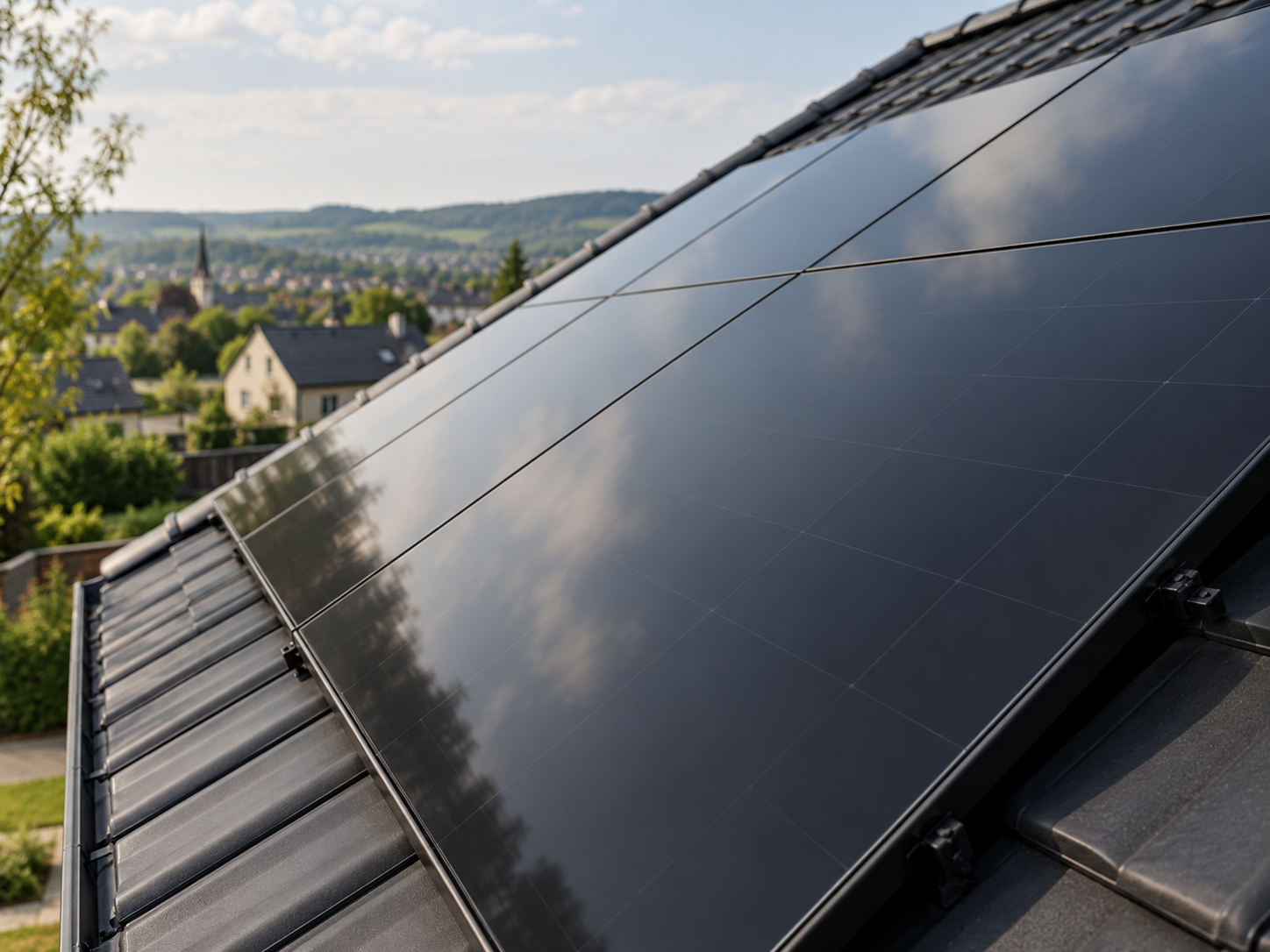
AIKO moves these contacts to the back, leaving the front free from the metal contact grid. This design supports high conversion efficiency and gives the cells a cleaner appearance.
For homeowners, the main benefits are straightforward:
Efficient use of roof space: high module efficiency helps maximise the installed capacity within the available area.
A uniform appearance: the absence of visible front contact lines contributes to a consistent black finish.
This combination is particularly appealing when the installation will be visible from the street, garden or terrace.
High Efficiency: Make More of Your Available Roof Space
Solar panel efficiency describes how much of the sunlight reaching a panel is converted into electricity under specified test conditions.
Higher efficiency allows more rated power to fit into the same surface area. That matters when chimneys, roof windows or the shape of the roof limit the space available for panels.
Selected AIKO NEOSTAR 3S+54 versions reach module efficiencies of up to 24.5%. The exact figure depends on the module selected and should always be checked in its datasheet.
Why does efficiency matter?
Consider a simplified comparison under standard test irradiance of 1,000 W/m²:
| Module efficiency | Approximate rated power per square metre |
|---|---|
| 22% | 220 W |
| 24% | 240 W |
In this example, the higher-efficiency module provides approximately 9% more rated power per square metre. This does not automatically mean 9% more annual electricity production, because real-world output also depends on installation conditions.
When comparing panels, check efficiency and dimensions together. A panel with a higher wattage may simply be larger.
Partial Shading: Technology Designed to Reduce Losses
A chimney, dormer or nearby tree can cast a shadow over part of a solar installation. How the cells and modules respond can influence the resulting power loss.
AIKO ABC modules incorporate Partial Shading Optimisation, a cell-level feature designed to reduce losses in certain partial-shading situations.
According to AIKO, the cell architecture allows current to continue flowing through shaded cells under specific conditions, helping more of the unshaded section remain productive.
This can be useful on roofs where occasional shading is difficult to avoid. However, the benefit depends on the position, shape and duration of the shadow, as well as the electrical configuration of the installation.
Shade still reduces solar production. This technology complements careful system design and a shading assessment. Whether power optimisers or another solution are appropriate should be determined for the complete installation.
Temperature Performance: An Important Factor on Sunny Days
Solar cells heat up in sunlight. As their temperature rises, their power output generally falls.
The power temperature coefficient, listed as Pmax in a datasheet, describes this effect. A coefficient closer to zero means a smaller temperature-related reduction in power under otherwise identical conditions.
For the NEOSTAR 3S+54 versions discussed here, AIKO specifies a coefficient of −0.26%/°C.
This means that power decreases by approximately 0.26% for each degree the cell temperature rises above the 25°C reference temperature, with other conditions unchanged.
For example, a cell temperature increase from 25°C to 55°C corresponds to an approximate temperature-related power reduction of:
7.8% with a coefficient of −0.26%/°C;
10.5% with a coefficient of −0.35%/°C.
These figures illustrate the effect of temperature alone. They are not estimates of annual energy losses.
AIKO’s temperature coefficient is a useful feature, although some competing modules also achieve −0.26%/°C. Comparing current product specifications is therefore essential.
Full Black Design: Solar Panels That Complement Your Home
Solar panels become a visible part of your home for many years. Their appearance deserves consideration alongside their technical specifications.
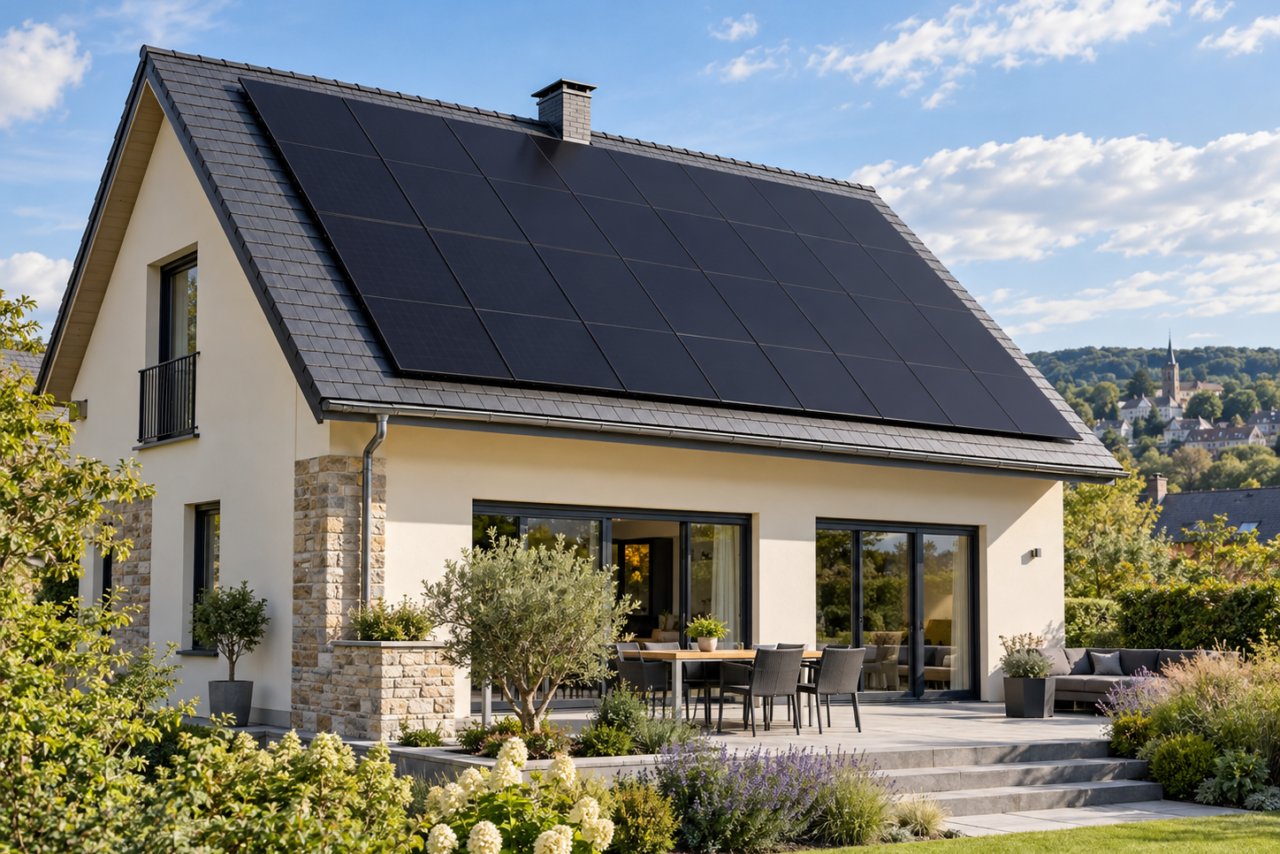
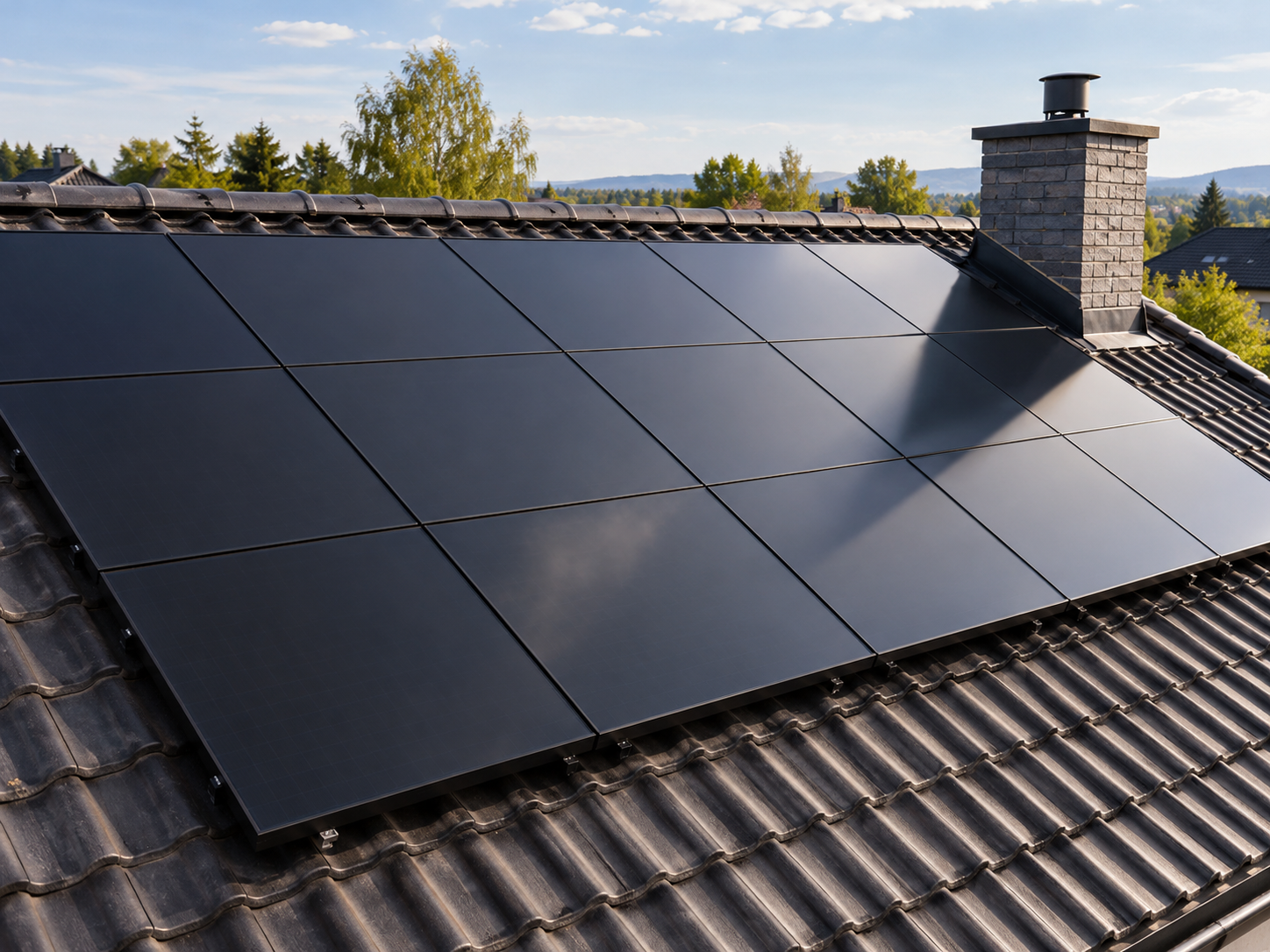
AIKO Full Black variants use cells without a front metal contact grid to create a uniform black appearance. This can work particularly well with dark roof coverings and contemporary architecture.
For a prominent roof, ask to see photographs of the proposed module and completed installations. The final appearance also depends on panel placement, mounting components and cable routing.
Dual-Glass and Bifacial: Understanding the Difference
These terms describe different aspects of a solar panel:
| Term | What it means |
|---|---|
| Dual-glass / glass-glass | The module uses glass on both its front and rear surfaces. |
| Bifacial | The module can generate electricity from light reaching both sides. |
| Full Black | Describes the module’s appearance. |
| ABC | Describes the cell technology, with electrical contacts positioned on the rear. |
Selected AIKO NEOSTAR modules combine these features. However, the construction and capabilities of the specific product should always be confirmed in its documentation.
When does bifacial generation help?
Bifacial panels can use light reflected onto their rear surface to produce additional electricity.
The potential benefit depends on factors such as:
the distance between the panels and the surface below;
the reflectivity of that surface;
the mounting angle;
shading from mounting structures or other obstacles.
Panels mounted close to a dark roof may receive little useful light on the rear. A more open installation above a reflective surface may offer greater potential.
Bifacial generation should be assessed for each project. It should not be treated as a fixed percentage of additional energy that every installation will achieve.

Long-Term Performance and Warranties
A solar installation is a long-term investment. Alongside initial power and efficiency, it is worth checking the manufacturer’s stated power retention over time.
For selected AIKO NEOSTAR 3S+ modules, the published specifications state:
no more than 1% power degradation in the first year;
no more than 0.35% annual power degradation in years 2–30;
a 30-year linear power warranty.
AIKO also lists a 30-year product warranty for the current NEOSTAR 3S+54 family discussed here. The applicable warranty must be confirmed for the exact module supplied and its governing warranty document.
Product warranty and power warranty are different
A product warranty covers eligible defects under the manufacturer’s terms.
A power warranty specifies a minimum level of retained module power over time under defined conditions.
Neither should be interpreted as a guarantee that your installation will produce a particular number of kilowatt-hours every year. Annual generation also depends on weather, shading, orientation and system performance.
How Do AIKO Panels Compare with Other Solar Panels?
A useful comparison separates cell technology from module construction and appearance.
For example, a TOPCon panel can also be Full Black, bifacial and dual-glass. Those features are not exclusive to AIKO.
| Technology | Key characteristics | What to compare |
|---|---|---|
| PERC | An earlier generation of cell technology used in many existing installations. | Module efficiency, temperature coefficient and warranty terms. |
| TOPCon | A modern cell technology, commonly using N-type silicon. | Power per square metre, shading performance, price and projected energy yield. |
| Other back-contact technologies | Also position electrical contacts on the rear, using different cell designs. | Specifications of the individual products and total installation cost. |
| AIKO ABC | Combines N-type back-contact cells with features designed to limit partial-shading losses. | How its combination of efficiency, appearance and performance suits your roof. |
AIKO is one of several manufacturers developing back-contact technology. The strongest reason to choose it is the suitability of its overall specification for your project.
Its appeal lies in combining high efficiency, a uniform black appearance and partial-shading optimisation within the same product family.
Are AIKO Solar Panels Worth Choosing?
AIKO panels are particularly worth considering if:
Your roof space is limited. High efficiency can help you fit more installed capacity into the available area.
Appearance matters to you. Full Black variants offer a uniform finish for visible roof installations.
Parts of your roof experience occasional shading. Partial-shading optimisation is a relevant feature to assess during system design.
You are comparing long-term specifications. Power retention and warranty terms deserve attention alongside initial wattage.
If an AIKO proposal costs more than an alternative, ask what the difference delivers for your property.
Can the design fit more capacity on the roof? Does the production forecast show a meaningful benefit? Do you prefer the appearance? What warranty terms apply?
The most useful comparison considers the complete installation, including the panels, inverter, mounting system, installation work and projected electricity production.
High panel efficiency is valuable, but it does not determine financial savings or payback time on its own.
Choosing AIKO Solar Panels for Your Home in Luxembourg
The right solar installation starts with your roof and your household’s energy needs.
Available space, roof orientation and shading all influence the design. Your electricity consumption matters too, particularly if you use or plan to install a heat pump, an electric vehicle charger or battery storage.
AIKO ABC / NEOSTAR panels are available through Voltmax, offering an option for homeowners who value efficient use of roof space and a consistent black appearance.
Contact Voltmax to discuss your home in Luxembourg and request a solar installation proposal tailored to your roof and energy needs.
Frequently Asked Questions About AIKO Solar Panels
What does ABC mean in AIKO solar panels?
ABC stands for All Back Contact. The electrical contacts are positioned on the rear of the cell, leaving the front free from the metal contact grid.
Do AIKO panels produce more electricity than other panels?
They can provide more rated power within the same area than lower-efficiency modules. Annual electricity production also depends on sunlight, temperature, shading and system design. The brand alone does not determine the result.
Do AIKO panels work in shade?
They can continue producing electricity under partial shading, and their ABC technology is designed to reduce associated losses in certain conditions. Shading still reduces production and should be assessed before installation.
Are all AIKO solar panels bifacial?
No. AIKO offers different module families and constructions. Bifacial capability must be confirmed in the datasheet of the selected product.
Do AIKO panels need battery storage?
No. Battery storage is a separate system component. Whether it is useful depends on when you consume electricity and how you want to use your solar production.
Is Full Black the same as back-contact technology?
No. Full Black describes appearance, while back-contact describes the position of the cell’s electrical contacts. AIKO combines these features in selected modules.