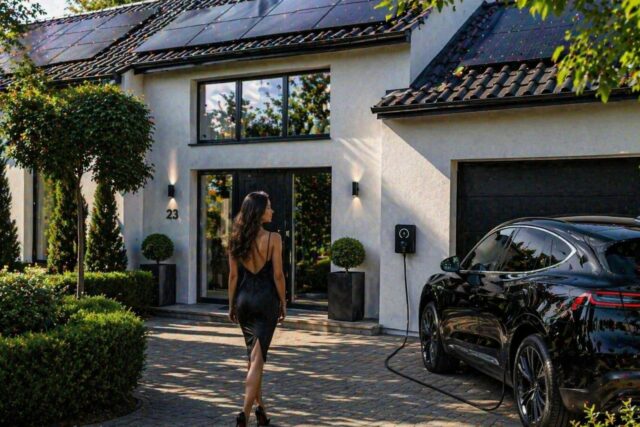
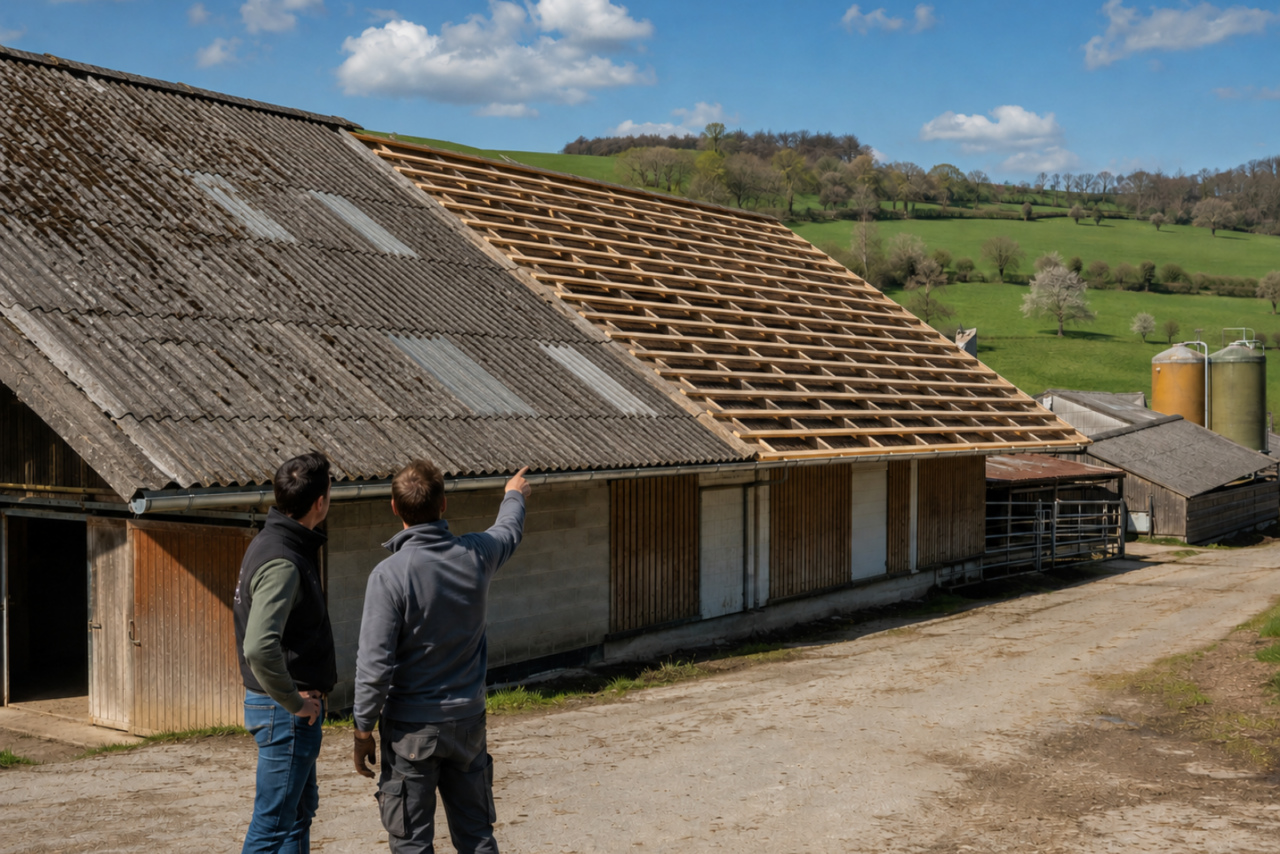

Old asbestos roofs on agricultural farms in Luxembourg are not something worth leaving until the last moment. This applies not only to residential houses, but also to barns, cowsheds, garages, shelters, storage buildings, workshops and other farm buildings. For years, such roofing was considered durable and practical. Today, however, it is increasingly becoming an obstacle when renovating, expanding or carrying out an energy modernisation of a farm. Removing asbestos from a roof should not be treated only as a technical problem. It is a good moment to look at the building from a broader perspective: check the condition of the structure, plan the new roofing and decide whether the roof should simply protect the building in the future, or also produce energy. After the old covering has been safely removed, the roof can be prepared for photovoltaics – PV panels can be installed, a solar roof can be considered, and the whole system can be connected to an energy storage system, a heat pump or an EV charger.
For farmers and farm owners in Luxembourg, replacing an old roof can therefore become the beginning of a larger change. On the one hand, it is about safety and handling the asbestos issue in accordance with local rules. On the other hand, it is about using the surface area of farm buildings to reduce energy costs and prepare the farm for the years ahead.
Table of contents
ToggleAsbestos roofs on agricultural farms - why are they a problem?
For many years, asbestos was used in roof coverings, including on agricultural and farm buildings. Asbestos-cement sheets were lightweight, durable and resistant to rain, frost and high temperatures, which is why they were often installed on older buildings. Today, the problem is not only the age of such a roof, but above all its condition and the way work is carried out on the building. If the sheets are stable and are not disturbed, the risk is different than in a situation where the roof starts to crack, crumble, leak or needs to be removed during renovation. The greatest risk appears when the material is damaged: during cutting, breaking, drilling, sanding, dismantling, transport or improper storage. At such moments, asbestos fibres may be released. They are invisible to the naked eye, but dangerous to health.
Asbestos on a house, barn, cowshed and farm buildings
Old asbestos-cement roofing may be found in different parts of a farm, not only on the residential house. It is often found on buildings that were built or renovated many years ago, when such sheets were a popular roofing material. That is why, when planning renovation work, it is worth checking not only the main building, but also all other buildings located on the property.
Asbestos may be present, among others, on buildings such as:
- the residential house on the farm,
- barn,
- cowshed,
- pigsty,
- chicken coop,
- garage,
- shelter,
- machinery hall,
- workshop,
- feed storage building,
- auxiliary buildings.
Each of these buildings may have a different technical roof condition and a different role within the farm. The roof of the house is important above all for the safety of residents and everyday comfort, while the roof of a barn, cowshed or machinery hall may also become a large surface for future photovoltaics. That is why, before replacement, it is worth assessing not only whether the covering contains asbestos, but also whether the new roof should be prepared for PV panels, a solar roof or a broader energy modernisation.
Asbestos in Luxembourg and the EU - what should you know before renovation?
Asbestos has been banned in Luxembourg since 2001. This applies to placing asbestos and asbestos-containing products on the market, as well as their use. However, this does not mean that all older materials automatically disappeared from buildings. Elements installed before the ban may still be present in houses, barns, cowsheds, garages, storage buildings and other farm buildings, which is why the subject returns during renovations, demolitions, roof replacements and energy modernisation. For a farm owner, the most important thing is to check what type of material they are dealing with before any work begins. An old roof may look like an ordinary covering, but during dismantling, cutting, breaking or transport there may be a risk of asbestos fibres being released. That is why removing such a roof should not be treated as a standard roof replacement. It must be planned in accordance with safety rules and local requirements.
What does safe asbestos removal from a roof involve?
Safe asbestos removal from a roof begins with confirming whether the old covering actually contains asbestos, followed by an assessment of the condition of the sheets, the roof structure, access to the building and the possibility of securing the area around the site. On a farm, this is particularly important because the work may take place next to a building that is still used on a daily basis. The dismantling itself is not simply a matter of removing the old covering. With asbestos, it is important to limit dust generation and carry out the work in a way that avoids breaking, crumbling or damaging the sheets. The material should be removed carefully, properly secured, packed and prepared for transport in accordance with local rules. Waste collection and transfer to the appropriate facility are just as important – it should not be stored loosely on the farm.
Why should old asbestos-cement sheets not be removed on your own?
Old asbestos-cement sheets should not be removed on your own, even if they look stable and easy to take down. The main problem is asbestos fibres, which can be released when the material is damaged. They are invisible to the naked eye, but can be dangerous to health, especially when the sheets are cut, broken, sanded, drilled or thrown down from the roof. That is why asbestos-cement sheets should not be treated like ordinary construction waste. They should not be crushed, cut, stored loosely or transported without protection. In Luxembourg, work involving asbestos-containing materials should be carried out by specialist companies in accordance with safety, packaging, transport and waste transfer rules.
Replacing an asbestos roof - a standard roof or a roof prepared for photovoltaics?
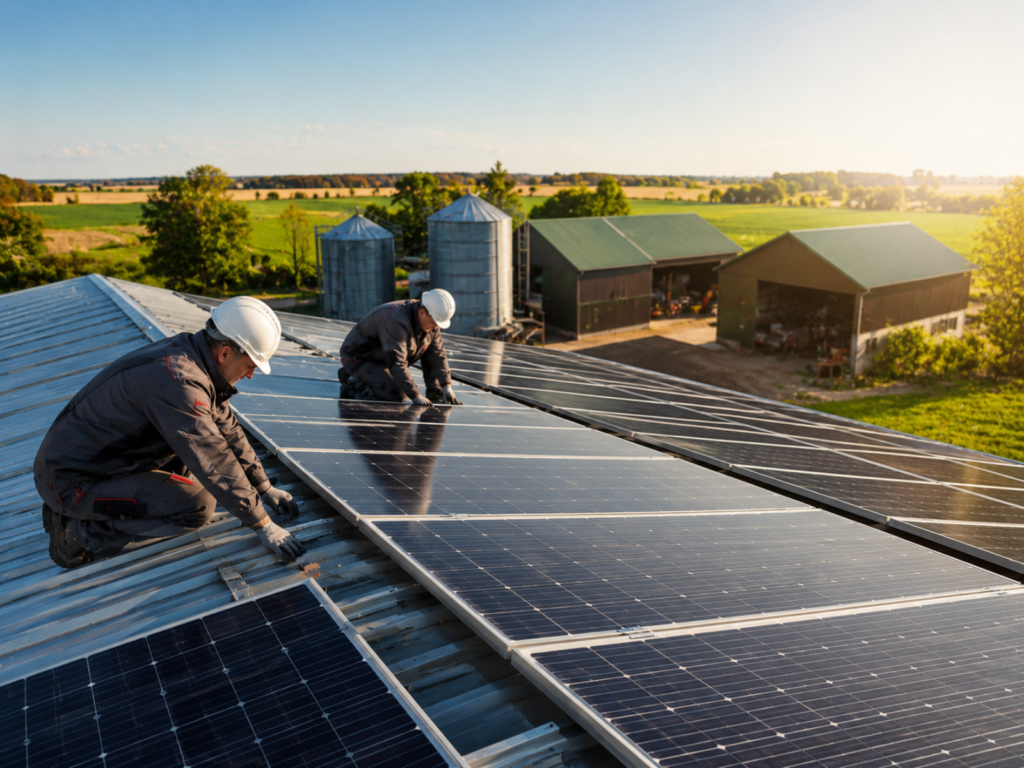
After asbestos has been removed, you do not have to limit yourself to installing a new roof covering. This is the moment to decide what role the roof should play over the coming years. It can simply be a watertight and durable protection for the building, but it can also be prepared for a photovoltaic installation, PV panels or a more advanced solution such as a solar roof.
The simplest option is a standard roof covering replacement. This works well when the main goal is to protect the building against leaks and further structural deterioration. Even with this solution, however, it is worth checking the roof load-bearing capacity, roof layout, shading and the possibility of installing panels in the future. This means that the new roof will not close the door to the farm’s energy modernisation. Another option is to plan the roof for photovoltaics from the very beginning. In this case, not only the covering itself matters, but also the structure, cable routes, space for the inverter, protections, energy storage and service access. For farmers in Luxembourg, this can be a particularly practical solution, because large roofs on farm buildings can become surfaces for producing energy for the needs of the farm.
The most advanced option is a solar roof or BIPV, meaning a solution where photovoltaic elements are part of the roof covering or the building structure. This makes the most sense when the roof is being replaced from the ground up and the owner wants to combine renovation with energy production. This option requires a more detailed design, but it allows the roof replacement to be treated as part of a broader farm modernisation.
Solar roof or photovoltaic panels?
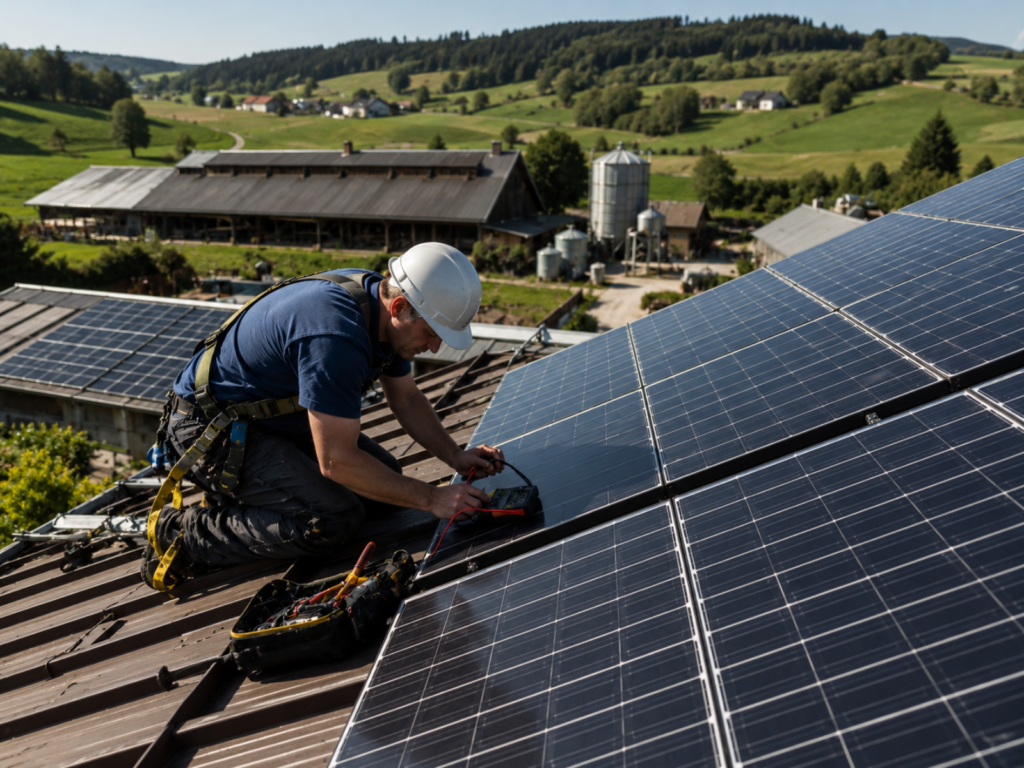
After removing asbestos and planning a new roof covering, an important question arises: should you choose a traditional roof with photovoltaic panels or decide on a solar roof from the start? PV panels are usually the simpler option. They are installed on a finished roof covering, which makes them suitable when the roof is in good condition or has just been replaced and has the right load-bearing capacity, roof layout and space for the installation. A solar roof is a more advanced solution. In this case, the photovoltaic elements are not just an addition mounted on top of the covering, but become part of the roof, facade or building structure. This option makes sense when the roof is already being replaced from the ground up, for example after asbestos-cement sheets have been removed.
Check: Photovoltaics for farms
However, it will not always be the best choice for every farm. A solar roof requires a more detailed design, good coordination between roofing and electrical works, and a profitability assessment. Costs, surface area, sunlight exposure, building orientation, future energy consumption and whether the installation is to power the house, farm buildings, heat pump, energy storage system or EV charger all need to be taken into account. For farmers in Luxembourg, the most important question is therefore not simply whether to choose a solar roof or photovoltaic panels, but whether the new covering will be planned as part of a broader farm modernisation.
Photovoltaics for farmers in Luxembourg - why think about them when replacing a roof?
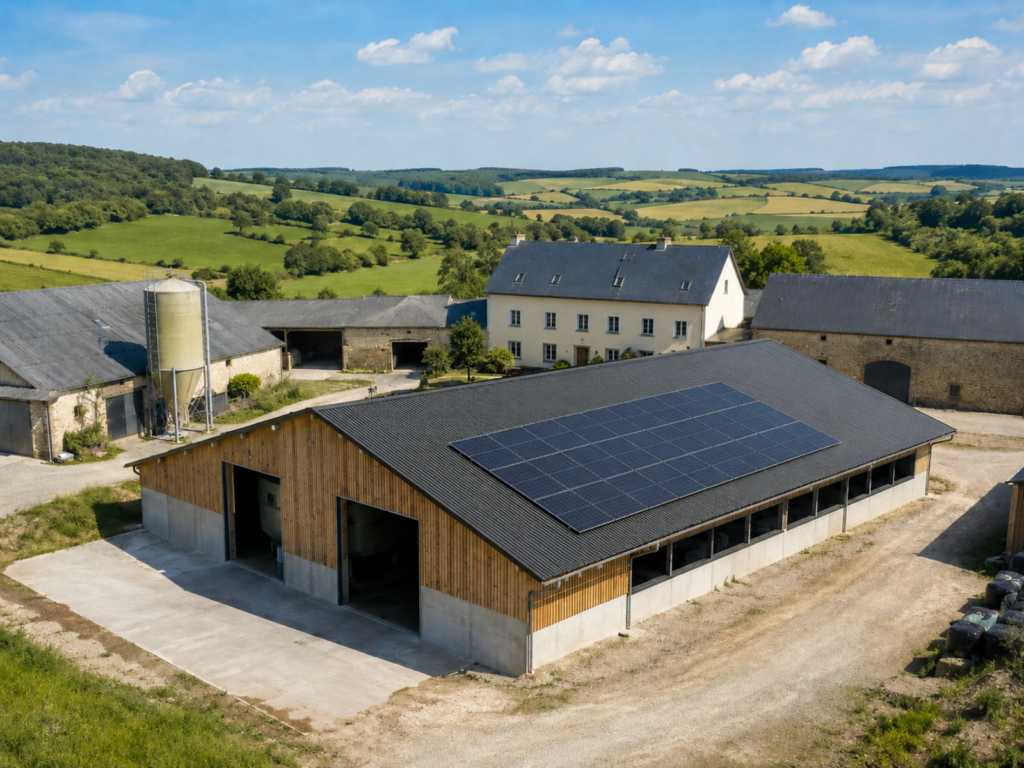
Replacing an old roof is a good moment to think about photovoltaics on a farm. Agricultural buildings often have large roof surfaces that, for years, served only a protective function. After asbestos has been removed and a new covering installed, the same roof can start producing energy for the house, cowshed, barn, machinery hall, workshop or storage building. This is important where the farm uses a lot of electricity during the day. Energy from photovoltaics can power ventilation, pumps, lighting, cold storage, workshop equipment, the office, a heat pump or an EV charger. As a result, the roof not only protects the building, but can also genuinely work for the needs of the farm.
Photovoltaics for farmers in Luxembourg also have the advantage of using existing roof areas without taking up land. The roof of a barn, cowshed, garage or storage building can become a place of energy production, while the farm land remains available for crops, animals, machinery and everyday work. That is why, when replacing an asbestos roof, it is worth checking its orientation, load-bearing capacity, shading and the possibility of installing PV panels in the future right away.
Subsidies and Klimabonus during asbestos roof replacement
Replacing an asbestos roof does not automatically mean eligibility for an energy subsidy. Luxembourg has the Klimabonus programme, which supports, among other things, photovoltaic installations, energy storage systems and heat pumps, but the conditions depend on the type of investment, the building and the devices used. That is why, in the case of an agricultural farm, it is necessary to check separately whether support applies to the residential house, a farm building, the PV installation, battery, heat pump or another element of the modernisation.
A farm often consists of several different buildings: a house, barn, cowshed, machinery hall, garage or storage building. Not all of them will qualify for the same type of support. The situation may be different for photovoltaics on a house, panels on a farm building, and an energy storage system or heat pump used in the residential part.
That is why, before replacing a roof, it is worth treating subsidies as part of planning the entire investment, rather than as something guaranteed. After asbestos has been removed, it is possible to check whether the new roof should be only a covering, or immediately become a surface for photovoltaics, a solar roof or a system connected with energy storage. Voltmax points out that with Klimabonus, specific technical and administrative conditions matter, so it is best to verify in advance which solutions may realistically suit a given building and scope of work.
How does Voltmax help farmers plan the roof and energy system on a farm?
Voltmax helps farmers look at old roof replacement more broadly than just as a single renovation project. For farms in Luxembourg, it is important not only to safely remove the asbestos covering and install a new roof, but also to check whether that roof can immediately become part of a larger energy plan. This applies to residential houses, barns, cowsheds, machinery halls, workshops, storage buildings and other farm buildings.
Work involving asbestos should be carried out in accordance with local safety rules and by properly prepared companies. After this stage, it is possible to plan a new covering, roof insulation, thermal modernisation of the building, photovoltaics, a solar roof, energy storage, a heat pump or an EV charger. Voltmax analyses the condition of buildings, available roof areas, energy consumption on the farm and future needs, and then helps select solutions that will work together. As a result, the farmer does not have to make several separate decisions: one about the roof, another about panels, another about heating and another about energy storage. The whole process can be planned as one farm modernisation project – with lower energy costs, better use of roof surfaces and preparation of buildings for the years ahead in mind. If you are planning to replace an old roof on a farm in Luxembourg, it is worth checking from the start whether the new roof can work not only as a covering, but also as part of the energy system.