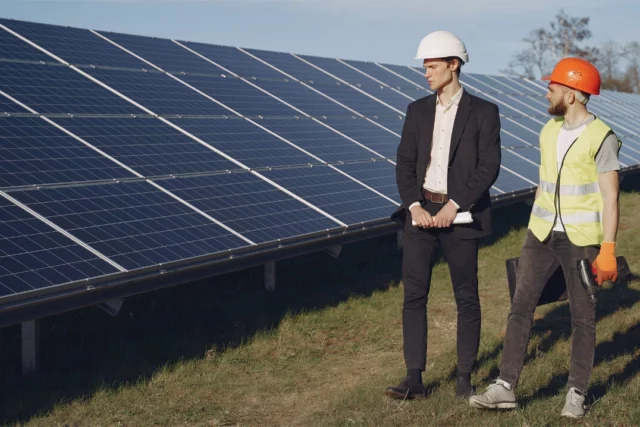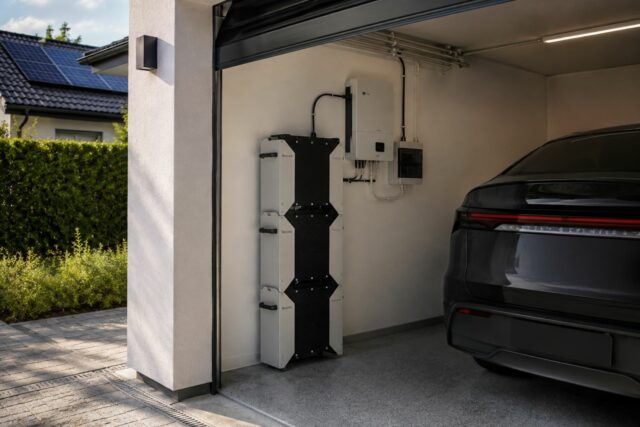
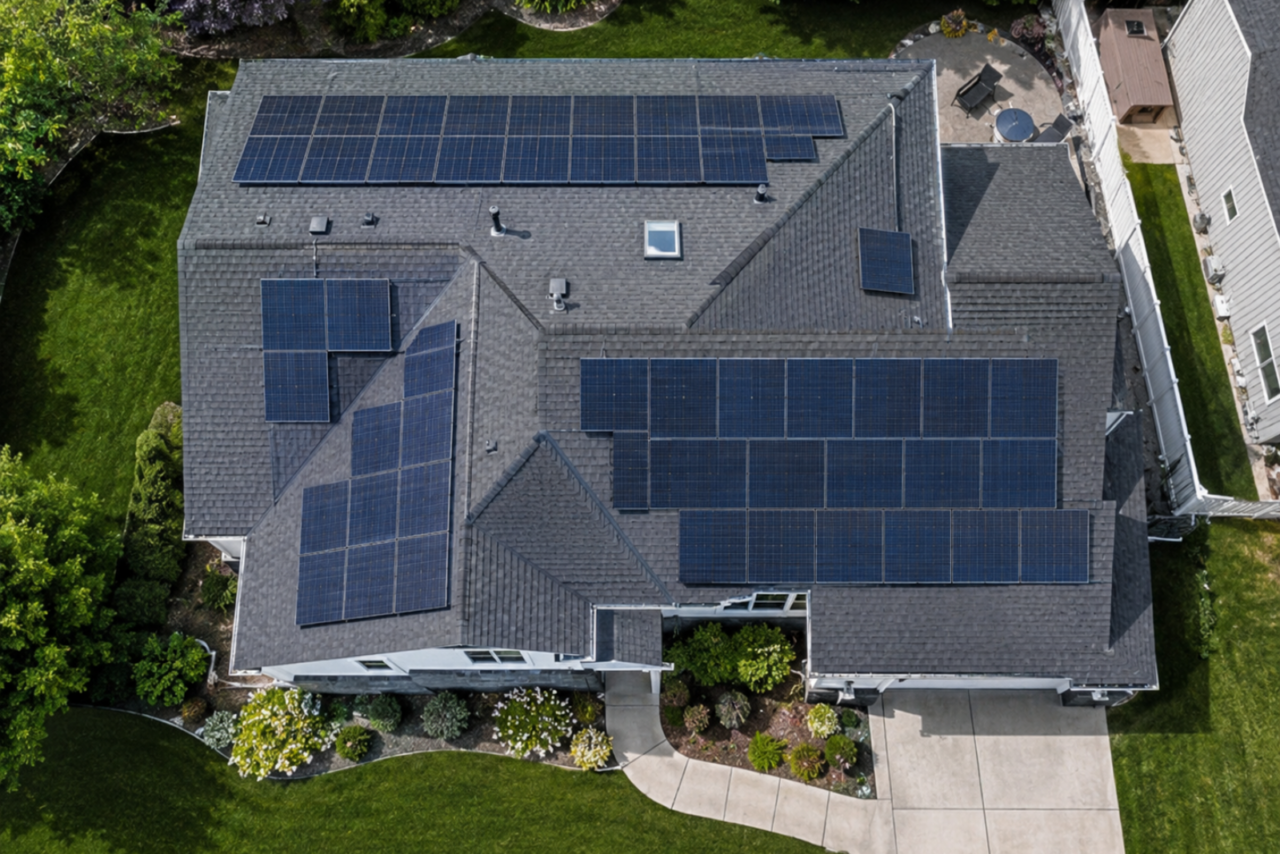

The direction in which photovoltaic panels are installed affects energy production, system efficiency and the overall return on investment. In most cases, a south-facing orientation delivers the best results, but the optimal setup also depends on the roof layout, pitch, shading, available surface area and the building’s energy consumption profile. East- and west-facing panels can also perform very well, particularly when electricity consumption is higher in the morning or afternoon. The direction of the panels should therefore be selected individually, following an analysis of the roof, solar exposure and energy consumption profile.
Table of contents
ToggleThe best direction for photovoltaic panels
In most cases, south is the best direction for photovoltaic panels because it allows the system to achieve the highest annual energy production, especially on an unshaded roof with a suitable pitch. However, this does not mean that a PV installation only makes sense on a perfectly south-facing roof. South-east and south-west orientations also perform very well, while an east-west layout may be suitable in certain situations, particularly when energy is mainly consumed in the morning and afternoon. North is generally the least favourable direction, so this option should only be considered when no better surface is available and a production simulation confirms that the investment remains worthwhile. Even then, a north-facing PV installation may still provide benefits in certain circumstances.
Panel orientation | Assessment | When it makes sense |
South | the most optimal option | when the roof is unshaded and the goal is to maximise energy production |
South-east / south-west | a very good compromise | when the roof does not face directly south but still receives good solar exposure |
East-west | a good daily production profile | when energy consumption is concentrated mainly in the morning and afternoon |
North | the least favourable option | recommended only in exceptional cases, following a roof assessment and production simulation |
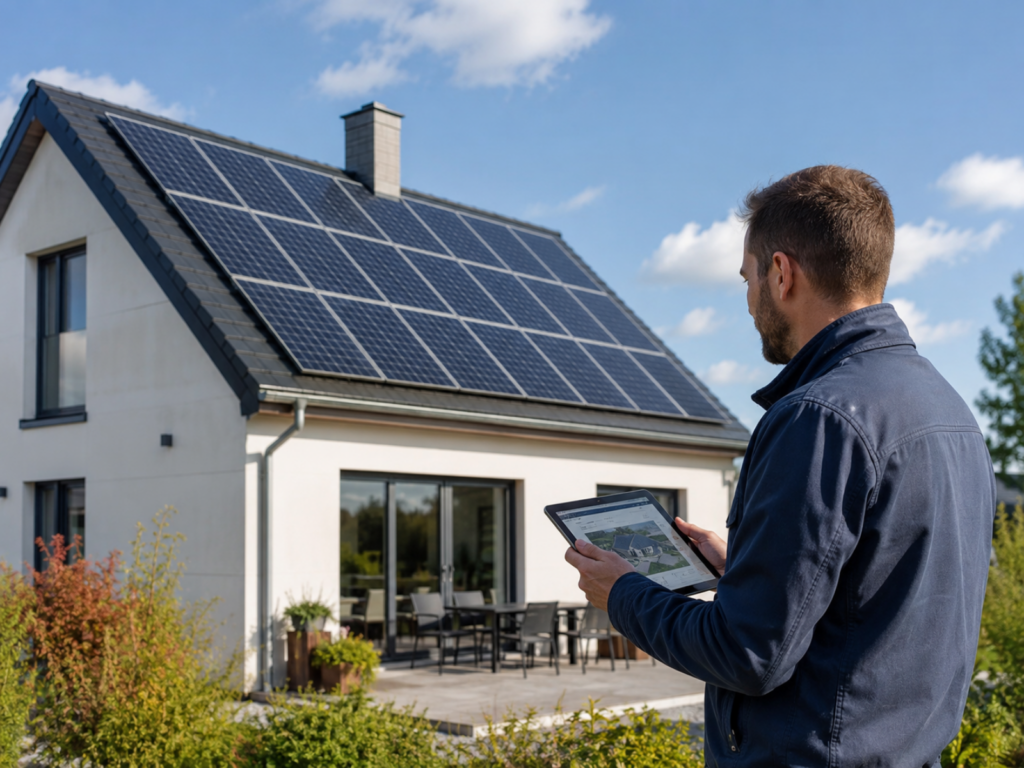
Why does the direction of photovoltaic panels matter?
The direction of photovoltaic panels affects how much solar radiation reaches the modules and at what time of day the installation produces the most energy. South is usually the best orientation, although slight deviations towards the south-east or south-west also perform well. For year-round installations, a tilt angle of approximately 30-35° is often used, while east-west systems are typically installed at a slightly lower angle to distribute production more evenly throughout the day. The direction of the panels, also known as the azimuth, should be selected not only to maximise annual yield, but also to match the times when energy is actually used in the building.
South-facing photovoltaic panels - when are they the best choice?
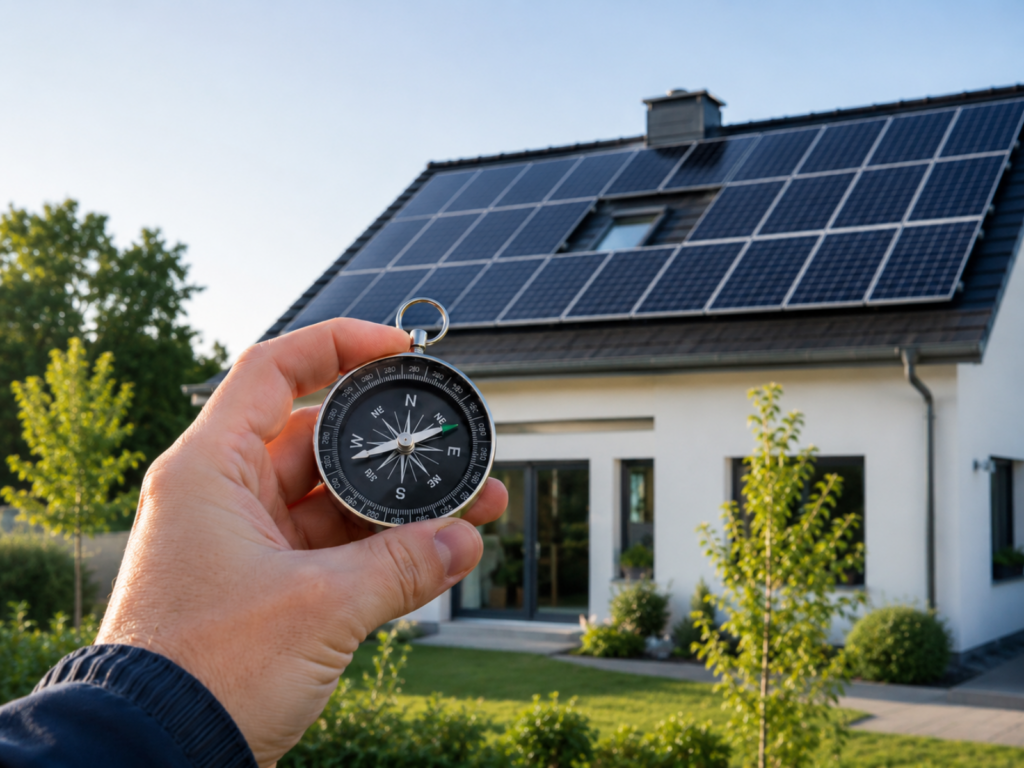
The direction of photovoltaic panels matters because it determines how much sunlight reaches the modules and at what time of day the system generates the most energy. South-facing panels usually reach their highest production around midday, east-facing panels generate more in the morning, and west-facing panels perform more strongly in the afternoon. When designing an installation, it is therefore worth considering not only the annual yield, but also the hourly production profile and the way energy is consumed in the building.
Can photovoltaic panels face north?
Photovoltaic panels can also be installed on a north-facing roof, but this option requires a more detailed analysis. A north-facing roof usually receives less direct sunlight, which means that energy production may be lower than with a south-, east- or west-facing orientation. However, this does not necessarily mean that such an installation is not worthwhile. With a low roof pitch, no better available surface or as an extension of a larger PV installation, a north-facing system may still be worth considering, particularly after carrying out a yield simulation and assessing the expected return on investment.
What is the optimal tilt angle for photovoltaic panels?
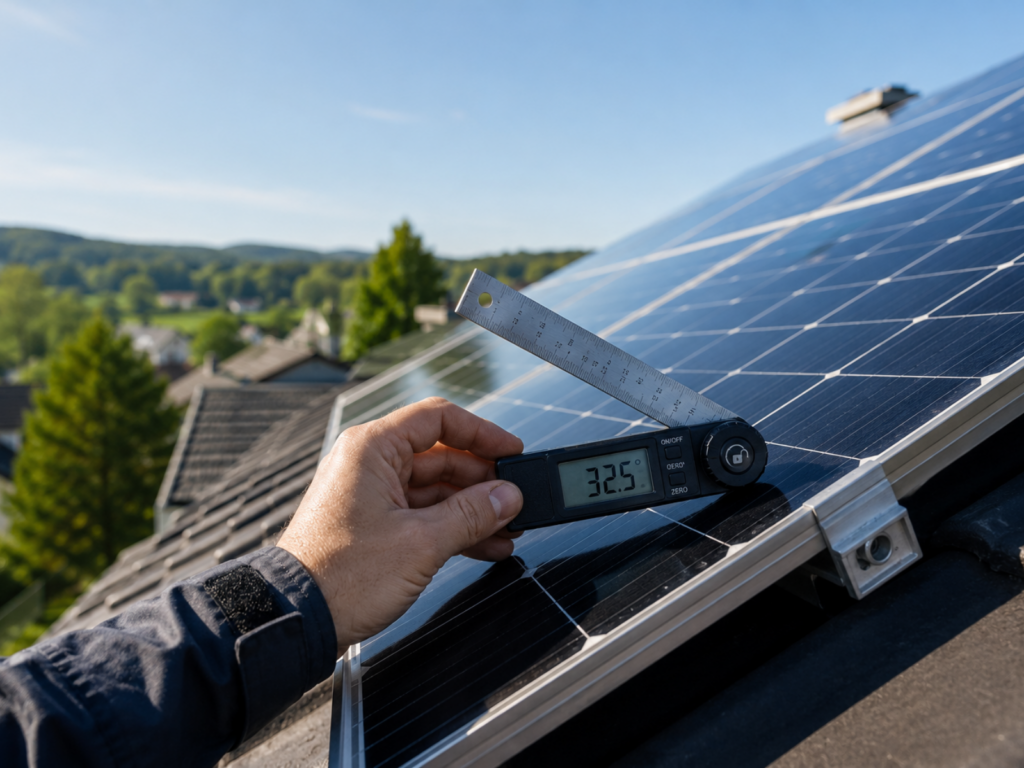
The optimal tilt angle for photovoltaic panels depends on the location, roof orientation, type of mounting system and the purpose of the installation. In Central Europe, an angle of approximately 30-40° is often recommended for year-round systems, but this is not a strict rule. In many cases, it is more practical to use the existing roof pitch rather than complicate the installation with an additional mounting structure. The profitability of a photovoltaic installation is influenced not only by the panel angle, but also by their direction, shading, available surface area and the way energy is consumed in the building.
Panel shading - a greater problem than an imperfect orientation
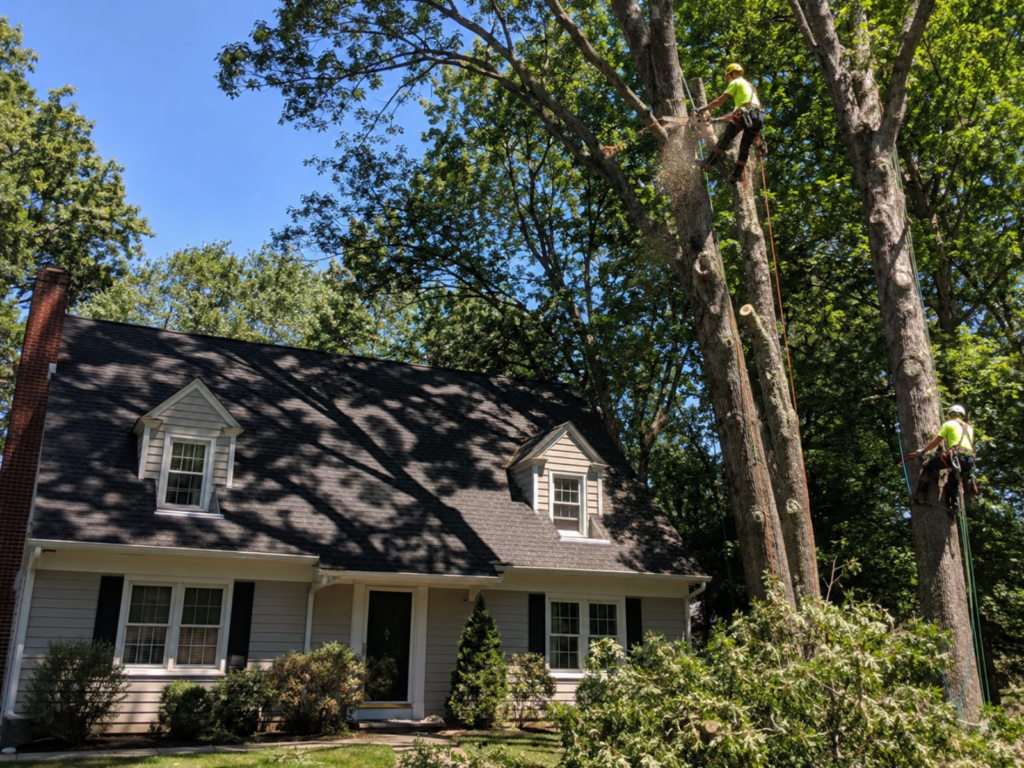
Shading can reduce the performance of a photovoltaic installation more significantly than a less-than-ideal panel orientation. Before installation, it is important to check whether the modules may be shaded by trees, chimneys, dormer windows, antennas, neighbouring buildings or other roof elements. Seasonal shading should also be taken into account, as the sun is lower in winter and shadows are longer than in summer. Only a proper shading analysis can determine which part of the roof is best suited for photovoltaics.
Before installing the panels, it is particularly important to check:
- trees and tall shrubs,
- chimneys and dormer windows,
- neighbouring buildings,
- antennas and rooftop installations,
- shading caused by subsequent rows of panels,
- dirt, leaves and accumulated snow.
How does Voltmax select the direction and angle of photovoltaic panels?
Voltmax selects the direction and tilt angle of photovoltaic panels based on an analysis of the individual building. We assess the roof orientation, pitch, available surface area, technical condition, shading and actual energy consumption. This allows us to determine the appropriate system capacity, panel layout and positioning that best match the building’s conditions and the way electricity is used.
Voltmax supports investors at every stage, from analysis and system design to photovoltaic installation and planning for future expansion. If you would like to find out whether your roof is suitable for photovoltaic panels and which system configuration would be the most cost-effective in your specific circumstances, it is worth consulting the project before making a final installation decision.