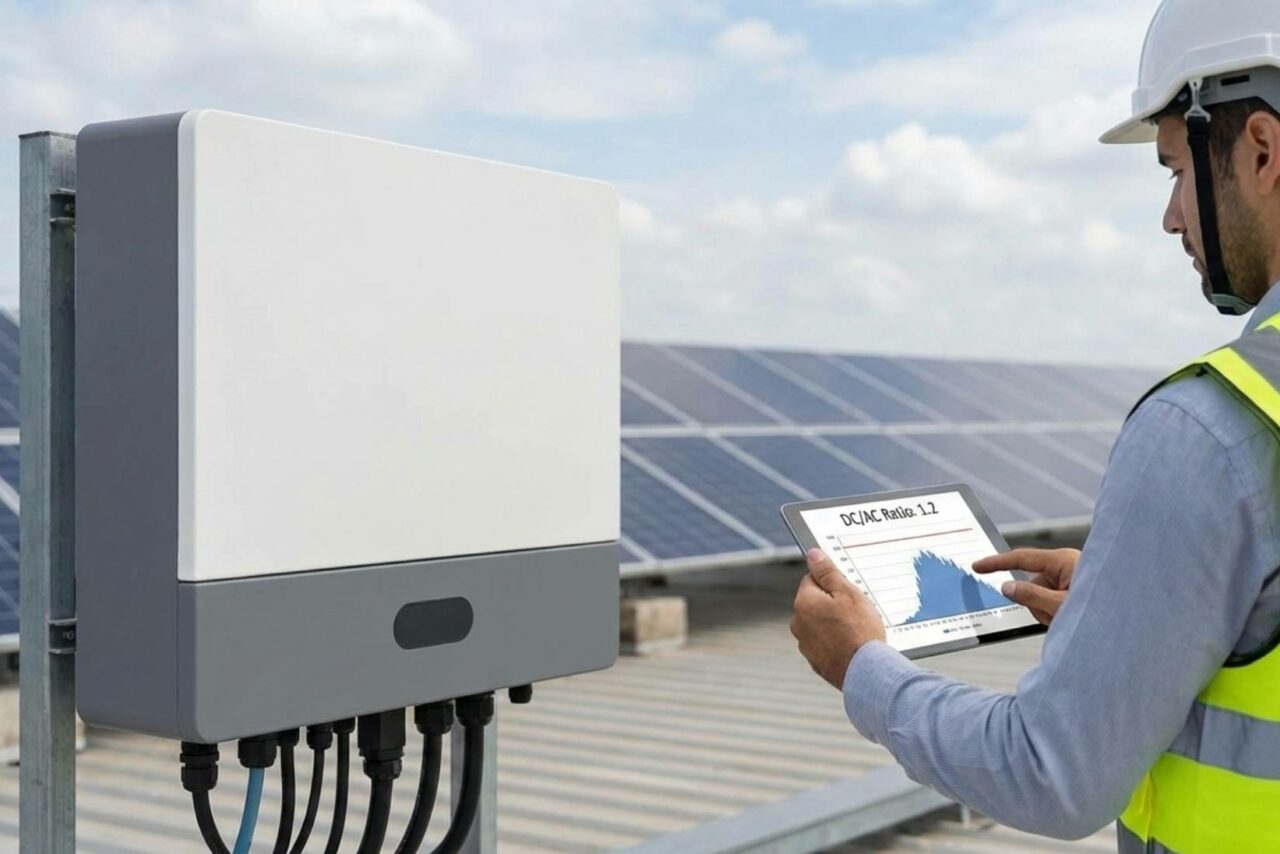

When planning a PV installation and trying to match the power of your solar panels to the inverter, you quickly discover that inverter sizing and PV system design have a major impact on long-term solar energy production. One of the most important concepts in modern solar engineering is over-paneling, also known as DC oversizing. In today’s PV systems, the DC/AC ratio directly influences performance, return on investment and how effectively the solar system works in real-world conditions.
This guide explains when over-paneling is worth applying, how an oversized PV array can increase annual energy yield, what solar designers should consider when choosing the DC/AC ratio, and which limitations signal that adding more panels no longer provides meaningful benefits.
Table of contents
ToggleWhat is overpaneling in a solar PV system?
DC-to-AC ratio explained in simple terms
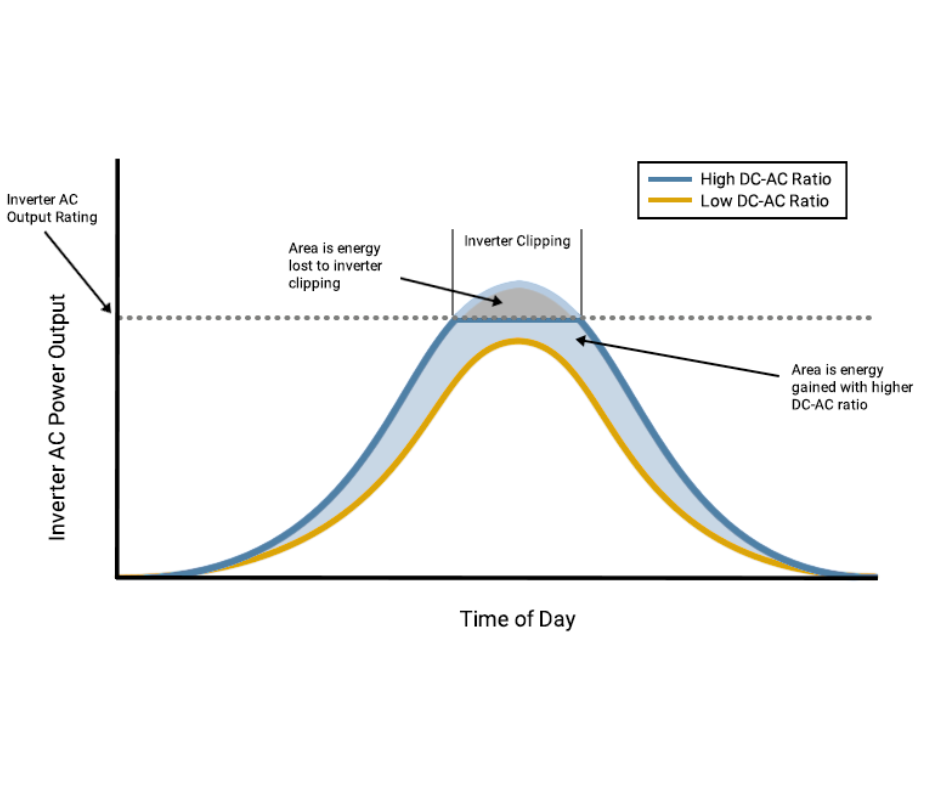
Overpaneling refers to installing a photovoltaic array with a higher DC power capacity than the nominal AC power output of the inverter. In other words, the solar panels are intentionally oversized in comparison to the inverter’s rating. The key parameter here is the DC-to-AC ratio, which tells us how much total panel power (DC) is connected to how much inverter power (AC). For example, if a 7 kW DC array is connected to a 5 kW AC inverter, the DC-to-AC ratio is 1.4. Increasing this ratio allows the system to produce more usable power during most daylight hours, especially in the morning, late afternoon, or during cloudy conditions. As a result, the inverter spends more time operating close to its peak efficiency rather than underloaded.
What is inverter clipping and why it happens
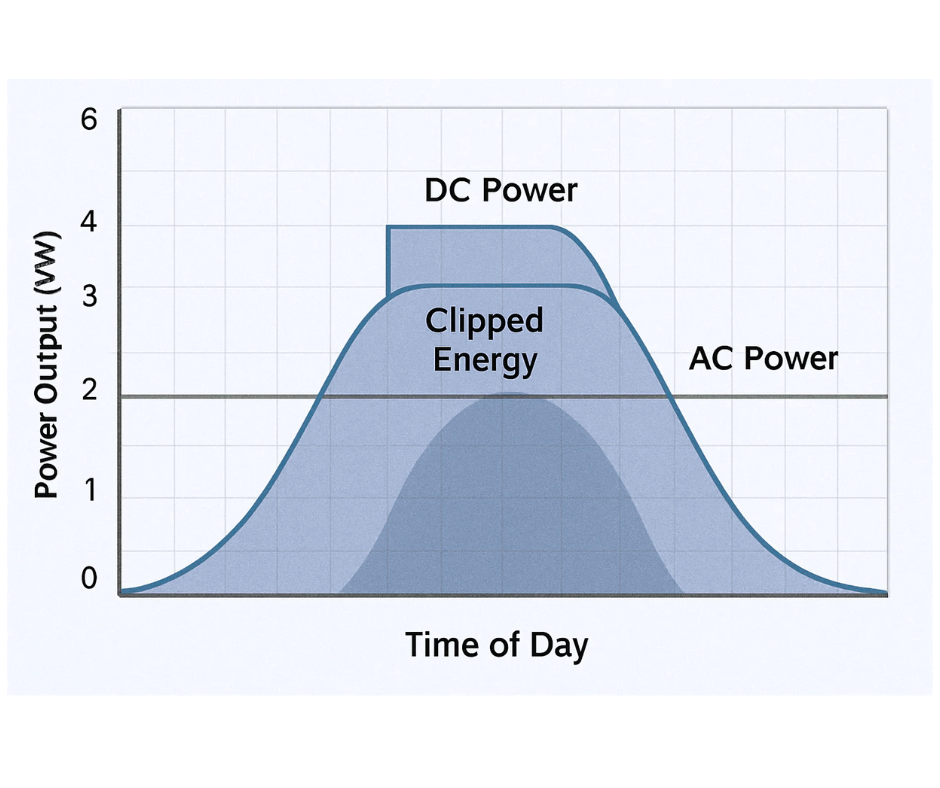
Because the solar panels can generate more DC power than the inverter is able to convert to AC at any given moment, there are short periods—typically around midday on very sunny days—when the inverter reaches its maximum output and cannot convert the surplus energy. This limitation is known as inverter clipping. The excess power is simply not used, so the system’s production curve gets “flattened” at the top. While clipping may sound like a drawback, the additional energy produced during the rest of the day usually outweighs the small amount of energy lost during peak production hours. This is why overpaneling is considered both economically and technically beneficial in many installations, especially in regions with variable climate or limited roof space.
Why overpaneling works in real-world PV performance
In theory, solar panels should deliver their full nameplate power output — but this happens only under Standard Test Conditions (STC), which almost never occur on an actual rooftop. Real-world weather, temperature, dirt, shading, and seasonal angles reduce the effective production of every PV array. Overpaneling compensates for these natural performance losses by connecting more DC power (solar panels) to the inverter than the inverter’s maximum AC rating. As a result, instead of working underloaded most of the time, the inverter delivers high output more consistently throughout the day and throughout the year.
Panels rarely reach their STC nameplate power
The wattage printed on a solar panel label represents output under perfect laboratory conditions: 1,000 W/m² irradiance, 25°C cell temperature, and an ideal light spectrum. On a real roof, these numbers are almost never achieved. High cell temperatures in summer can reduce panel efficiency by 10–20%. Dust, clouds, morning and evening sun angles, and winter conditions bring the output even lower. This means a “10 kW” PV array often spends only a tiny portion of the year operating anywhere near 10 kW. By oversizing the DC side, homeowners make better use of the inverter’s capacity throughout the day instead of leaving energy production unused.
Lower cost per kWh by adding more solar panels
From a financial point of view, overpaneling increases the return on investment. In many markets, solar panel prices have dropped significantly, while inverters remain a relatively expensive component. Instead of buying a substantially larger inverter, it is usually cheaper to add a few more panels to boost annual energy production. Even if a small amount of energy is occasionally clipped at noon on very sunny days, the extra energy harvested in the mornings, afternoons, and in cloudy weather far outweighs those losses. The result is more solar electricity for the same or nearly the same total system cost — and therefore a lower cost per kilowatt-hour over the lifetime of the installation.
Why overpaneling boosts real-world performance
- Solar panels reach their nameplate power only under rare laboratory conditions
- Overpaneling helps to compensate for temperature, weather, and seasonal losses
- The inverter runs closer to its optimal efficiency for a larger portion of the day
- Occasional inverter clipping is minimal compared to gains in yearly energy output
- Adding extra panels is usually cheaper than upgrading to a larger inverter
- More annual production = lower cost per kWh and faster ROI
When does over-paneling stop being beneficial?
Over-paneling remains effective only within a certain range. Industry-standard inverter sizing usually recommends a DC/AC ratio between 1.2 and 1.5. Beyond this level, the benefits flatten out while the disadvantages grow.
One of the first symptoms of excessive DC oversizing is prolonged inverter clipping. Short, midday clipping peaks are normal and have minimal impact on yearly output, but clipping that lasts for hours each day reduces annual production and can undermine the purpose of over-paneling.
Voltage limits also play a critical role. In cold conditions, open-circuit voltage increases, and overly long strings can exceed the inverter’s maximum input voltage. This poses a technical risk and requires the array to be redesigned. Excessive oversizing may also lead to higher thermal stress on the inverter, reducing reliability and lifespan by forcing it to operate near its limits too frequently.
Economic factors matter as well. When using high-end solar panels, adding more modules can become disproportionately expensive compared to selecting a slightly larger inverter. For these reasons over-paneling is best applied within an optimal range where PV system efficiency rises without surpassing electrical or economic limits.
Recommended DC-to-AC ratios for modern PV design
Selecting the right DC-to-AC ratio is one of the most important decisions when sizing a solar PV system. A well-designed system aims to maximize yearly electricity production while keeping hardware costs under control and avoiding excessive clipping. In modern PV engineering, slight oversizing of the DC side is not a flaw — it is now considered a best practice, especially given today’s panel efficiency, temperature behavior, and rapidly falling module prices. The key is not to avoid clipping completely, but to choose a ratio where the inverter runs close to its peak efficiency much of the year while clipping remains minimal and financially insignificant.
Typical design ranges for residential and small commercial
Most PV designers today no longer aim for a 1:1 DC-to-AC match. For residential systems, optimal ratios frequently fall between 1.2 and 1.4 — and even 1.5 can be justified in climates with frequent cloud cover, high temperatures, or east–west roof layouts. For small commercial installations, ratios of 1.3 to 1.6 are common due to higher daytime energy demand and larger roof areas. These ranges allow the inverter to operate closer to its peak power rating more consistently, improving energy yield without requiring a larger, more expensive inverter.
Annual energy gain vs clipping losses
When the DC array is oversized, two things happen:
- Annual energy production increases because low and medium irradiation periods are used more effectively.
- Short periods of inverter clipping occur around solar noon on very bright days.
However, long-term data shows that the energy gained throughout the year is significantly greater than the energy lost to clipping. Even at a 1.4 ratio, clipping losses might total only 1–3% annually, while total generation may increase by 8–15%. For most homeowners and businesses, the additional production during mornings, afternoons, and cloudy days is what drives the return on investment.
Is inverter clipping really a problem?
In practical terms — not usually. Clipping looks dramatic when viewed on a production graph, because the curve appears “flat-topped” at peak midday hours. But the duration of clipping is short, and the total kilowatt-hours lost are small. Avoiding clipping entirely would require purchasing a larger inverter, leading to higher system costs for very little additional production. Modern PV design philosophy accepts a small amount of clipping as a strategic trade-off for a larger yearly energy yield and lower cost per kWh. The real “problem” is not that clipping exists — it’s when a system is undersized on the DC side, causing the inverter to run below its optimal output for most of the day.
How to decide if overpaneling makes sense for your roof
Overpaneling is not just a technical trend — it is a strategic design choice that can significantly increase your annual solar production when applied in the right conditions. The key is to evaluate your roof, inverter size, space availability and energy goals as one system. You don’t need to eliminate clipping completely — the smartest PV systems accept a small amount of clipping in exchange for much higher total kWh across the year. If your aim is to maximise clean energy from every square metre of roof, overpaneling is often the most cost-effective solution.
Checklist for homeowners and PV designers
Use this list as a quick decision tool — if most points match your situation, overpaneling probably makes sense:
- You want to maximise total annual kWh production, not just peak midday output
- You have unused roof space where you could add more panels without major extra cost
- Your region has variable weather, frequent clouds, high summer temperatures or winter seasons
- You have east–west roof orientations or several roof planes rather than a single perfect south pitch
- You want to reduce payback time and lower the cost per produced kWh over 25 years
- Adding more panels is cheaper than buying a significantly larger inverter
- A small amount of inverter clipping is acceptable in exchange for more energy throughout the year
- The inverter manufacturer supports oversizing and the design stays within warranty limits
- Local grid connection rules allow oversizing of the PV array relative to the inverter
Questions to ask your installer about overpaneling
To ensure a safe and financially optimal design, it’s useful to speak openly with your installer. Recommended questions include:
- What DC-to-AC ratio do you recommend for my roof and why?
- How much clipping do you expect annually and how will it affect total energy production?
- Will oversizing the panels stay within the manufacturer warranty and technical limits of the inverter?
- Is a bigger inverter necessary, or is adding more panels a better investment in my case?
- How will roof temperature, shading and orientation affect an oversized array?
- Can you show projected yearly production for a 1.0 vs 1.3–1.4 DC/AC setup?
A professional installer like Voltmax provides side-by-side annual yield simulations for different DC/AC ratios, helping homeowners choose the most profitable configuration rather than the biggest inverter. This removes uncertainty and makes the decision purely data-driven.
FAQ — overpaneling, inverter sizing and clipping
Overpaneling refers to connecting a solar panel array (DC power) that is larger than the AC rating of the inverter. The goal is to increase total yearly electricity production — not just maximize output during the brightest hours of the day. A slightly oversized DC array allows the inverter to operate closer to its maximum power for more hours across the day and across the year, especially during mornings, afternoons and cloudy weather. A small amount of inverter clipping becomes acceptable because the net energy gain far outweighs the small losses at midday.
Is it safe to oversize solar panels compared to the inverter?
Yes. Overpaneling is safe when it follows the inverter manufacturer’s specifications. Modern inverters are designed to limit their output safely once they reach their maximum AC power rating — they do not “overheat” or become overloaded. Oversizing does not push additional AC power into the grid; the inverter simply caps the output and discards the unused surplus.
How much can I overpanel my inverter — what DC/AC ratio is best?
For most residential and small commercial systems, a DC/AC ratio between 1.2 and 1.4 provides the best balance of annual production and equipment cost. Ratios up to 1.5 are often viable in climates with high temperatures, frequent cloud cover or mixed roof orientations. The goal is not to eliminate clipping, but to increase total kWh throughout the year and reduce the cost per produced kWh.
Does overpaneling damage the inverter or affect its warranty?
No — as long as oversizing stays within the limits specified by the inverter manufacturer. Overpaneling does not force the inverter to output more power than it is designed for; it simply gives the inverter more available DC power to convert. In practice, warranty conditions often include a maximum allowable DC/AC ratio, and staying under that threshold keeps the warranty fully valid.
What is inverter clipping and should I worry about it?
Inverter clipping occurs when the DC power from the solar panels briefly exceeds what the inverter can convert to AC — usually around midday on very sunny days. The inverter simply caps the output at its maximum and discards the excess. Clipping may look dramatic on a production graph, but the total lost energy is typically very small, while the extra production gained during the rest of the day is much greater. In modern PV design, slight clipping is considered normal and economically beneficial.
Not sure how much overpaneling is right for your inverter? Contact us for a professional system assessment.
Tagged: best DC/AC ratio for residential solar can you oversize solar panels for your inverter DC-to-AC ratio in solar PV inverter clipping inverter sizing is overpaneling safe Luxembourg over-paneling overpaneling overpaneling grid-tied systems overpaneling solar overpaneling solar panels oversizing solar array vs inverter photovoltaic panels photovoltaics Photovoltaik photovoltaïque PV design solar energy Voltmax