
When planning a photovoltaic installation, one of the first and most important decisions is choosing between ground-mounted photovoltaic panels and roof-mounted photovoltaic panels. As homeowners and businesses begin this process, they quickly discover that although both systems use the same photovoltaic technology, they perform differently in real-world conditions and offer different advantages—depending on the available space, structural constraints, and long-term energy goals.
This guide compares both mounting options in a clear and practical way. It explains how they differ in terms of performance, how much space they require, what installation challenges should be considered, and how local regulations—including those in Luxembourg—can influence the final choice. Our goal is to help property owners assess which approach will deliver the best long-term efficiency for a specific location.
Table of contents
ToggleGround-mounted vs. roof-mounted photovoltaic panels – a quick overview
At first glance, ground-mounted panels may seem more efficient, while roof systems appear simpler and more cost-effective. In practice, however, neither option is universally better—the right choice depends on the roof structure, available land, shading, long-term energy goals, and local permitting rules.
To make comparison easier, below is a brief summary of the key differences. You can also jump directly to the full comparison table 👉 see the comparison.
What distinguishes roof-mounted photovoltaic panels?
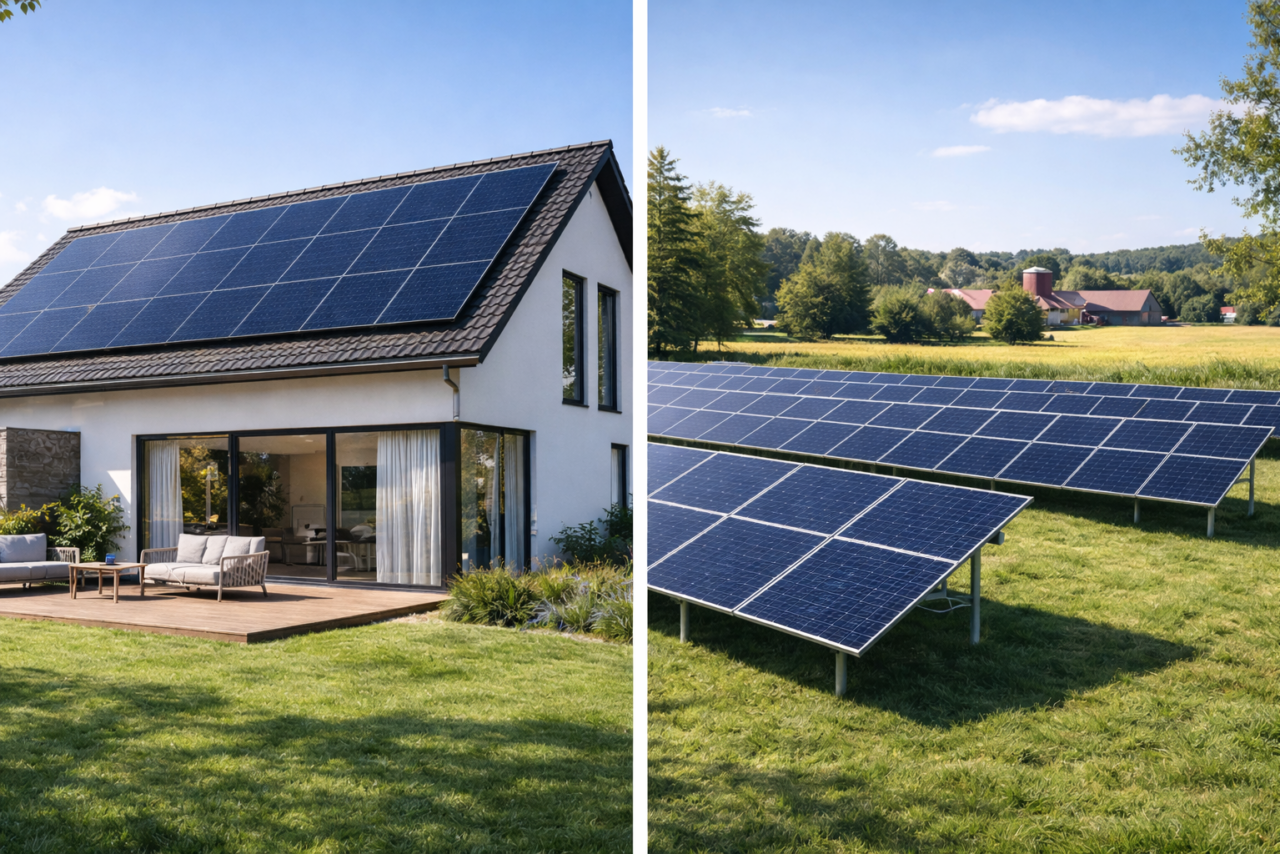
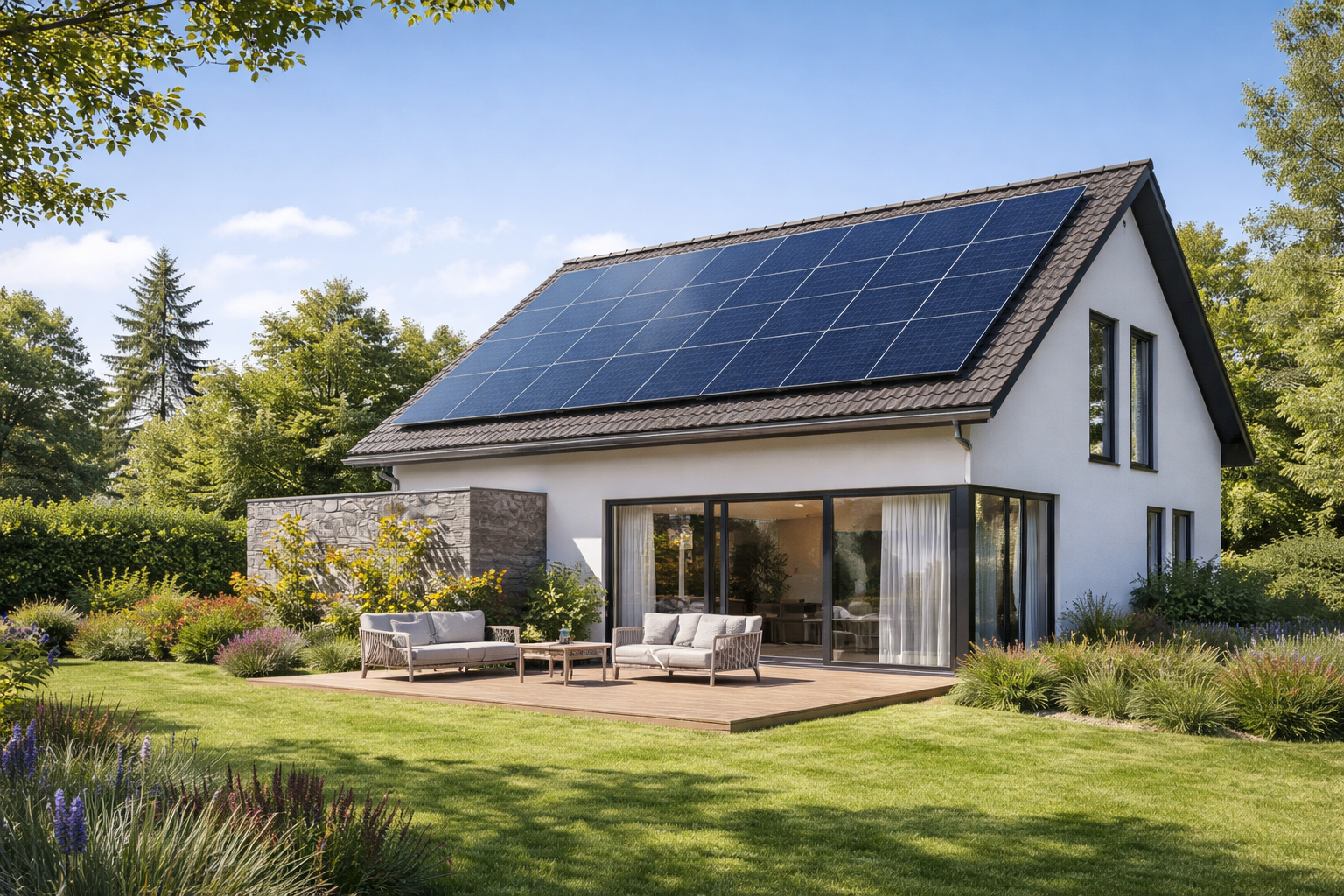
Roof-mounted photovoltaic panels are one of the most commonly chosen solutions. They make it possible to use the existing surface of a building without taking up additional space on the property. Such installations are usually less visible and much easier to integrate into the building’s structure, which is very important for many people. The roof itself plays the most important role—its orientation, tilt angle, and any potential shading are factors that can directly affect future energy output. Rooftop photovoltaics work well when we want to efficiently use the available space and the building’s technical conditions allow it.
How are photovoltaic panels installed on a roof?
Roof-mounted photovoltaic panels are installed directly on the existing roof structure using dedicated mounting components. This is the most common type of PV installation because it uses space that would otherwise remain unused. For many homes and businesses, roof-mounted PV panels are a simple way to produce solar energy without changing the layout of the property.
When do roof systems work best?
The performance of a roof system mainly depends on the roof’s orientation, its tilt angle, and shading conditions. A well-positioned roof can provide very good annual energy production with minimal visual impact. Roof installations, however, are always limited by the available roof area and the load-bearing capacity of the structure.
Limitations of roof mounting to keep in mind
Installing panels on a roof can be a great solution, but it is not always possible or cost-effective. It is most often limited by the structure and condition of the roof covering—older roofs may require reinforcement or renovation, and some materials and slopes make safe mounting more difficult. Load-bearing capacity is also important: the installation itself, as well as wind and snow loads, must remain within the building’s design parameters.
Another common issue is shading. Chimneys, dormers, taller buildings, or trees can significantly reduce energy yield, especially during periods with shorter daylight hours. In addition, there is limited surface area—there may simply not be enough space on the roof to install a system with enough capacity to realistically cover the energy needs of a home or business.
It is also worth remembering practical considerations such as service access, safety when working at height, and aesthetics (for example, visibility of the installation from the street). If any of these factors pose a barrier, ground mounting may be a more convenient alternative—it offers greater freedom in choosing system size and orientation, as well as easier access to the installation.
What distinguishes ground-mounted photovoltaic panels?
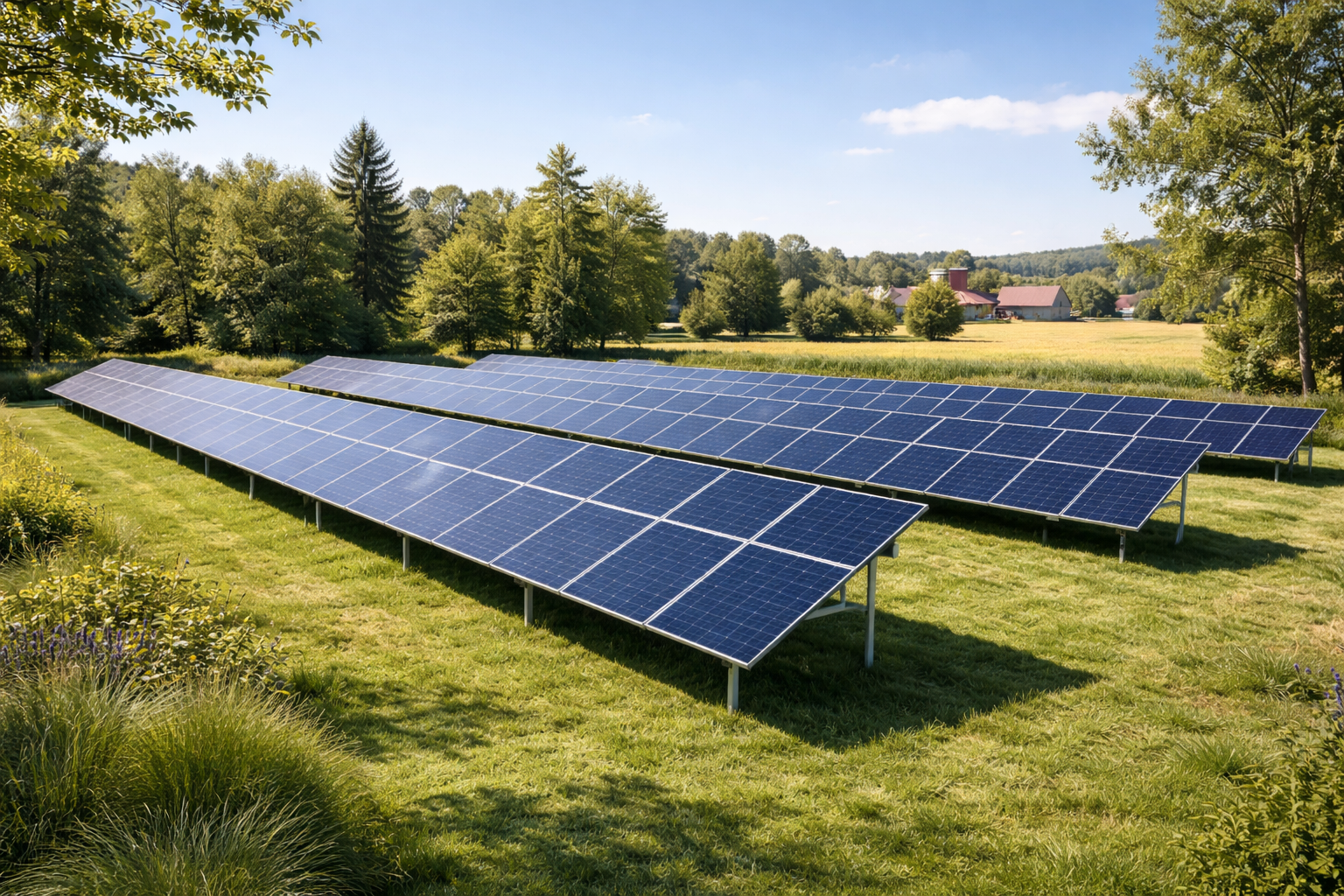
Ground-mounted photovoltaic panels are installed on free-standing structures anchored directly into the ground. This type of system works well on properties with unused land or when the roof is not suitable for PV installation. Because the structure is built specifically for the panels, it can be optimized for the best orientation, tilt angle, and spacing, which often translates into higher energy yield.
Ground systems also provide easier access for cleaning and maintenance. However, they require dedicated space, earthworks, and—in many cases—additional permits, which is particularly important in countries such as Luxembourg, where ground-mounted PV installations may trigger planning procedures depending on the size and intended land use.
How are photovoltaic panels installed on the ground?
The installation of a ground-mounted system begins with a detailed site assessment—including soil conditions, shading analysis, and layout planning. Next, the site is prepared through excavation or land leveling. Steel posts or concrete foundations are then installed to support the structure. Once the structure is ready, the panels are installed at the optimal tilt and orientation. The system is then connected to the inverter using cabling routed underground, and finally testing and commissioning are carried out to ensure proper operation.
When do ground systems work best?
Ground systems perform best on properties with sufficient open space and good sunlight throughout the day. They are particularly well suited to rural areas, farms, large private plots, and commercial facilities where roof space is limited or unsuitable. This type of installation is often chosen when maximizing system performance is a priority or when the investor plans future expansion of the PV farm as energy demand increases.
Limitations of ground mounting and permits
One of the most important limitations of ground-mounted panels is the need for additional land and formal approvals. In the case of ground-mounted photovoltaic panels in Luxembourg, a permit may be required depending on the size of the installation, the land-use designation in the zoning plan, and the proximity to protected areas or residential buildings. Local authorities may also assess visual impact, distance from property boundaries, and potential environmental effects. These factors can extend the project timeline but are essential for legal compliance and the long-term safety of the installation.
Roof-mounted vs. ground-mounted installation – step-by-step comparison
To make the differences easier to understand, below is a simplified comparison of the two most common types of installations. The table shows performance characteristics, space requirements, and practical considerations that often influence the decision.
Aspect | Roof-mounted PV panels | Ground-mounted PV panels |
Orientation and tilt angle | Limited by roof angle and orientation | Fully adjustable for maximum performance |
Required space | Uses existing roof surface, no land required | Requires dedicated land and open ground space |
Installation complexity | Faster installation, fewer materials | More construction work, foundations or posts required |
Service access | More difficult due to roof height | Easy and safe access from ground level |
Shading | Limited ability to avoid obstacles | Can be positioned optimally to avoid shade |
Cost factors | Usually lower upfront cost | Higher cost due to structure and earthworks |
Permits (Luxembourg) | Usually simpler, fewer formalities | May require a permit depending on size |
Future expansion | Limited by roof area | Easy to expand with additional rows |
Cost, performance, and maintenance – which panels are better?
The choice between ground-mounted and roof-mounted panels usually comes down to three key factors: upfront cost, long-term energy yield, and ease of maintenance. While both systems can deliver excellent results, the differences become clear when these aspects are compared side by side.
Upfront cost and installation complexity
Roof-mounted panels are generally more cost-effective at the installation stage. They use the existing building structure, so apart from the mounting system itself, no additional foundations or support frames are required. Installation is faster and involves less construction work, which reduces labor and material costs. This makes roof systems an attractive option for homeowners and small businesses looking for a budget-friendly entry into solar energy.
Ground systems, on the other hand, require a much greater scope of work. Steel posts or concrete foundations must be installed, the site often needs preparation, and underground cabling is usually required. These elements increase both installation time and total project cost. However, the higher investment provides greater flexibility and potential for future expansion.
Energy yield and system efficiency
In terms of performance, ground-mounted panels often achieve higher annual energy yields. Because they can be set at the optimal tilt and orientation and arranged to avoid shading, they operate under near-ideal conditions throughout the year. Better air circulation around the panels also helps limit overheating, further improving efficiency.
Roof systems can also be very effective, but their performance is limited by roof orientation, tilt, and surrounding obstacles. When the roof layout is favorable and shading is minimal, rooftop panels can deliver excellent results. However, they rarely achieve the same level of optimization as ground-mounted installations.
Maintenance, safety, and access
Maintenance is one of the most noticeable differences between these systems. Ground-mounted panels are easily accessible from ground level, making cleaning, inspections, and repairs faster and safer. This is particularly beneficial in areas with frequent dust, high pollen levels, or snowfall, where regular cleaning improves energy yield.
Roof-mounted panels are more difficult to access and usually—due to safety considerations—require servicing by professionals. Roof height, slope, and weather conditions can further complicate work. In addition, future roof renovations may require temporary removal of the PV system, which generates additional costs and logistical planning.
Ground-mounted and roof-mounted photovoltaics in Luxembourg – what to check locally
Before choosing between ground-mounted and roof-mounted panels in Luxembourg, it is worth considering several local regulations and formal requirements that can affect both the project timeline and the total investment cost. In most cases, roof systems are treated as a standard building upgrade and usually require fewer administrative procedures, especially when the panels follow the roofline and do not significantly alter the building’s appearance.
Ground-mounted panels in Luxembourg are subject to more restrictive regulations. A permit may be required depending on the size of the installation, land-use designation, and proximity to residential or protected areas. Properties located in agricultural zones, nature conservation areas, or near heritage sites may be subject to additional restrictions. Local municipalities may also require environmental impact checks, visual integration assessments, and compliance with minimum distances from neighboring plots.
Connection to the grid and approval for feeding electricity back into the network is also important. Regardless of the mounting type, every system must meet the requirements of the national grid operator, especially for larger installations. Investors should also check available subsidies and support programs for photovoltaics, as some incentives may differ depending on whether the system is roof-mounted or ground-mounted.
Because regulations can vary between municipalities, it is always advisable to consult a local PV specialist before making a final decision. This helps avoid delays, unexpected permitting costs, and ensures full legal compliance of the installation.
Which system requires more space?
Roof-mounted panels only require the available roof surface of the building. Their capacity is naturally limited by roof dimensions, obstacles such as chimneys or skylights, and the load-bearing limits of the structure.
Ground systems require dedicated land. A general rule of thumb is that 1 kWp of ground-mounted panels needs about 5–7 m² of free space, including spacing between rows to prevent shading. Larger installations may require significantly more area due to service access paths, maintenance access, or seasonal tilt-angle adjustments.
Summary – which option is better?
The choice between ground-mounted and roof-mounted panels depends entirely on the characteristics of the property and long-term energy goals. Roof systems remain the preferred solution for most homeowners thanks to their lower cost and the ability to use unused roof space. They are simple, efficient, and usually easier to approve from a formal perspective, especially in Luxembourg.
Ground systems are the better choice when the roof is not suitable for photovoltaics or when maximum performance is the priority. They allow for ideal orientation and future scalability, making them a good solution for larger properties, farms, and commercial installations.
Both options can deliver very good results if properly designed. The best choice is the one that best fits the available space, structure, regulatory environment, and the property’s long-term energy strategy.
FAQ
Are ground-mounted panels more efficient than roof systems?
In many cases, yes. Ground-mounted panels can be set at the optimal tilt and orientation and benefit from better airflow around the modules. This often results in higher annual energy yield compared to roof systems of the same capacity.
Which is cheaper – ground-mounted or roof-mounted panels?
Usually, roof-mounted panels are the cheaper option. They use the existing roof structure and require less construction work, which lowers material and labor costs. Ground systems require foundations and site preparation, increasing upfront investment.
Do ground-mounted panels require a permit?
In many regions, yes. In Luxembourg, ground-mounted panels may require a permit depending on system size, land-use designation, and proximity to residential or protected areas. It is always advisable to check local municipal regulations before installation.
Are roof-mounted panels harder to maintain?
Yes. Roof systems are less accessible and usually require professional servicing for safety reasons. Ground systems are easier and safer to clean, inspect, and repair thanks to ground-level access.
Can I start with a roof system and later add a ground-mounted system?
Yes, this is a common approach. Many homeowners start with a roof system and later add a ground-mounted expansion as energy demand grows or when roof space runs out.