
Heating prices in Luxembourg in 2026 are a topic that raises many questions — especially since the rates for gas, electricity, oil, or pellets alone do not show the full picture. In practice, the actual costs are determined not only by the fuel price, but also by the efficiency of the heating appliance and fixed charges, which can significantly affect the final bill. That is why we compare heating sources using a common denominator: the cost of 1 kWh of useful heat, meaning the heat that actually reaches the home. This approach makes it possible to compare different forms of heating fairly. Based on current reference data for Luxembourg, we show which solutions are the most cost-effective in everyday use. We also explain why the same heating source can be cheaper for some users and more expensive for others — and which factors matter most here. If you are planning to modernize your heating system or simply want to better understand your bills, this comparison will help you make a more informed decision.
Table des matières
ToggleReference fuel prices
Heating costs in Luxembourg can vary significantly not only because each energy source has a different price, but also because different heating systems “produce” different amounts of heat from the same energy. That is why simply comparing the “price of gas” with the “price of electricity” can be misleading.
Below, we compare the most popular heating sources in Luxembourg (gas, electricity, heating oil, pellets). We examine how much 1 kWh of actual heat in the home costs and what the annual bill may amount to for typical demand.
The fairest comparison is the cost of 1 kWh of useful heat (that is, the heat that actually warms the interior). This is important because:
- resistive electric heating converts 1 kWh of electricity into about 1 kWh of heat,
- a gas/oil boiler has losses and usually delivers less than 100%,
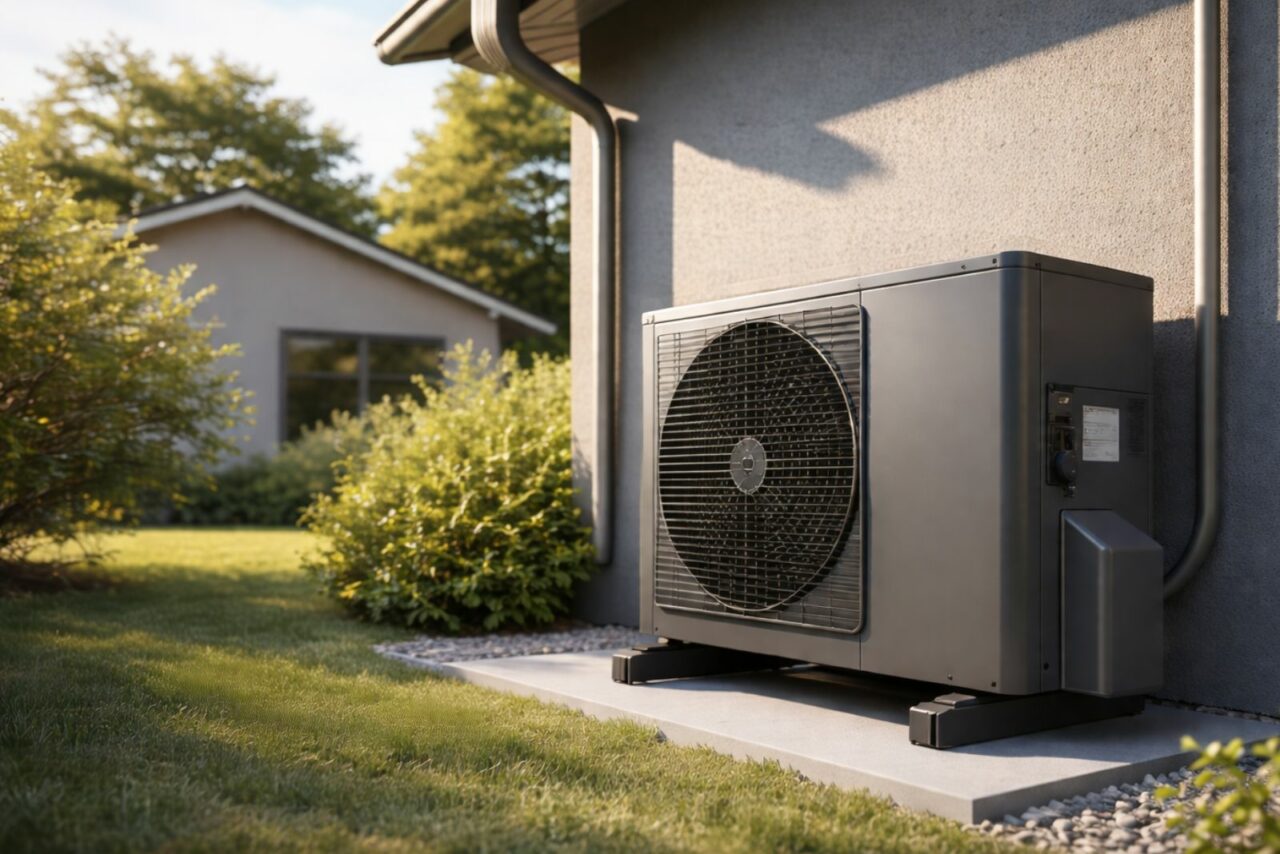
- a heat pump can, under favorable conditions, “produce” 3–4 kWh of heat from 1 kWh of electricity (this is the so-called seasonal efficiency/SCOP).
In the calculations, we assume typical seasonal efficiencies:
- gas (condensing): about 92%
- oil: about 88%
- pellets: about 88%
- heat pump: SCOP about 3.2 (in reality it is often 3–4, depending on the system and temperature)
Gas (household tariff 01/01/2026 – SUDgaz Classic, prices excluding 8% VAT)
- gas: 0.4455 €/m³ + network: 0.2202 €/Nm³, taxes: 0.00108 €/kWh + 0.00912 €/kWh CO₂, fixed charges including 8.69 €/month (network access) + a service fee depending on capacity (e.g. 5 €/month for <10 kW)
- calorific value of gas (SUDenergie): 10.2 kWh/m³
Fioul
- official price in Luxembourg (10/02/2026): 0.867 €/l (TVA incl.)
- energy in 1 liter (typically): ~10 kWh/l
Wood pellets
- example price of bulk pellets with delivery: from 373.22 €/t – it is worth remembering that the price depends on the quantity
- example price of bagged pellets in a store (Hornbach LU): 6.79 € / 15 kg
- energy in pellets: ~4.8 kWh/kg
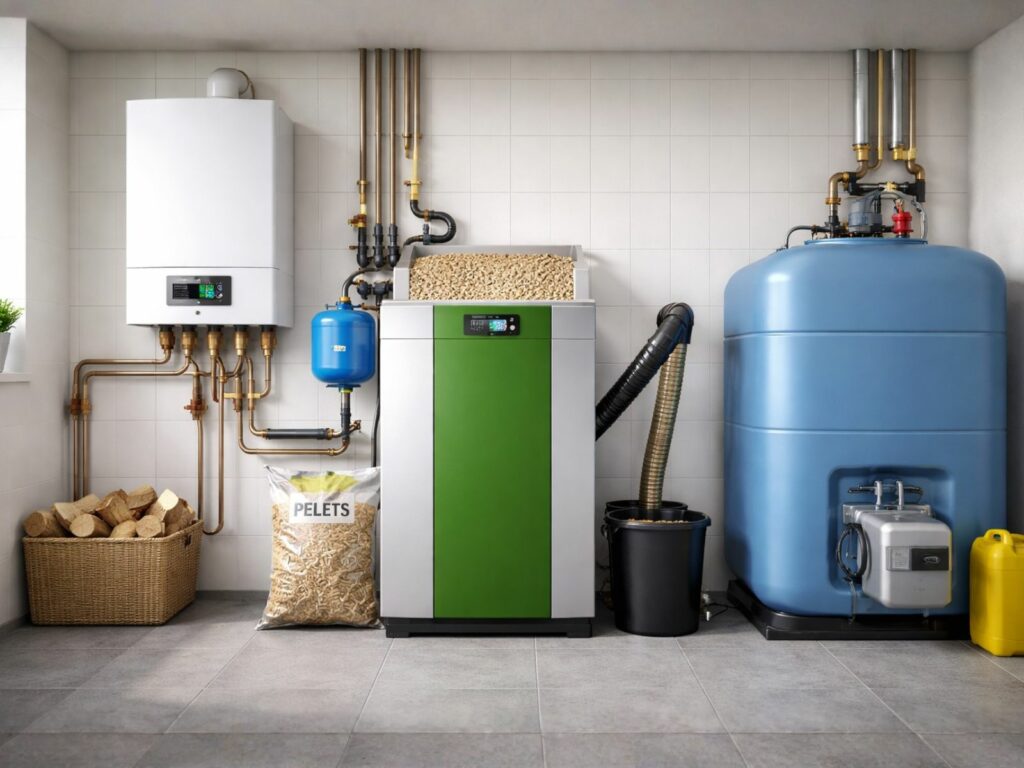
Comparison of the cost of 1 kWh of heat depending on the heat source
The cost of 1 kWh of heat from different sources, calculated “after efficiency” of the appliance and based on the reference data above.
Pompe à chaleur (SCOP ~3.2): ~0.081 €/kWh of heat
(assuming that 1 kWh of electricity gives about 3.2 kWh of heat; in reality it may be better or worse).
Granulés en vrac (about 373 €/t): ~0.088 €/kWh of heat
Condensing gas (with typical fixed charges): ~0.10 €/kWh of heat
Fioul (0.867 €/l): ~0.099 €/kWh of heat
Bagged pellets (6.79 €/15 kg): ~0.107 €/kWh of heat
Resistive electric heating: ~0.258 €/kWh of heat (because 1 kWh of electricity ≈ 1 kWh of heat)
In practice, this means that under current market conditions in Luxembourg, a heat pump and pellets purchased on favorable terms (in bulk) are most often the most cost-effective options, while resistive electric heating is usually the most expensive option to operate.
Source de chauffage | Approximate cost of 1 kWh of heat |
Pompe à chaleur (SCOP ~3.2) | ~0.081 €/kWh of heat |
Granulés en vrac (about 373 €/t) | ~0.088 €/kWh of heat |
Condensing gas (with fixed charges) | ~0.100 €/kWh of heat |
Fioul (0.867 €/l) | ~0.099 €/kWh of heat |
Bagged pellets (e.g. Hornbach) | ~0.107 €/kWh of heat |
Resistive electric heating | ~0.258 €/kWh of heat |
In practice, this means that under current market conditions in Luxembourg, a heat pump and pellets purchased on favorable terms (in bulk) are most often the most cost-effective options, while resistive electric heating is usually the most expensive option to operate.
Example annual heating cost for a house
If a building uses about 15,000 kWh of heat per year (heating + part of the hot water demand – depending on the standard of the house), the approximate costs may look as follows:
Source | Annually (15,000 kWh of heat) |
Heat pump (SCOP 3.2) | ~1,209 € / year |
Granulés en vrac | ~1,325 € / year |
Fioul | ~1,478 € / year |
Condensing gas | ~1,506 € / year |
Bagged pellets | ~1,607 € / year |
Resistive electric | ~3,870 € / year |
What has the biggest impact on the result? 4 factors that change heating costs
First, isolation des bâtiments and the supply temperature of the system are of huge importance. A heat pump is most cost-effective where the house has reasonable thermal insulation and the heating system operates at low temperatures (e.g. underfloor heating or large radiators). Then the SCOP increases and the cost of 1 kWh of heat decreases.
Second, in the case of gas, fixed and network charges matter. Even if gas itself looks attractive when converted per m³, the bill is increased by the network component, taxes, and fixed monthly items.
Third, not all pellets are equal – what matters is whether you buy them in bulk or in bags, and how much you can order at one time. The difference in price per ton often amounts to hundreds of euros over a season.
Fourth, in the case of electricity, variability results from how charges and support mechanisms are structured. In Luxembourg, there have been significant changes and state interventions concerning elements of the energy bill from 2026 onward.

Which form of heating should you choose in Luxembourg if you are looking for a long-term solution?
If you want the lowest possible heating costs over the long term, then in many cases a heat pump is the winner, because it works like an energy “multiplier”: you pay for 1 kWh of electricity and get several kWh of heat.
Additionally, in practice it is often combined with photovoltaics, so part of the energy for heating (especially during transitional periods) may come from your own roof, which stabilizes costs.
Gas and oil are still sometimes chosen where the priority is the simplicity of replacing a heat source “1 to 1,” and the building has a higher supply temperature while system modernization is limited. Pellets, in turn, are interesting for people who want a “physical” fuel and have space for storage, but it is important to remember about delivery logistics, storage space, and fuel quality.
Energy prices in Luxembourg - key conclusions in 2026
If we compare the actual cost of 1 kWh of heat, rather than fuel prices alone, then in Luxembourg a heat pump et pellets (especially bulk) are usually the best options, while resistive electric heating is usually the most expensive to operate. Gas and oil can be comparable in terms of cost, but the final bill depends on fixed charges, tariffs, and the efficiency of the appliance.
How can Voltmax help with choosing heating and lowering bills?
If you want to compare heating costs in Luxembourg using the example of “your home,” you will reach sensible conclusions the fastest when you calculate the actual energy consumption and check how the system will perform under your conditions. Voltmax can help you with this: we prepare preliminary calculations (heat demand, annual kWh, projected bills), select the right equipment (e.g. heat pump and accessories, system modernization, solutions for low supply temperature), and if you are planning to combine heating with photovoltaics, we match the system so that it actually lowers heating and electricity costs over the year.
In practice, it looks like this: based on data about the building (floor area, insulation standard, type of radiators/underfloor heating, previous bills, comfort preferences), we prepare a comparison of scenarios, e.g. gas vs. heat pump, pellets vs. heat pump, and the “heat pump + photovoltaics” variant. Thanks to this, you compare not only the fuel price, but the actual cost of 1 kWh of heat and the annual heating cost for your case. Additionally, we help you go through the topic of subsidies and formalities – so that the whole thing is calculated not “by eye,” but according to current rules and real figures.