Voltmax Energy Solutions in Luxembourg

Business solar subsidies · Luxembourg
Solar subsidies for businesses in Luxembourg
Your roof, car park or facade can cut your company’s energy bill for the next 25 years – and the state helps pay for it. Up to 30 kWp, your company can get a fixed Klimabonus. Above 30 kWp, larger projects compete for investment aid. Voltmax shows you which route fits, files everything in the right order and builds the system.
The short version
What your company can get
Four things every business owner should know before asking for a quote. The exact amount always depends on your project, your consumption and the state aid your company has already received.
Up to €10,000
Klimabonus for a self-consumption solar system on a company roof or facade, from 2 kWp.
+ up to €2,250
Extra Klimabonus for a battery of at least 2 kWh installed together with the solar system.
Up to €1,215/kWp
Highest ceiling in the latest investment-aid call (solar carports with storage, 30–200 kWp). Projects compete on price.
Apply before you sign
For investment aid, the application must be filed before any order or works. Signing too early can cost you the subsidy.
Route 1 · up to 30 kWp
Klimabonus: a fixed subsidy, no competition
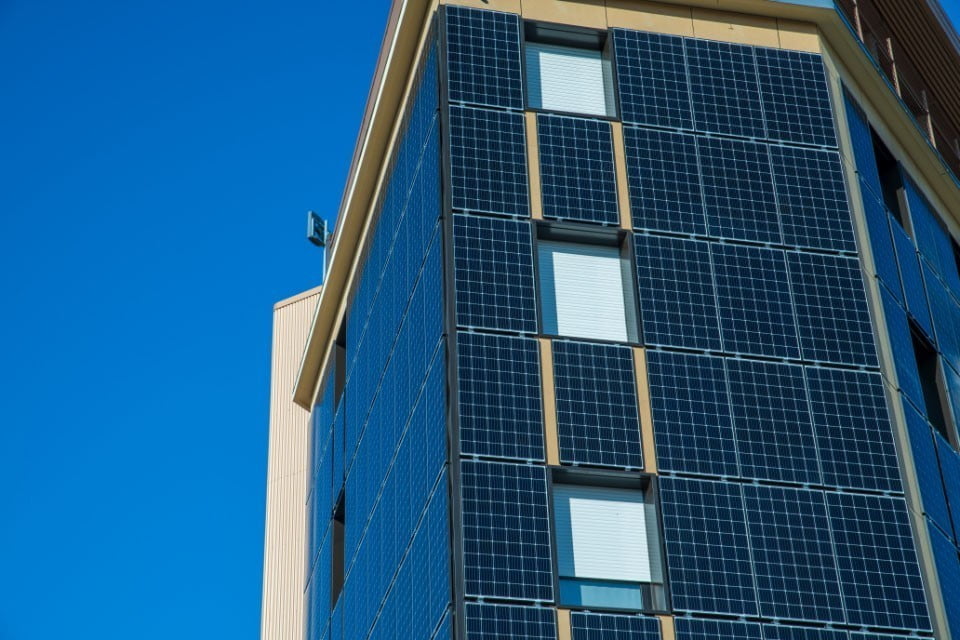
For most small and medium-sized businesses – shops, workshops, offices, medical practices – a system of up to 30 kWp covers a large share of daytime consumption. Here nobody competes for a budget: if your installation meets the conditions, the amount follows a fixed formula.
- Open to companies as de minimis state aid
- Self-consumption system on a roof or facade, from 2 kWp
- Up to €10,000 for solar + up to €2,250 for a battery
- Claimed from the Environment Agency after the works
Good to know: Klimabonus pre-financing (subsidy deducted from the invoice) is reserved for residential buildings. Companies use the standard procedure – you pay the invoice, then claim the subsidy.
Route 2 · above 30 kWp
Investment aid: a call for projects with competitive ranking
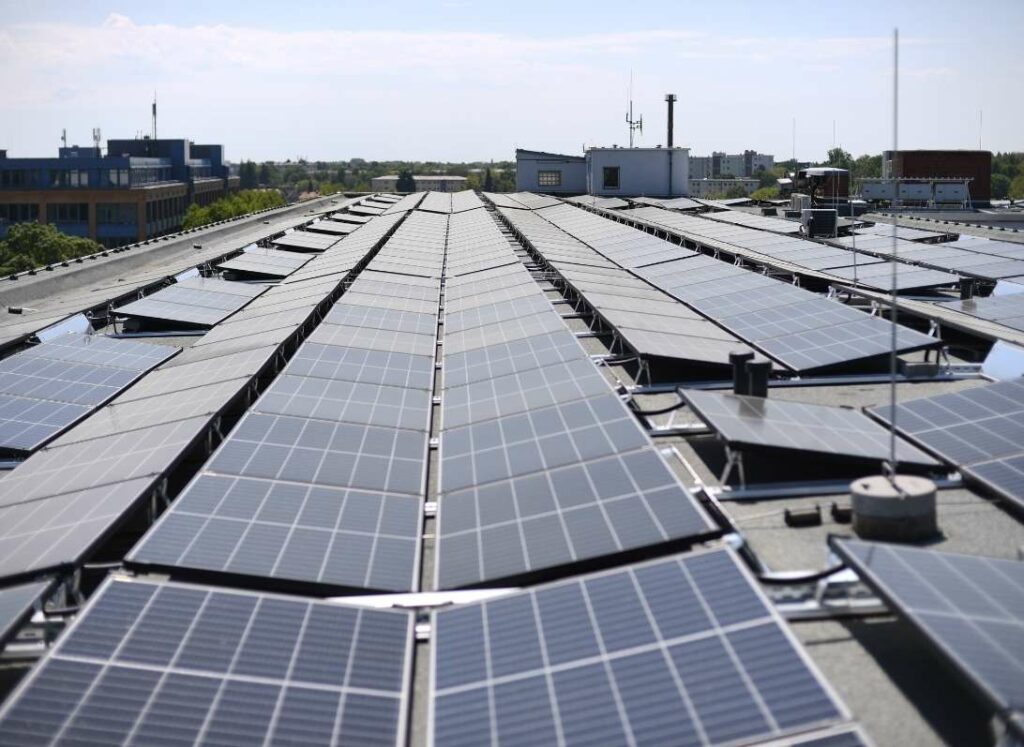
Larger roofs – warehouses, production halls, retail parks, car parks – can apply for investment aid through calls for projects run by the Ministry of the Economy. Projects are ranked by the aid they request per kWp: the more modest your request, the better your chances.
- Plants above 30 kWp, up to 2–3 MWp depending on the lot
- Separate lots for roofs, facades and solar carports
- Higher ceilings when you add on-site storage
- Application before any order or start of works
The latest call (PV6) ran from 17 July to 30 September 2026 and is now closed. We can prepare your project now, so it is ready to file quickly when a new call is published.
Why Voltmax
One partner for both routes
Choosing between a Klimabonus system and a project for the investment-aid call is a business decision, not just a technical one. We give you the numbers for both, explain the rules in plain words and keep an eye on the deadlines, so your subsidy is never lost to a signature made too early.
What you get with Voltmax
A system sized on your consumption and load profile
A clear comparison of Klimabonus vs. investment aid
Help with the de minimis declaration and MyGuichet file
A local team with a showroom in Soleuvre
Numbers before signatures
You see the expected yield, savings and subsidy before you commit.
How we work
From the first site visit to the subsidy paid
Whichever route fits your company, we take care of the technical side and make sure every application is filed at the right moment.
1. Site visit
We look at your roof, your grid connection and your electricity bills.
2. The right size
We size the system around your real consumption, not the biggest roof possible.
3. The right route
Up to 30 kWp: Klimabonus. Above: investment aid. When it is close, we show you both.
4. Detailed offer
Layout, yield estimate, storage option and the subsidy you can expect.
5. Application
For investment aid, filed on MyGuichet before you sign the order. We prepare the technical file with you.
6. Grid & installation
We coordinate the grid connection and install panels, inverter and battery.
7. Commissioning
We start up the system and hand over all the documents needed for your claim.
8. Subsidy paid
Klimabonus: claimed after the works with the invoice. Investment aid: paid once the project is completed.
Full rules · Route 1
Klimabonus for companies: how the amount is calculated
Who
Companies, as de minimis aid under EU Regulation 2023/2831. The amount is entered in your de minimis register.
Solar
Aid = P × (1,155 − 1,155/35 × P), with P in kWp. Capped at €10,000, reached from about 16 kWp.
Battery
Aid = Q × (500 − 500/18 × Q), with Q in kWh, from 2 kWh. Capped at €2,250, reached at 9 kWh.
Conditions
Self-consumption, min. 2 kWp, on a roof or facade, no maximum power. Claimed after the works.
An example
A workshop installs 20 kWp on its roof with a 9 kWh battery. The solar part reaches the €10,000 cap and the battery adds €2,250: €12,250 in Klimabonus, provided the company stays within its de minimis ceiling.
The application is submitted to the Environment Agency (Administration de l’environnement) once the works are finished, online via MyGuichet or by post, with the invoice and technical documents. Pre-financing is not available for companies, and the same installation cannot be funded under two aid schemes.
Full rules · Route 2
Investment aid above 30 kWp: what the latest call (PV6) set out
Lot 1 · Roofs
Building roofs and business-zone (ZAE) land, up to 3 MWp. Max. €550/kWp, or €715/kWp with storage (30–200 kWp).
Lot 2 · Innovative
Lightweight roof modules and facade modules, up to 2 MWp. Max. €760/kWp, or €925/kWp with storage (30–200 kWp).
Lot 3 · Carports
Solar car-park canopies, up to 3 MWp. Max. €1,050/kWp, or €1,215/kWp with storage (30–200 kWp).
Storage
At least 1 kWh per kWp, charged for at least 75% from the solar plant, installed behind the meter.
How the call works
PV6 had a total budget of €10 million split into the three lots. The ceilings above are for 30–200 kWp; they fall as plants get bigger. Projects are ranked by the aid they request per kWp, at most 90% of eligible projects can be selected, and no group may receive more than 40% of a lot’s budget.
The application is filed on MyGuichet with LuxTrust or eID, before any order is placed or works start, and the plant must be in operation within 18 months. Eligible costs and required documents are set out in the call specifications. Questions about the call itself: Luxinnovation, aides@luxinnovation.lu, +352 43 62 63 1.
Sources: guichet.lu, Klima-Agence and the Ministry of the Economy, November 2026. Amounts are indicative; the final decision lies with the authorities.
FAQ
Questions business owners ask us
Can my company get the Klimabonus for solar panels?
Yes. Under the Klimabonus 2026 scheme, companies can receive the photovoltaic and battery subsidy as de minimis aid. The system must be used for self-consumption, be at least 2 kWp and sit on a roof or facade. The aid is entered in your company’s de minimis register.
Is pre-financing available for companies?
No. Pre-financing, where the subsidy is deducted directly from the invoice, applies to residential buildings. Companies pay the invoice and then claim the Klimabonus from the Environment Agency once the works are finished.
Should we install up to 30 kWp or more?
Start from your consumption, not from the subsidy. Up to 30 kWp, the Klimabonus is fixed and the procedure simple. Above 30 kWp, investment aid per kWp can be higher, but it depends on a call being open and on how your project ranks. We calculate both scenarios for you.
Can we combine the Klimabonus with investment aid?
No. The same installation cannot be funded under two aid schemes, so each project goes through one route. Municipal subsidies may exist on top – it is worth checking with your commune.
Is a call for projects open right now?
The sixth call (PV6) closed on 30 September 2026. New calls are announced by the Ministry of the Economy. Tell us about your project and we will let you know when a new call is published.
Does a battery make sense for a business?
Often, yes. It stores the midday surplus for the late afternoon and reduces what you buy from the grid. Under the Klimabonus it adds up to €2,250, and in the investment-aid call it unlocks higher ceilings per kWp.
Have questions?
Let’s check what your company can get
Tell us a little about your building and your electricity use. A Voltmax advisor will tell you which route fits – Klimabonus or investment aid – and what subsidy you can realistically expect.
- Free advice on Klimabonus and investment aid
- Both routes compared for your building
- Call us on +352 26 33 86