Voltmax Energy Solutions in Luxembourg


Sustainable and Smart Energy Choice



-

SolarEdge
-

Breeze
-

SigEnergy
-

Huawei
-
BYD
-

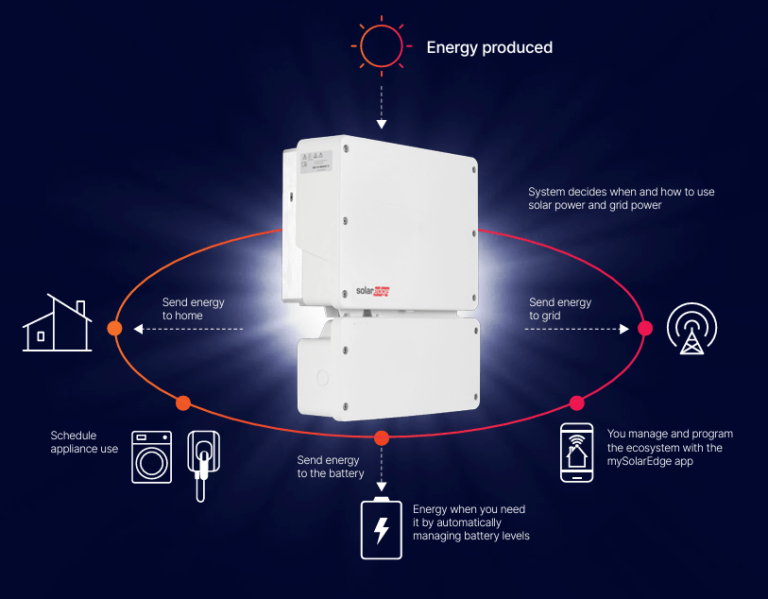
SolarEdge Home optimises and prioritises your home’s energy distribution based on your individual preferences
Energy Flexibility with the SolarEdge Home Battery
– Store excess solar to power your home later in the day and at night
– Charge the battery from the grid to make the most of lower cost time-of-use tariffs
– Indoor or outdoor installation
– Add up to three batteries per inverter for greater storage capacity
– 10kWh energy capacity
– Manage your battery from mySolarEdge app and select your storage priorities
One cohesive platform.
The inverter, storage, and mySolarEdge app work as a single system – simpler installation, fewer “bridges,” and full visibility of consumption and production.
More energy from your own DC connection.
The storage works directly with the SolarEdge inverter, reducing the number of AC/DC conversions. The result: higher charge/discharge efficiency and significantly lower bills.
Reliable backup without interruptions.
In the event of a power outage, the system automatically switches selected circuits to battery operation, maintaining lighting, refrigerator, and IT operations – without manual intervention.
Scalability to meet your needs.
You start with a smaller capacity and expand as consumption increases (e.g., after installing a heat pump or EV charger). The configuration remains consistent, and expansion is rapid.
Intelligent energy management.
In the app, you set priorities (backup/savings), schedules, and responses to dynamic tariffs. The system automatically charges when electricity is cheap or sunny – and releases when it’s profitable.
Ecosystem security and reliability.
24/7 monitoring, over-the-air software updates, and compatibility with other SolarEdge ecosystem components (e.g., optimizers, meters, EV chargers) ensure stable operation and easy maintenance.
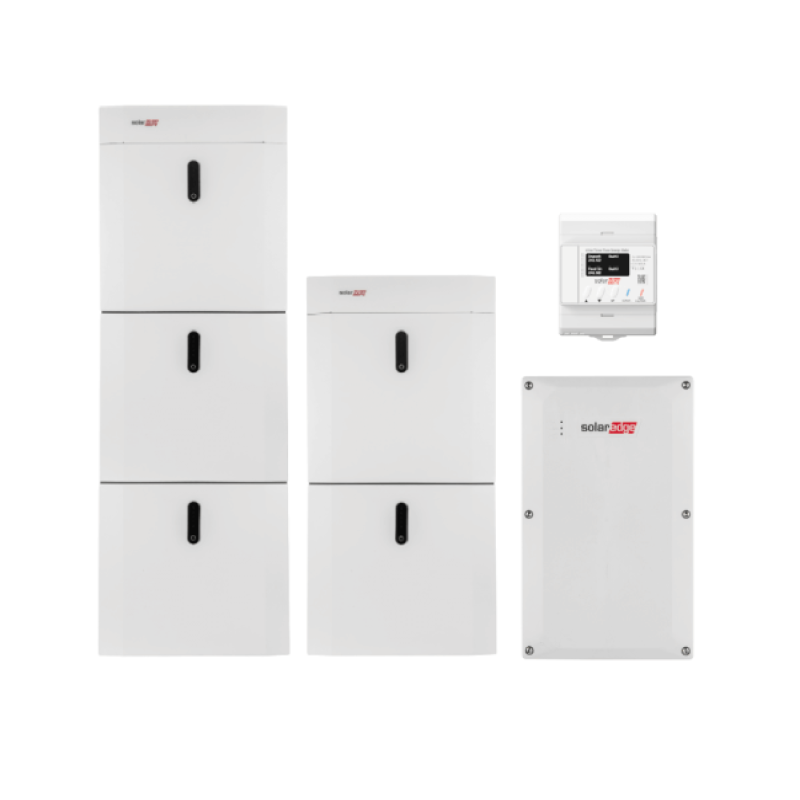
Want to find out which SolarEdge capacity and configuration will pay for itself the fastest? Let us know—we’ll select a package and prepare a quote for your home or business.
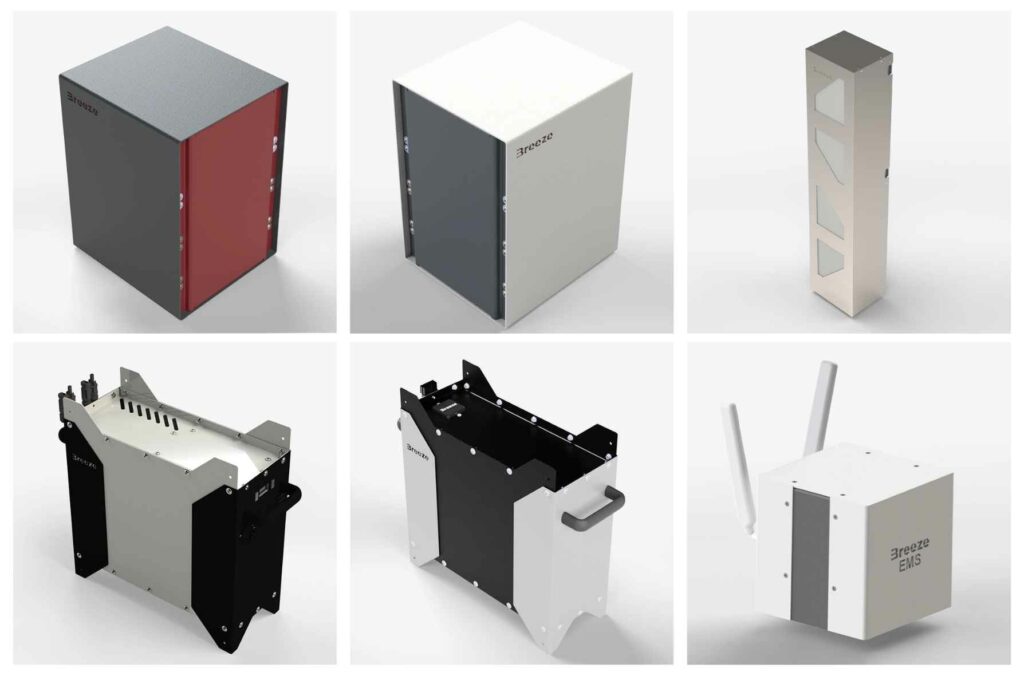
For Users who prioritize longevity and a favorable price-to-quality ratio.
Key Facts:
- Technology: LiFePO₄, > 8,000 cycles at 90% DOD.
- Products and installation support; manufactured and warranted.
- It’s charged via AC, so it can be charged when there’s excess energy from photovoltaics or when the grid becomes cheaper, as someone is on a flexible pricing model.
- It’s an energy storage device that can be connected to non-hybrid grid inverters, so there’s no need to upgrade to a hybrid, which is expensive.
- The storage device supplies voltage to the DC inverter circuit, and the inverter thinks the sun is shining and produces as much energy as needed, or, for example, 2kW until it runs out. When it comes to car charging, especially if someone has 3.5-11kW chargers, even that 2kW can be removed from the storage device and used to charge an EV.
- The storage device can also release energy when the building needs it at night.
More information: breeze-energies.com
Very long lifespan and wide model availability – a smart choice for homes and SMEs.
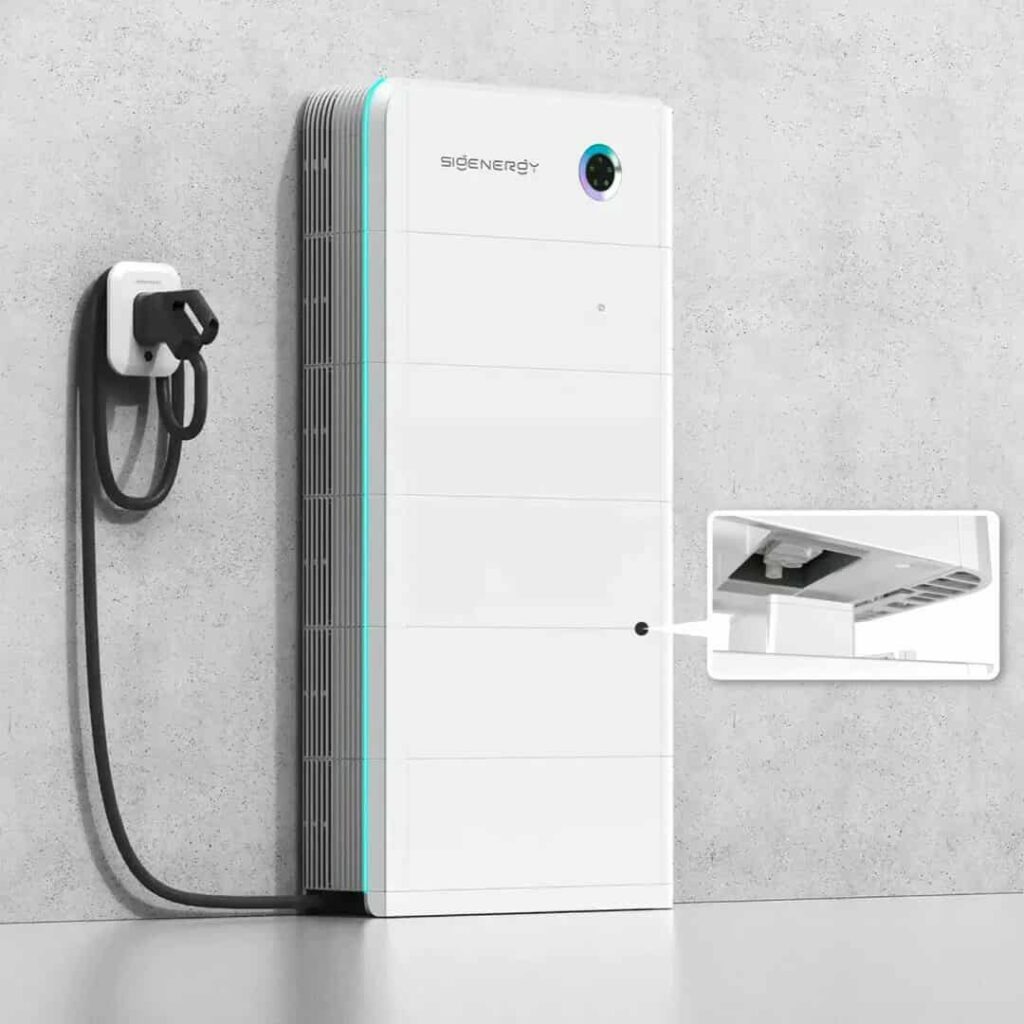
SIGENERGY SigenStor – 5-in-1 Modular Energy Storage (LiFePO₄)
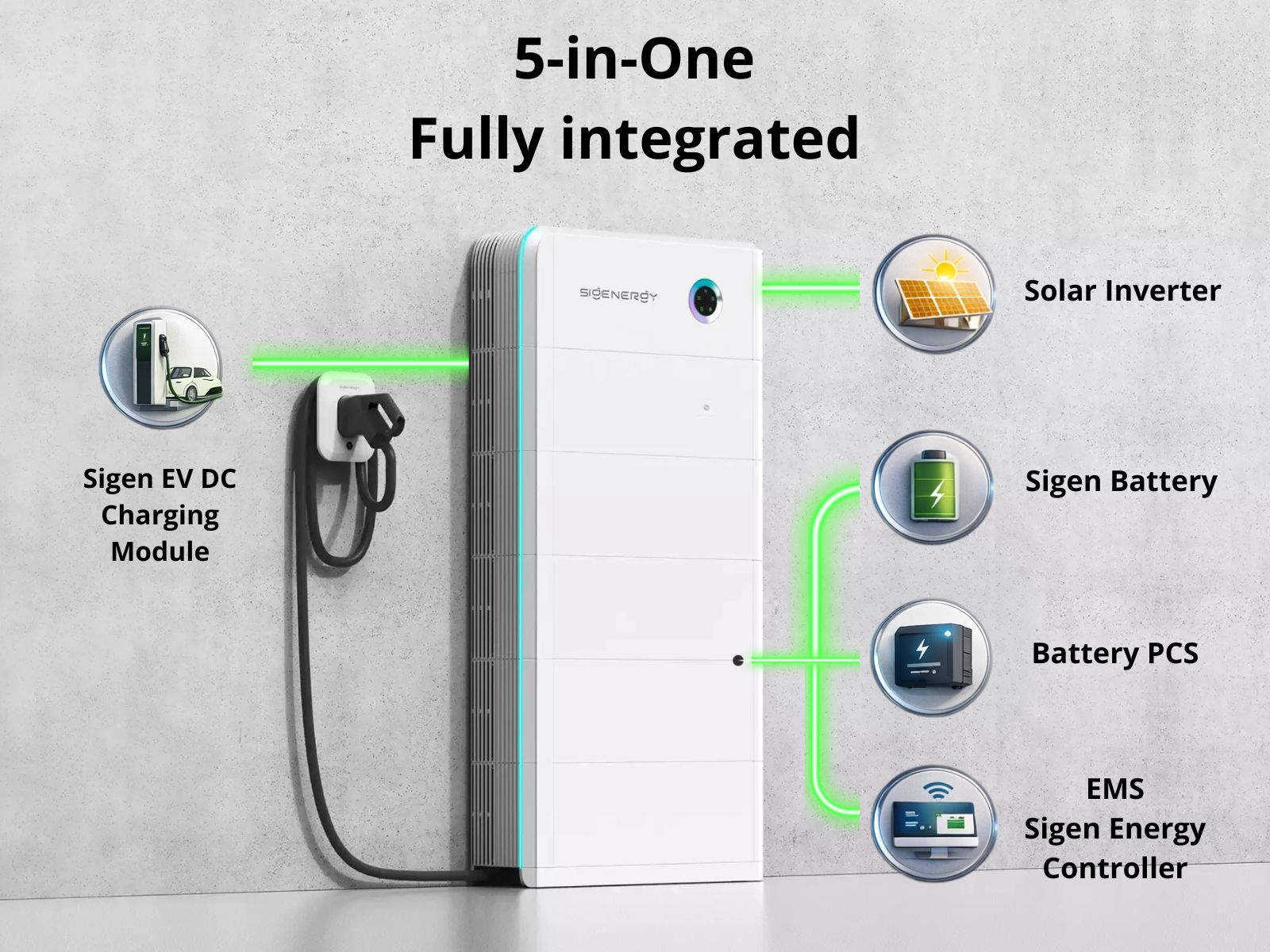
SigenStor is a smart, modular energy storage system for homes and small businesses that combines a storage system (LiFePO₄), an inverter, a power controller, and an optional bidirectional DC charging module up to 25 kW – all in a single, aesthetically pleasing “tower.”
- Each battery module has a total capacity of 5.38 or 8.06 kWh (usable approximately 5.2/7.8 kWh) and can be scaled up to ~48 kWh, matching capacity to current and future needs (EV, heat pump, remote operation).
- The system automatically charges from PV or the grid during low-cost hours and releases energy when it’s most expensive; in the event of a power outage, it switches power to the battery for selected circuits – maintenance-free and safe.
- The optional 25 kW EV DC Charger allows for faster charging at home (bypassing the on-board AC charger) and is V2H/V2X-ready, so the car can power your home or connect to the grid in the future.
- Thanks to natural cooling, multi-layered protection, and a monitoring app, SigenStor ensures high cycle efficiency, long life, and complete energy control – now and in the future.
Why do customers choose Sigenergy?
SigenStor stands out not only for its appearance, but above all for its functionality. It’s a solution for those who want to store energy conveniently, intelligently, and with an eye on the future.
5-in-1 System
One integrated solution instead of multiple separate devices.
Modular Expansion
Start with a configuration tailored to your needs and expand it in the future.
Intelligent Energy Management
Greater control over energy consumption, production, and storage.
Electric Vehicle Ready
A system prepared for a modern lifestyle and the development of electromobility.
In many installations, energy storage is just one of several components from different manufacturers. The Sigenergy SigenStor works differently. It’s a cohesive ecosystem that simplifies installation, improves user convenience, and provides greater control over home energy.
Sigenergy allows you to better utilize the energy produced by your photovoltaic system. Instead of feeding excess energy into the grid, you can store it and use it later-in the evening, at night, or when demand at home is highest.
Huawei LUNA2000 is Huawei’s modular residential energy storage system designed to work with selected Huawei SUN2000 inverters. It stores excess solar energy for later use, such as in the evening, at night, or during grid outages when paired with the right backup setup. Huawei offers multiple LUNA2000 generations, including the older S0 series and the newer S1 series.
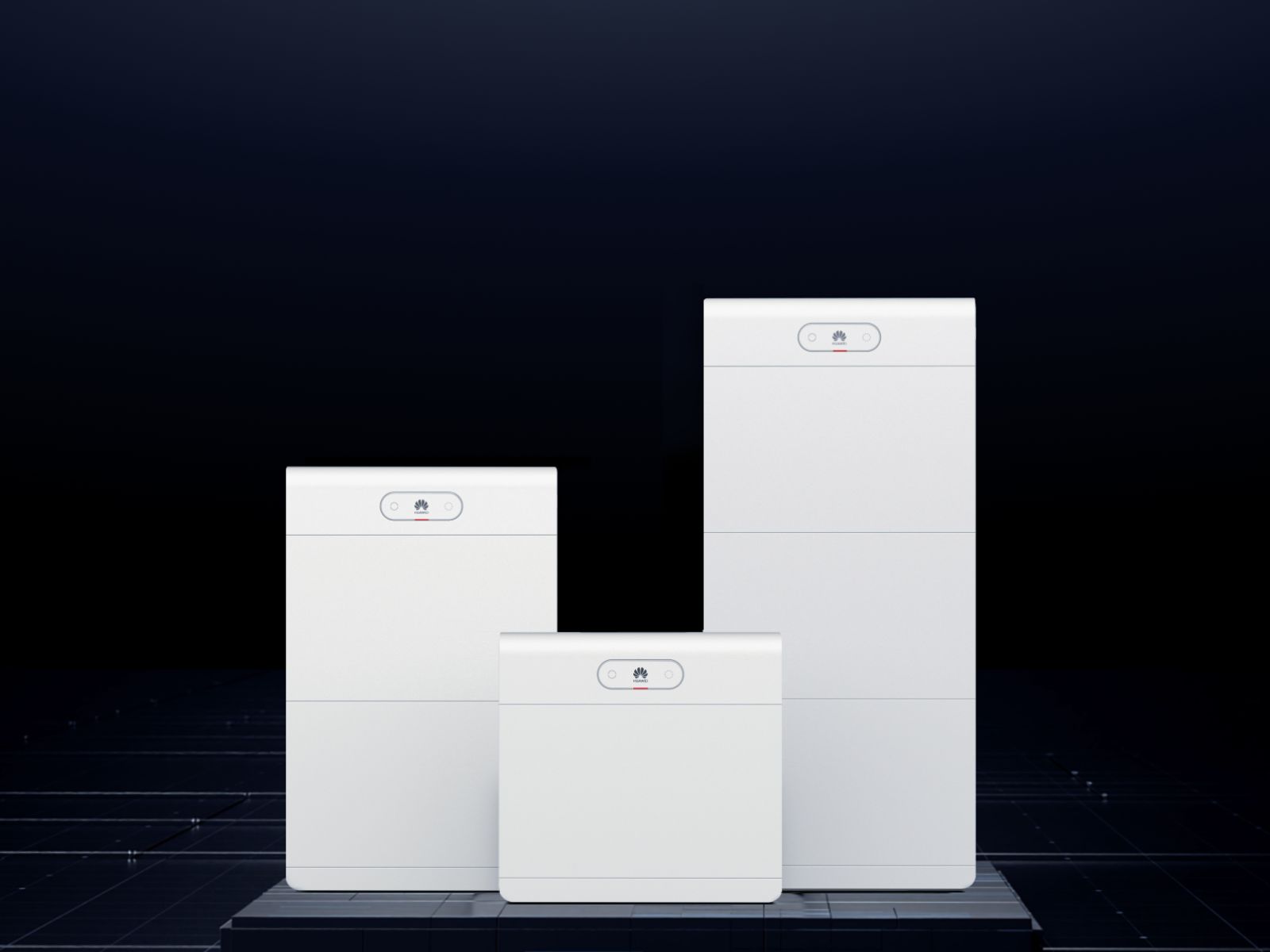
The newer LUNA2000 S1 series is modular and scalable. It uses battery modules of 5 kWh or 6.9 kWh, which can be combined into systems with usable capacities from 5 kWh up to 20.7 kWh in one stack, depending on the configuration. Huawei also states that up to 4 systems can operate in parallel on supported inverter versions.
A major advantage of the LUNA2000 is its LiFePO4 battery chemistry. This chemistry is widely valued for safety, thermal stability, and long service life. Huawei also highlights 100% depth of discharge for the S1 series, which means the system is designed to make the full usable battery capacity available under specified test conditions.
In terms of power, the S1 series uses the LUNA2000-10KW-C1 power module. Depending on the number of battery modules installed, the maximum charge and discharge power can reach 3.5 kW, 7 kW, or 10.5 kW. This makes the system suitable for increasing self-consumption and supporting essential household loads, though real performance depends on the inverter and installation design.
The battery is designed for demanding residential conditions. The S1 version has IP66 protection, supports indoor or outdoor installation, uses natural convection cooling, and has a typical noise level of below 29 dB. Huawei lists an operating temperature range of –20°C to +55°C and a maximum operating altitude of 4,000 m with derating above 2,000 m.
Huawei emphasizes safety as one of the key selling points of the LUNA2000. For the S1 series, the company promotes a 5-layer safety protection concept, including cell-level, electrical-level, structural-level, active, and emergency protection. The system also carries certifications such as CE, IEC62619, UN38.3, REACH, and RoHS, among others.
Another important point is compatibility. The LUNA2000 is intended to work with a defined list of Huawei inverters, including selected single-phase and three-phase SUN2000 models. Compatibility should always be checked against the exact inverter model and regional configuration before purchase or installation.
BYD Battery-Box Premium HVM is a modular high-voltage residential battery storage system designed for solar energy storage. It is built from 3 to 8 HVM battery modules connected in series, giving a usable capacity from 8.3 kWh to 22.1 kWh per tower. Up to 3 identical HVM towers can be connected in parallel, which allows a maximum system size of 66.2 kWh.
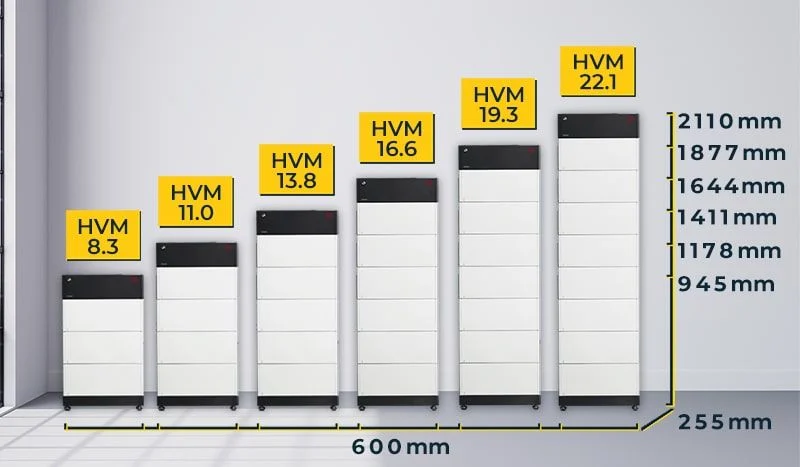
One of the main advantages of the HVM system is its modularity and scalability. Homeowners can start with a smaller configuration and expand later by adding more modules or parallel towers. BYD also highlights its patented internal plug-in design, which reduces the need for internal wiring and helps simplify installation.
The system uses cobalt-free lithium iron phosphate (LFP) battery chemistry, which is valued for high safety, long service life, and stable performance. BYD presents this as one of the key strengths of the Battery-Box Premium series.
In terms of performance, the HVM series is intended for high-power applications, including emergency backup and off-grid use, depending on the inverter and system configuration. BYD also states that the system benefits from a real high-voltage series connection, which supports high efficiency. The datasheet lists round-trip efficiency above 96%.
For the HVM range, the available tower sizes are:
HVM 8.3, 11.0, 13.8, 16.6, 19.3, and 22.1, corresponding to 3, 4, 5, 6, 7, and 8 modules. The nominal voltage ranges from 153.6 V to 409.6 V, depending on configuration.
The battery is designed for both on-grid and backup applications, and the datasheet also lists off-grid capability. It supports CAN / RS485 communication, has an IP55 protection rating, and an operating temperature range of -10°C to +50°C. BYD lists a 10-year warranty and certifications including VDE 2510-50, IEC 62619, CE, and UN38.3.
Compatibility is another important point. The BYD HVM is designed to work with a wide range of single-phase and three-phase compatible inverters, but exact compatibility depends on the inverter brand, model, firmware, and battery configuration. BYD’s current compatible inverter list was updated on 20 August 2025, so it is worth checking the exact combination before installation.
SMA Home Storage is a modular high-voltage residential battery system designed to store surplus solar energy for later use in the home. It is built to work with selected SMA hybrid inverters, especially the Sunny Boy Smart Energy and Sunny Tripower Smart Energy series, making it part of the wider SMA Home Energy Solution.
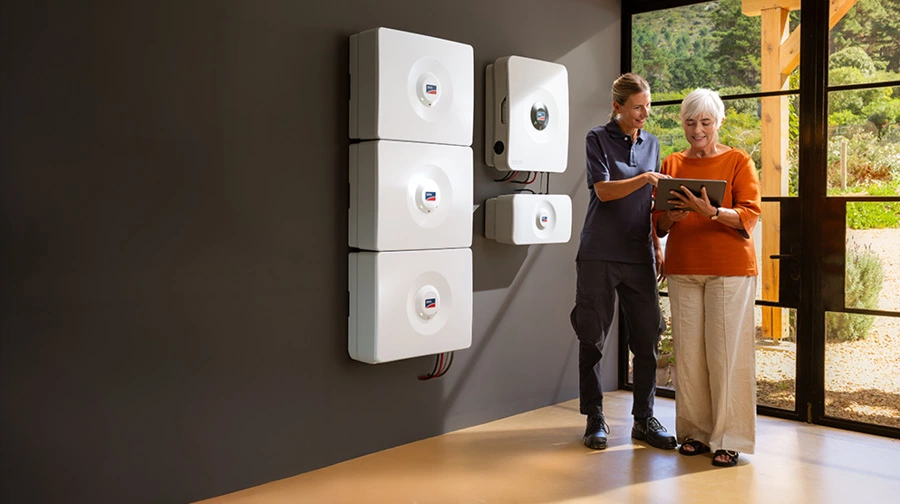
One of the main strengths of SMA Home Storage is its modular design. The system is based on battery modules of 3.28 kWh usable capacity, and it can be expanded from 3.28 kWh up to 16.40 kWh, depending on the number of modules installed. Available system sizes include 3.28, 6.56, 9.84, 13.12, and 16.40 kWh.
The battery uses Lithium Iron Phosphate (LiFePO4) cell technology, which is known for its high safety, long service life, and thermal stability. SMA states that the system is designed for intensive use and offers around 8,000 charging cycles, which makes it suitable for long-term residential operation.
In terms of electrical performance, SMA Home Storage operates as a high-voltage battery with nominal voltage rising according to the number of modules, from 96 V up to 480 V. The system has a maximum charging/discharging current of 36 A and a listed battery efficiency of 94.5%.
Another important benefit is installation flexibility. SMA Home Storage has a slim, stackable design and can be installed on the floor, on the wall, or back-to-back. It is also suitable for outdoor installation, thanks to its IP65 protection class. The operating temperature range is -10°C to 50°C for discharging and 0°C to 50°C for charging.
SMA also highlights backup-related functionality. When combined with a compatible SMA hybrid inverter, the system supports an integrated black-start function for backup supply, which can be an important advantage for homeowners who want greater energy security. SMA additionally positions the battery as ready for future energy applications such as dynamic electricity tariffs and virtual power plants (VPPs).
From the practical side, the battery is designed as a plug-and-play solution with preassembled cables and automatic commissioning, which helps simplify installation. SMA also notes that capacity expansion is possible within 2 years, which gives homeowners flexibility if their energy needs grow over time.
In terms of warranty and compliance, SMA lists a 10-year warranty subject to product registration conditions. The product also carries certifications including CE, UN38.3, IEC 62619, IEC 62477, and VDE 2510-50.
Other brands available upon request.
We also service other warehouses (e.g., DEYE, FOX ESS, Tesla Powerwall, Pylontech, sonnen, Fronius Reserva, Enphase IQ Battery, and others) after verifying compatibility with your inverter and consumption profile.
Ask about compatibility

Independence and energy security for your home and business.
Stay powered when the grid goes down. A right-sized battery gives automatic backup, uses more of your own solar, and sharply cuts grid draw—protecting you from rising energy prices. Choose independence with our energy storage & backup solutions.

Cheap electricity at any time of the day or night
Buy cheap electricity at night, use it during the day, and pay less. A home battery also stores your PV surplus, so you rely less on the grid when solar is low. Save more and gain independence with our energy storage solutions.

Increasing auto consumption and relieving the energy network.
Boost your self-consumption and buy less at peak prices. A home battery stores your PV surplus and smooths peak demand, so you use your own electricity when you need it—not when the grid dictates. Take control with our energy storage solutions.

Subsidies for energy storage – attractive programs
Unlock subsidies to cut your battery costs and boost ROI. Current programs can cover a significant share of purchase and installation—often 25–50%. We’ll check your eligibility, prepare the paperwork, and maximize your benefit so your storage pays back faster.

Flexibility in expansion – Easy to adapt to your needs!
Start small and expand anytime. Our modular batteries are sized to your needs for maximum efficiency. Planning an EV charger? Storage absorbs the extra load and smooths peaks, so you charge reliably without costly grid upgrades.

Intelligent energy management
Manage energy smartly and cut costs. Intelligent modes charge when power is cheap or solar is abundant, then discharge when prices rise. Automations can run devices when the battery is full, and stored PV powers your home at night instead of exporting—lower bills, higher self-consumption.