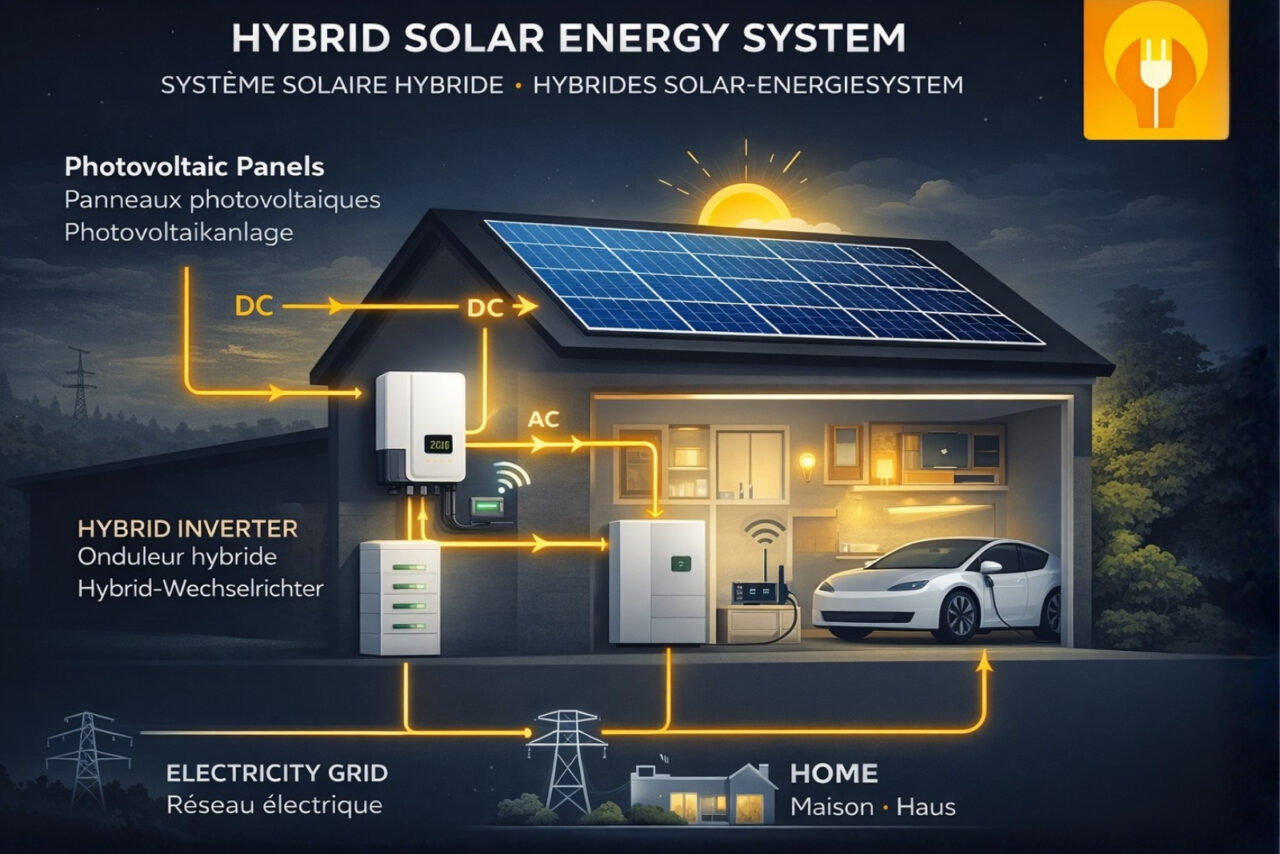

A hybrid inverter is a device that combines the functions of a conventional photovoltaic inverter with a system that works with an energy storage unit. Its function therefore focuses on converting direct current from PV panels into alternating current, which flows through household sockets. Other functions of a hybrid inverter also include managing battery charging and discharging, and some models are equipped with an emergency mode (EPS/backup). It is worth noting right away, however, that “hybrid” does not always mean full backup power for the entire building. In some devices, the emergency function covers only selected circuits, and some hybrid inverters do not provide full backup at all, even though they work with an energy storage unit. Want to learn more? Find out what hybrid inverters are and what benefits their installation can offer.
Table of contents
ToggleWhy do people choose hybrid inverters?
Hybrid inverters are chosen primarily by people who want to make better use of the energy from their own PV system. Instead of feeding most of the surplus back into the grid, they can use it for current household consumption or, after adding an energy storage unit, save it for later. This higher self-consumption is one of the most common reasons for choosing a hybrid solution.
The second important reason is preparing the system for an energy storage unit in the future. Many people do not want to invest in a battery right away, but they want the system to be ready for expansion in a year or two. In this sense, a hybrid inverter can be a “future-proof” solution, because it simplifies the later addition of storage and provides more flexibility than a conventional on-grid inverter.
Another motivation is greater control over how the system operates and how much energy is fed into the grid. In practice, users care not only about producing electricity, but also about more predictable management of surplus energy, limiting energy fed into the grid, and better aligning the system’s operation with household consumption. In Luxembourg, this is of additional importance, because Creos – the main electricity and gas grid operator in Luxembourg – provides specific technical requirements for PV installations with self-consumption, including limits concerning inverter power in certain connection models.
For some investors, emergency functions are also important. Some hybrid inverters can work with an energy storage unit in such a way that, during a power outage, they can keep selected household circuits running. This is an important argument especially where the user wants to secure the refrigerator, internet, lighting, or a few of the most important devices. It should be remembered, however, that the scope of such support depends on the specific model and configuration, and the term “hybrid” itself does not always mean full backup power for the entire building. For some devices, additional modules that cooperate with the hybrid inverter are also installed.
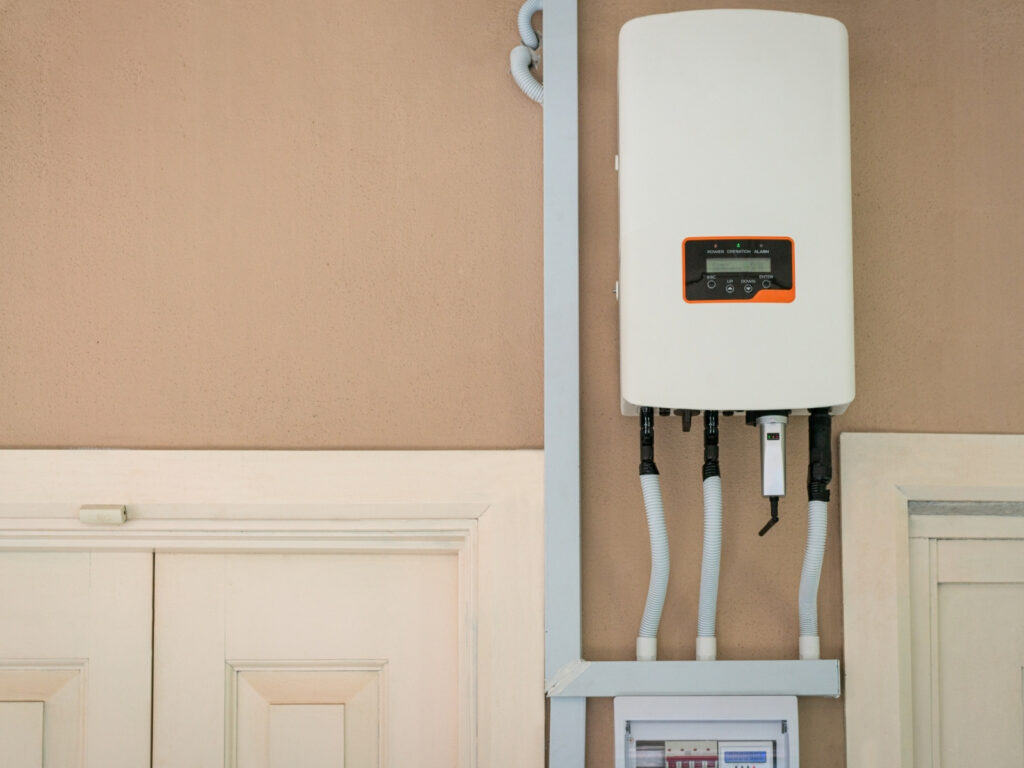
How does a hybrid inverter work in practice?
In practice, the operation of a hybrid inverter is best understood through a simple example from everyday household use. During the day, energy from PV panels first powers household appliances. If production is greater than current consumption, the surplus goes to the energy storage unit and charges the battery. In the evening and after sunset, the situation is reversed. Production from the panels decreases or disappears, but the house still needs energy. Then the hybrid inverter draws it from the storage unit and powers household appliances. This allows the energy previously produced by the PV system to be used when it is needed most – for example, after household members return home, when electricity consumption increases. If the battery is already full, the surplus energy is fed into the grid or curtailed, if the system has been configured that way. The entire process takes place automatically – the inverter decides whether the energy should power the house, charge the storage unit, or be fed into the grid.
What does EPS mean and what should be checked before deciding on installation?
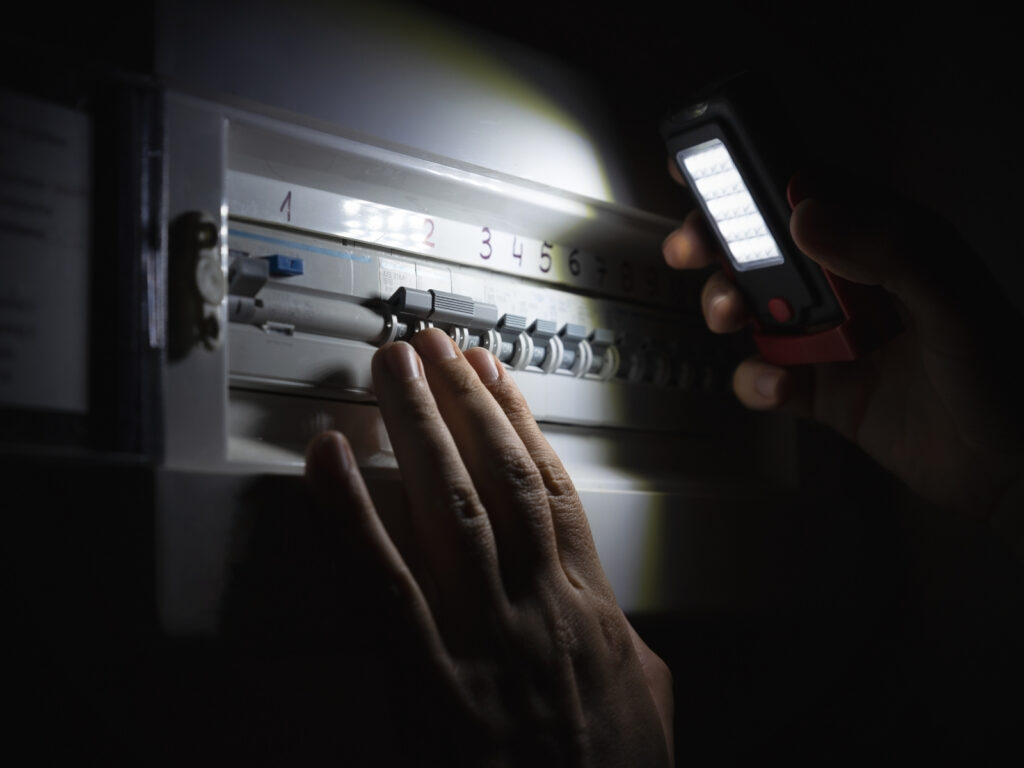
EPS is an emergency power supply function that makes it possible to keep selected circuits operating after a grid power failure. In practice, however, this does not mean that the whole house will function normally during an outage. Most often, EPS supports only a dedicated part of the installation, for example the refrigerator, lighting, internet, gate, or a few sockets. Before deciding to purchase the installation, it is necessary to check whether our house has an emergency output for selected circuits and what role it plays. An emergency output for selected circuits is one thing, while full backup power for the entire house is another. The latter option is less common, more demanding in terms of design, and usually involves additional installation components. It is also worth checking what power limits apply in the case of a given device. This means that even if the inverter offers an emergency mode, it will not always be able to power all household devices at the same time, especially those with high energy consumption.
Advantages of a hybrid inverter
A hybrid inverter is chosen mainly for organizational reasons – it organizes the entire system in one place. It is a single platform for managing energy – overseeing both the photovoltaic installation and the energy storage unit. In practice, this means simplified control and usually more transparent operation – both at the installation stage and in the app, where production, consumption, battery charging, and discharging can be viewed.
The second advantage is better use of your own electricity, that is, self-consumption. A hybrid system can continuously decide where the PV energy should go: first to the house, then to the battery, and only finally to the grid. As a result, you use more of your energy on-site – especially in the evening and in the morning, when the sun is setting or has not yet risen, and the house still needs electricity.
For many people, the possibility of expanding the system is also important. If today you are installing only photovoltaics and want to add storage later, a hybrid inverter often makes this plan easier – provided that the selected model actually supports the specific type of battery and has the appropriate parameters. This approach makes it possible to spread the investment over time, without rebuilding the entire system from scratch.
The topic of integration with home “automation” also comes up: an electric car charger, appliance control, a heat pump, or a smart home system. Many hybrid inverters have ready-made functions or work with meters and applications that help shift consumption to production hours and make better use of your own electricity. It should only be remembered that a lot depends here on the manufacturer’s ecosystem and on what devices you plan to have at home.
Luxembourg – what should be considered formally and technically?
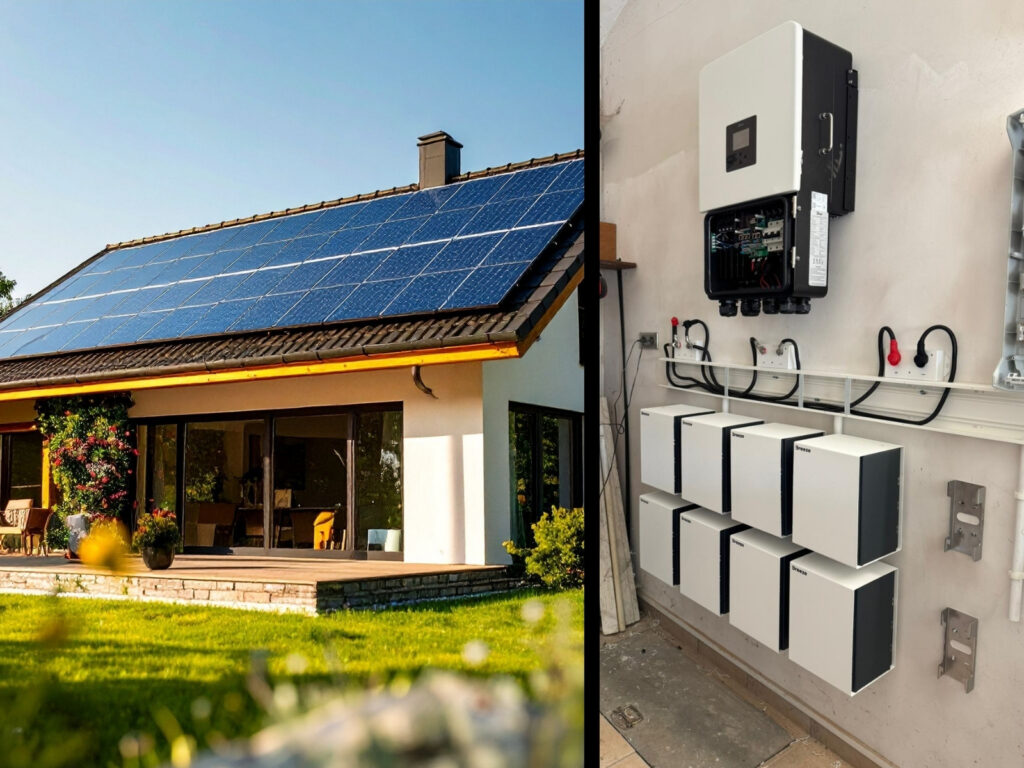
In Luxembourg, a PV installation with a hybrid inverter and a possible energy storage unit must be adapted not only to the needs of the house, but also to the requirements of the grid operator and TAB rules. In practice, this means that it is not just the choice of device that matters, but the entire method of connecting the installation, its configuration, and compliance with technical requirements. From the investor’s point of view, the most important principle is simple: the installation must be declared and carried out in accordance with the operator’s procedure. Every production installation with a capacity of 800 W or more must be declared to the grid operator, and the connection and commissioning procedure is carried out according to the rules described in TAB. It is also necessary to check whether the selected devices meet grid requirements. This concerns inverter operation, the method of power limitation, and protection systems. For installations below 150 kVA, the system must be capable, at the operator’s request, of reducing active power to 30% of installed capacity within 5 seconds. The selection of protection systems is also very important. Every production installation must have appropriate decoupling protection, and its type depends on the total installation capacity at the connection point. Up to 30 kVA, integrated and approved protection in the inverter is sufficient, while above 30 kVA, central protection is required. This has a direct impact on the design, cost, and overall complexity of the entire installation.
In practice, the issue of power limits resulting from the connection itself also often arises. In the self-consumption model with one meter, such a solution is permitted only if the total inverter power does not exceed 30 kVA, the installation is connected to the low-voltage grid, and it operates with one smart meter. Therefore, before choosing a hybrid inverter, it is worth checking not only the panel power, but also the conditions of the specific connection point.
How does Voltmax help select a hybrid inverter for a home in Luxembourg?
Selecting a hybrid inverter should not start with a device catalogue, but with the needs of a specific home. That is why, at Voltmax, the starting point is an analysis of what matters most to the investor: greater self-consumption, preparing the installation for an energy storage unit, or perhaps a backup function during outages. On this basis, an appropriate inverter and a compatible energy storage unit can be selected – so that the system is suited not only to the power of the PV installation, but also to the building’s actual energy consumption. An important stage is also checking connection requirements and the compliance of the entire installation with the grid operator’s conditions in Luxembourg.
If the investor wants emergency power supply, a proper design of backup circuits is also needed. In practice, this means determining which devices and circuits are to operate during a power outage and how to prepare the installation so that the entire system works safely and in accordance with the assumptions. The final step is commissioning and configuring the system so that the inverter, the energy storage unit, and the PV installation operate as one coherent whole. Thanks to this, the investor receives a solution tailored to the home, connection conditions, and future plans.
Are you interested in installing a hybrid inverter in your home? Feel free to contact us! We will be happy to clarify any doubts, help you choose the right equipment, and carry out the complete installation.