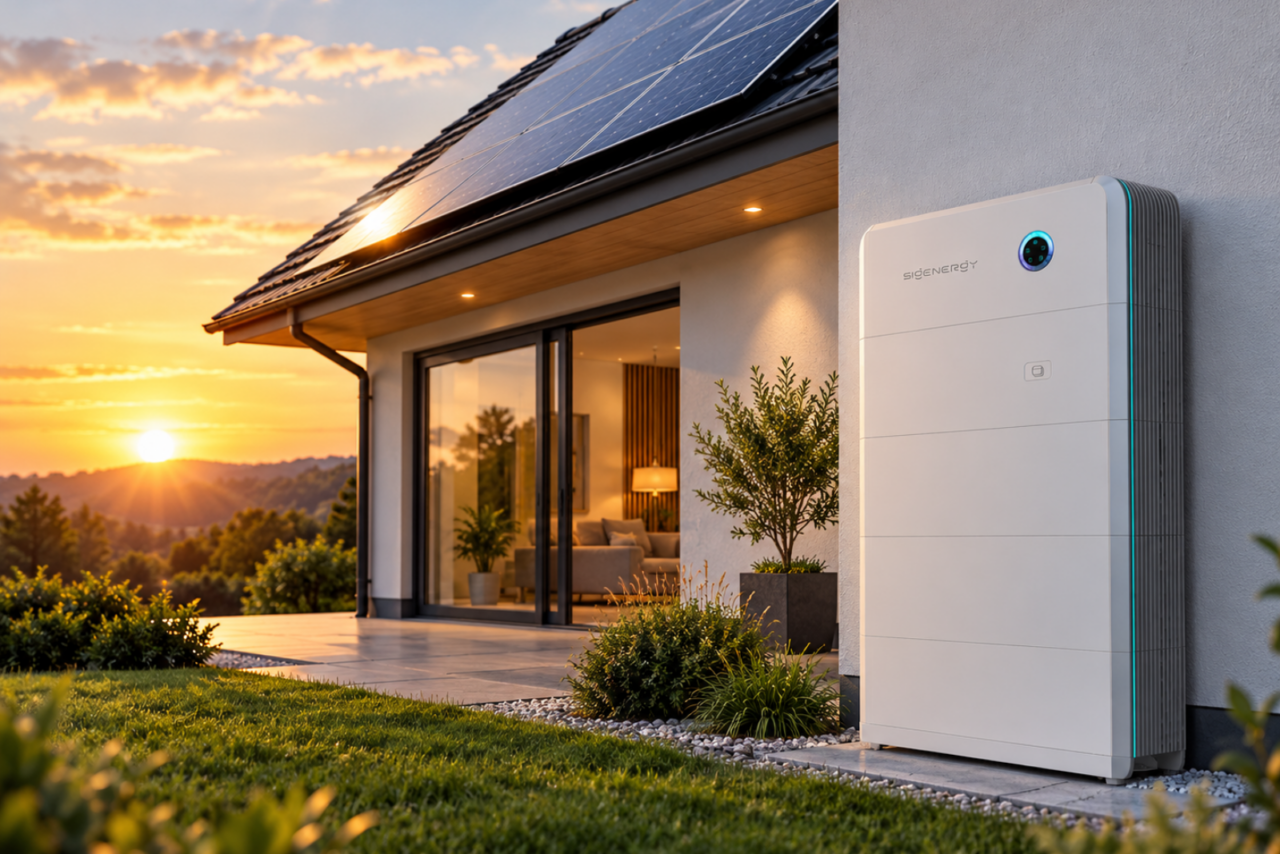

In the specifications of one energy storage system, you may see a capacity of 10 kWh and a power rating of 5 kW, while another may offer 10 kWh and 10 kW. Although both systems can store a similar amount of energy, their capabilities during operation will be different. It is therefore worth understanding the difference between these two parameters. Put simply, kWh tells you how much energy can be stored, while kW indicates how much power the storage system can deliver at a given moment.
This distinction matters, for example, when powering a heat pump, household appliances or using the storage system as a backup power source. In this article, we will not determine whether a 5, 10 or 15 kWh system is the better choice. Instead, we will focus on how to understand the most important technical parameters and why capacity alone is not enough to make an informed comparison between two energy storage systems.
Table of contents
ToggleWhat does energy storage capacity in kWh mean?
The capacity of an energy storage system indicates how much energy it can store. This value is expressed in kilowatt-hours, or kWh. The greater the capacity, the more energy can be stored and used later, for example in the evening, at night or during a power outage. It can be compared to the size of a tank: the larger the tank, the more energy it can hold. A 10 kWh storage system can therefore store more energy than a 5 kWh system, but 10 kWh does not mean that the unit can supply appliances with 10 kW of power. That is determined by another important parameter: the power rating of the storage system, expressed in kW.
Nominal vs usable energy storage capacity
First, it is worth explaining the difference between nominal capacity and usable capacity:
- nominal capacity is the total amount of energy that the battery can theoretically store according to its design. If the manufacturer specifies a nominal capacity of 10 kWh, this refers to the total capacity of the battery cells inside the storage system.
- usable capacity indicates how much of that energy the user can actually access during normal system operation. It is usually slightly lower than the nominal capacity because part of the battery capacity is kept in reserve to protect it against excessive discharge and overcharging.
For example, an energy storage system may have a nominal capacity of 10 kWh but a usable capacity of 9 kWh. It is the usable capacity that gives a better indication of how much energy will actually be available to power the home.
What does energy storage power in kW mean?
The power rating of an energy storage system, expressed in kilowatts (kW), indicates how much power the unit can deliver at a given moment. In simple terms, capacity tells us how much energy we have available, while power tells us how quickly we can use that stored energy.
A simple example illustrates this well. If a heat pump drawing 2 kW, a hob requiring 2 kW and other appliances consuming a combined 1 kW are operating at the same time, the instantaneous power demand is approximately 5 kW. If the storage system can deliver a maximum of 3 kW, it will not be able to cover the entire load on its own, even if it has a large capacity of 10 or 15 kWh. The remaining power will have to come from the photovoltaic installation or the grid. That is why, when comparing energy storage systems, it is not enough to look only at the number of kWh. A large capacity may mean plenty of stored energy, but the power rating in kW determines how many devices, and how demanding those devices can be, are supplied at the same time.
How do capacity and power affect energy storage operation in practice?
Capacity and power describe two different aspects of how an energy storage system operates. Capacity determines how much energy is available, while power indicates how quickly that energy can be supplied or replenished. That is why both parameters need to be considered together.
Parameter | What question does it answer? | What does it mean in practice? |
Capacity – kWh | How much energy can I store? | How long the stored energy may last |
Power – kW | How much power can I use at the same time? | How demanding the appliances operating at a given moment can be |
Charging power – kW | How quickly can the storage system absorb energy? | Whether it can make use of a large temporary surplus from photovoltaics |
Discharge power – kW | How quickly can it deliver energy? | Whether it can power several devices at the same time |
This can be illustrated with a simple example. An energy storage system with a usable capacity of 10 kWh and a discharge power of 5 kW could, under ideal conditions, supply appliances drawing a combined 5 kW for approximately 2 hours. If the same 10 kWh capacity is combined with a power rating of 2.5 kW, the amount of stored energy remains the same, but the system will not be able to supply appliances requiring a combined 5 kW at a given moment. Actual operating time also depends on system efficiency, battery state of charge, usable capacity and changing household electricity demand. Dividing kWh by kW should therefore be treated as a simple way to understand the relationship between capacity and power rather than as an exact prediction of how long the storage system will operate.
Which is more important - kWh or kW?
Neither parameter is more important than the other. Capacity in kWh and power in kW describe different characteristics of an energy storage system, so both need to be considered when selecting a unit.
If the main goal is to store a larger amount of surplus energy from the photovoltaic installation and use it later over several hours, usable capacity will be particularly important. It shows how much energy is actually available for use.
If, on the other hand, the storage system is expected to power several higher-demand appliances at the same time, reduce temporary power demand from the grid or provide backup power, discharge power becomes equally important. A large capacity will not help if the storage system cannot deliver enough power at a given moment.
A properly selected energy storage system should therefore provide both an appropriate amount of usable energy and a power rating matched to the way electrical devices are used in the home.

How does Voltmax help select the right energy storage parameters?
Voltmax helps select an energy storage system based on the actual operating conditions of the installation and the way energy is used in the building. The analysis may include electricity consumption, the highest simultaneous loads, the operation of the heat pump and other high-demand appliances, photovoltaic production, as well as expectations regarding self-consumption and backup power. Based on this information, Voltmax specialists can determine the appropriate usable capacity and the charging and discharge power required for a particular home. They also assess how the storage system will work with the inverter, photovoltaic installation and other devices so that the entire system is properly matched as a whole.
This means that choosing an energy storage system is not reduced to simply comparing numbers in a product specification. Voltmax helps select a solution with the right amount of stored energy, the appropriate power rating and an operating strategy matched to the user’s actual needs.